So far, data suggests that children under the age of 18 years face fewer deaths compared to other age groups and usually have milder symptoms.
Cases of critical illness have been reported among children and adolescents with pre-existing medical conditions like high blood pressure, heart and lung problems, asthma, diabetes, obesity, cancer and neurological and developmental conditions.
Can children and adolescents spread COVID-19 to other people even if they have mild or no symptoms?
Yes. Infected people of all ages – including children and adolescents - can transmit the virus to other people, even if they have mild symptoms or do not feel ill.
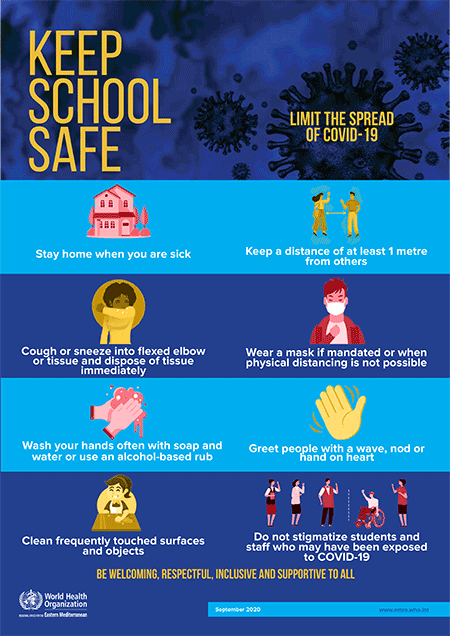
The virus is spread from person to person in close contact through droplets from the nose or mouth of person with COVID-19 when coughs, sneezes or speaks. Therefore, it is important to stay at least 1 meter away from others.
These droplets can also land on objects and surfaces. People can become infected by touching these objects or surfaces, and then touching their eyes, nose, or mouth.
What is WHO’s position on vaccinating children as schools returning?
Given learning loss and the negative impact on children’s social development due to school closures, WHO recommends prioritizing teachers and school staff for vaccination against COVID-19 as schools reopen.
Children and adolescents with severe pre-existing chronic conditions who are at significant risk of severe disease should also be prioritized in vaccination plans.
As of now, only Pfizer-BioNTech vaccine is recommended by WHO for use among children and adolescents aged 12 years and above.
Other risk mitigation strategies must always be implemented in school settings for all students, teachers and staff, including physical distancing, mask use, and hand hygiene.
What are WHO’s recommendations to countries to keep schools open safely?
WHO recommends applying public health and social measures (PHSM) that have proven critical to limiting transmission of COVID-19 and reducing deaths. Schools are part of a community. The measures taken in a community to reduce risk will reduce risk in schools as well.
Childcare services and primary and secondary schools should remain open with adequate safety and surveillance measures in place as long as the local context allows.
Deciding to close or re-open schools should be guided by a risk-based approach, taking into consideration the epidemiology of COVID-19 at the local level, the capacity of educational institutions to adapt their system to operate safely; the impact of school closures on educational loss, equity, general health, and wellbeing of children; and the range or other public health measures being implemented outside school.
What prevention measures should transport services take to protect students? Dr Samar El Feky, Regional Officer, Community-Based Initiatives and Healthy Settings
What should parents do if their children are sick with COVID or other symptoms? Dr Samar El Feky, Regional Officer, Community-Based Initiatives and Healthy Settings
What can schools with limited resources do to keep students safe and well when they reopen? Dr Samar El Feky, Regional Officer, Community-Based Initiatives and Healthy Settings
Do students need to wear masks at school? Dr Samar El Feky, Regional Officer, Community-Based Initiatives and Healthy Settings
Role of parents in preparing children for school Dr Samar El Feky, Regional Officer, Community-Based Initiatives and Healthy Settings
Live with Dr Khalid Saeed, Regional Adviser, Mental Health and Substance use Returning to school safely during the COVID-19 pandemic
Live with Dr Samar El Feky, Regional Officer, Community-Based Initiatives and Healthy Settings Returning to school safely during the COVID-19 pandemic
So far, data suggests that children under the age of 18 years face fewer deaths compared to other age groups and usually have milder symptoms.
Cases of critical illness have been reported among children and adolescents with pre-existing medical conditions like high blood pressure, heart and lung problems, asthma, diabetes, obesity, cancer and neurological and developmental conditions.
Can children and adolescents spread COVID-19 to other people even if they have mild or no symptoms?
Yes. Infected people of all ages – including children and adolescents - can transmit the virus to other people, even if they have mild symptoms or do not feel ill.
The virus is spread from person to person in close contact through droplets from the nose or mouth of person with COVID-19 when coughs, sneezes or speaks. Therefore, it is important to stay at least 1 meter away from others.
These droplets can also land on objects and surfaces. People can become infected by touching these objects or surfaces, and then touching their eyes, nose, or mouth.
What is WHO’s position on vaccinating children as schools returning?
Given learning loss and the negative impact on children’s social development due to school closures, WHO recommends prioritizing teachers and school staff for vaccination against COVID-19 as schools reopen.
Children and adolescents with severe pre-existing chronic conditions who are at significant risk of severe disease should also be prioritized in vaccination plans.
As of now, only Pfizer-BioNTech vaccine is recommended by WHO for use among children and adolescents aged 12 years and above.
Other risk mitigation strategies must always be implemented in school settings for all students, teachers and staff, including physical distancing, mask use, and hand hygiene.
What are WHO’s recommendations to countries to keep schools open safely?
WHO recommends applying public health and social measures (PHSM) that have proven critical to limiting transmission of COVID-19 and reducing deaths. Schools are part of a community. The measures taken in a community to reduce risk will reduce risk in schools as well.
Childcare services and primary and secondary schools should remain open with adequate safety and surveillance measures in place as long as the local context allows.
Deciding to close or re-open schools should be guided by a risk-based approach, taking into consideration the epidemiology of COVID-19 at the local level, the capacity of educational institutions to adapt their system to operate safely; the impact of school closures on educational loss, equity, general health, and wellbeing of children; and the range or other public health measures being implemented outside school.
What prevention measures should transport services take to protect students? Dr Samar El Feky, Regional Officer, Community-Based Initiatives and Healthy Settings
What should parents do if their children are sick with COVID or other symptoms? Dr Samar El Feky, Regional Officer, Community-Based Initiatives and Healthy Settings
What can schools with limited resources do to keep students safe and well when they reopen? Dr Samar El Feky, Regional Officer, Community-Based Initiatives and Healthy Settings
Do students need to wear masks at school? Dr Samar El Feky, Regional Officer, Community-Based Initiatives and Healthy Settings
Role of parents in preparing children for school Dr Samar El Feky, Regional Officer, Community-Based Initiatives and Healthy Settings
Live with Dr Khalid Saeed, Regional Adviser, Mental Health and Substance use Returning to school safely during the COVID-19 pandemic
Live with Dr Samar El Feky, Regional Officer, Community-Based Initiatives and Healthy Settings Returning to school safely during the COVID-19 pandemic