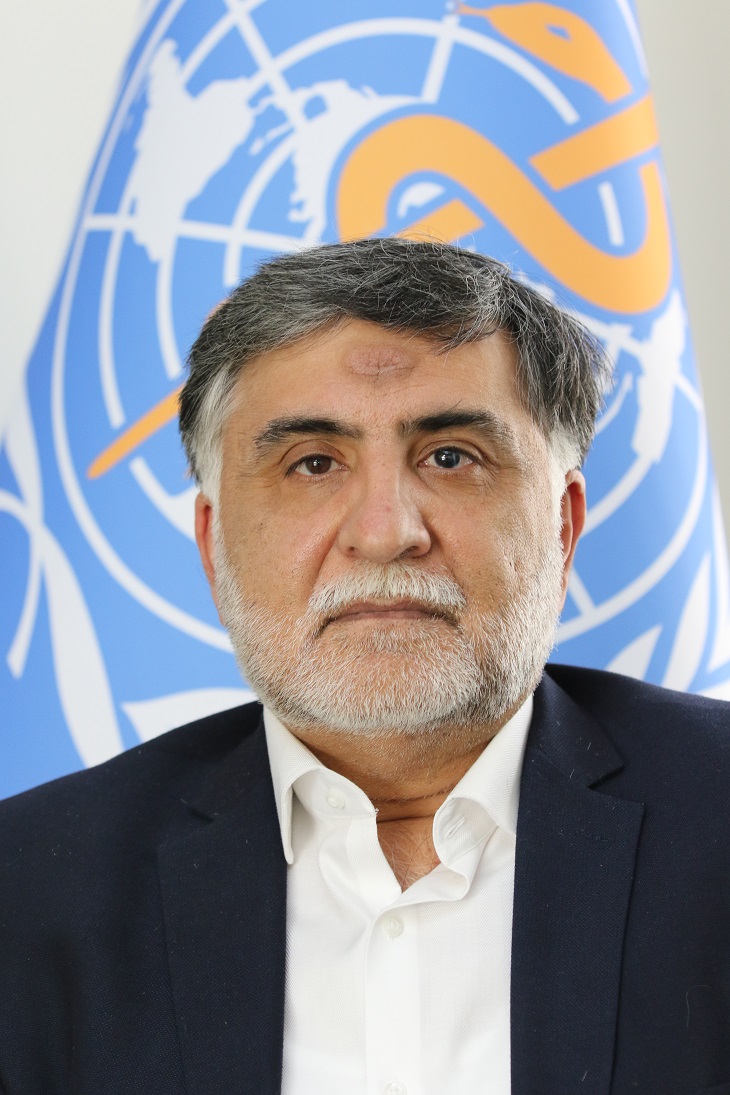
Dr Jihane Tawilah received all her graduate and postgraduate medical training at the American University of Beirut in Lebanon. She is a medical doctor and has specialized in Family Medicine. She also holds a master degree in Public Health with focus on health services administration.
She started her Public Health career as WHO medical officer in 1990 serving in her own country Lebanon in support of joint WHO/MOH collaborative plan. She established and managed the National AIDS Control programme in Lebanon, a joint WHO/MOH venture. Later, she assisted in other WHO collaborative programmes with the Ministry of Public Health in Lebanon, in areas of PHC, rational drug use, health promotion and education, control of communicable and Non Communicable diseases including epidemiological surveillance, women development and health research. She had also held the position of lecturer in Epidemiology as well as Social and Preventive Medicine, teaching medical students at the faculty of Medical Sciences in the Lebanese University in Lebanon for seven years.
In 1997, Dr Tawilah worked with UNAIDS first as consultant then as inter-Country Regional Adviser for the Middle East and North Africa Region. She established in Cairo the first office for UNAIDS for the MENA Region after which she took the responsibility of WHO Regional Adviser on HIV/AIDS and Sexually Transmitted Diseases and was based in Egypt at the WHO Eastern Mediterranean Regional Office for five years.
She also served as WHO Representative in Djibouti from 2003 to early 2007, followed by representing WHO in the Sultanate of Oman for 5 years before being appointed in January 2012 as WHO Representative in the Islamic Republic of Iran.
Dr Jihane Tawilah received all her graduate and postgraduate medical training at the American University of Beirut in Lebanon. She is a medical doctor and has specialized in Family Medicine. She also holds a master degree in Public Health with focus on health services administration.
She started her Public Health career as WHO medical officer in 1990 serving in her own country Lebanon in support of joint WHO/MOH collaborative plan. She established and managed the National AIDS Control programme in Lebanon, a joint WHO/MOH venture. Later, she assisted in other WHO collaborative programmes with the Ministry of Public Health in Lebanon, in areas of PHC, rational drug use, health promotion and education, control of communicable and Non Communicable diseases including epidemiological surveillance, women development and health research. She had also held the position of lecturer in Epidemiology as well as Social and Preventive Medicine, teaching medical students at the faculty of Medical Sciences in the Lebanese University in Lebanon for seven years.
In 1997, Dr Tawilah worked with UNAIDS first as consultant then as inter-Country Regional Adviser for the Middle East and North Africa Region. She established in Cairo the first office for UNAIDS for the MENA Region after which she took the responsibility of WHO Regional Adviser on HIV/AIDS and Sexually Transmitted Diseases and was based in Egypt at the WHO Eastern Mediterranean Regional Office for five years.
She also served as WHO Representative in Djibouti from 2003 to early 2007, followed by representing WHO in the Sultanate of Oman for 5 years before being appointed in January 2012 as WHO Representative in the Islamic Republic of Iran.