

اختر لغتك
أبطال ناكرون لذاتهم يخوضون معارك حالات الطوارئ الصحية في كارثة الفيضان
في مواجهة الطوارئ الفيضانية المدمرة في باكستان، يحاول القائمون على التطعيم في الخطوط الأمامية بشجاعة الوصول إلى المجتمعات المحلية بالخدمات الصحية المنقذة للحياة.
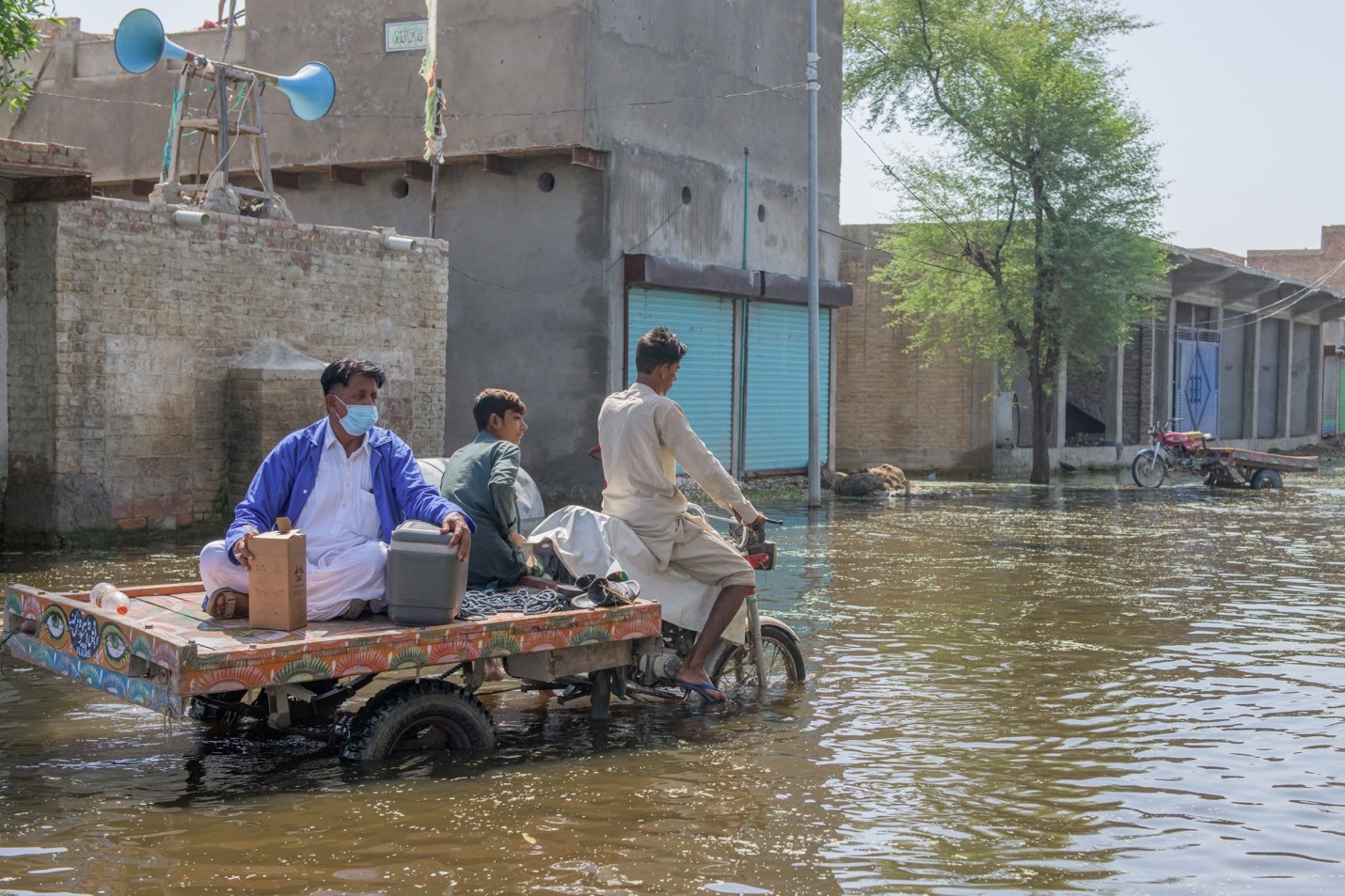
إسلام آباد، 26 أيلول/سبتمبر 2022 - لا يزال تطعيم الأطفال ضد الأمراض التي تهدد الحياة بالخطر وسط أزمة فيضانات مدمرة أمرًا صعبًا. وقد تكبَّد القائمون على التطعيم في إقليم السند مشقة رحلاتٍ صعبةٍ، حيث يُبحرون في القرى التي غمرتها مياه الفيضان ويعبرون الجسور المكسورة للوصول إلى الأطفال الذين تعرضوا لسلسلة من الفاشيات الصحية منذ فيضان آب/أغسطس. وقد واجهت جهودُهم تحدياتٍ بسبب الظروف الصعبة، حيث لا تزال المناطق التي تعرضت للفيضان مغمورةً بالمياه في مشهد يشبه البحر.
وتعقدت أعمال القائمين على التطعيم بسبب ركود مياه الفيضان. وأدَّت صعوبة الوصول إلى المرافق الصحية العمومية التي تضررت إلى تعطُّل خدمات التمنيع الروتيني، وفقد المواليد فرصة الحصول على اللقاحات الأساسية الأولى - ومن المرجح أن يحدث ذلك لمزيد من المواليد في الأسابيع المقبلة.
وضمت الاستجابة للفيضانات بقيادة منظمة الصحة العالمية في مقاطعة السند حملات تطعيم طارئة ومخيمات صحية طارئة متنقلة في مستوطنات السكان النازحين داخليًا وفي المناطق المجاورة المتضررة من الفيضانات.
ويُكلف أكثر من 2500 من القائمين على التطعيم بتقديم خدمات التمنيع الروتيني في 23 مقاطعة من المقاطعات المتضررة من الفيضانات في إقليم السند.
استئناف حملات التلقيح الأساسية ضد شلل الأطفال في ظل تدابير وقائية صارمة ضد كوفيد-19
20 تموز/يوليو 2020 - أعيد إطلاق حملات التمنيع الأساسية ضد شلل الأطفال في إقليم شرق المتوسط هذا الأسبوع في ظل تدابير صارمة للوقاية من العدوى بفيروس كوفيد-19 ومكافحته، بعد توقف دام 4 أشهر لجميع حملات التلقيح، والتي اشتملت على الحملات الهادفة لوقف الفاشيات المستمرة لشلل الأطفال.
وقد استهلت باكستان اليوم حملة على نطاق مصغر للاستجابة لفاشية شلل الأطفال في مناطق مختارة، بهدف تلقيح ما يقرب من 000 800 طفل دون سن 5 سنوات.
وتلقَّى العاملون الصحيون التدريب على التدابير الوقائية والاحترازية لضمان سلامة العاملين في الخطوط الأمامية والأطفال وأسرهم، بما يتماشى مع المبادئ التوجيهية العالمية لمنظمة الصحة العالمية، والإرشادات التي أعدَّتها المنظمة خصيصاً لأنشطة التمنيع ضد شلل الأطفال في الإقليم. وتشمل التدابير المحددة تحري العاملين للكشف عن أعراض مرض كوفيد-19، وتوفير الكمامات ومطهرات اليد، والبروتوكول الجديد للتباعد الجسدي في حملات طرق الأبواب ووضع العلامات على الأصابع، والإبقاء على مسافة داخل المنازل، والتقليل من الاتصال مع الأطفال أثناء تلقيحهم. ولن يقوم بتلقيح الأطفال في الحملات من منزل إلى منزل إلا العاملون من المجتمعات المحلية لمنع وصول عدوى فيروس كورونا-سارس-2 إلى المناطق غير المصابة.
Pakistan prepared for polio high season
 A child receives two drops of polio vaccine during the May vaccination campaigns in Lahore, Pakistan. WHO Pakistan/Anam Khan31 July 2017 – With 5 national campaigns since October 2016, Pakistan is well positioned to face the challenges ahead.
At the end of May 2017, more than 38 million children under the age of 5 were vaccinated against polio in Pakistan. During the campaign, over 250 000 trained polio workers went from house to house across the length and breadth of the country to vaccinate children against the crippling disease.
This was one of 5 country-wide vaccination campaigns that took place during the 2016/2017 “low season” for poliovirus transmission. From October to May when temperatures are low in Pakistan, the virus remains less active, giving polio eradication experts the opportunity to get ahead of the virus.
The end of the May polio campaign marked the start of the “high season” for poliovirus transmission. The ability of the poliovirus to infect children increases in high temperature and during heavy rainfall. As a result, viral circulation is expected to be higher from June to September.
Reaching more children
With steady gains in the proportion of children vaccinated during the 2016/2017 low season, the May campaign achieved an overall goal of vaccinating 92% of the targeted children, according to independent post-campaign monitoring. The highest vaccination coverage rates were observed in Khyber Pakhtunkhwa (KP), Sindh and the Federally Administered Tribal Areas (FATA), some of the highest risk areas of the country, with rates increasing from 84% to 95% in KP and 77% to 93% in Sindh in the last 9 months.
However, more work is needed to bring vaccination rates up to 95%, the level identified as that needed to stamp out the virus for good. FATA remains the only region consistently over 95% in the last 3 campaigns, with Balochistan, Islamabad, Azad Jammu, Kashmir and Gilgit Baltistan not reaching the benchmark.
With the high season underway, Pakistan is well-positioned to respond to these remaining gaps and challenges. The current situation remains the best we have ever seen in the country, with the virus geographically limited. The number of cases has declined from 306 in 2014 to 53 in 2015 and to 20 in 2016. So far this year, the number of polio cases reported in Pakistan is three (compared to 13 the same time last year). However, this progress means that there is more to lose than ever before. The low season campaigns put the polio programme in a better position with which to fight the virus through the high season.
Poliovirus in the environment
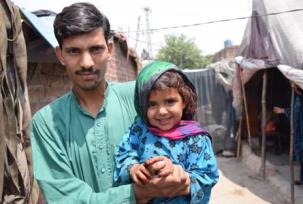 A father and daughter proudly show off the purple dot of ink on her little finger to show that she has been vaccinated against polio in the May campaign. WHO Pakistan/Anam KhanWhile the number of new wild poliovirus cases remains record low, the environmental surveillance system indicates the virus remains a serious threat to children, with the proportion of samples being tested positive for poliovirus reaching 18% as of May this year compared to 10% as of May 2016. In particular, the environmental presence of the virus has increased in the Quetta block, Karachi and the twin cities of Islamabad-Rawalpindi. The programme is systematically addressing and responding to these challenges by focusing on reaching missed children and continuously improving campaign quality to remove every last hiding place of the virus.
Preparing for the next low season
Government leadership is fully committed to the National Emergency Action Plan (NEAP), implemented via focused Emergency Operations Centres at national and provincial levels, with emphasis on evidence-based decision making, a one-team approach between all of the partners of the GPEI and the government, highlighting the essential role of front-line workers at the centre of the polio eradication effort, effective oversight of performance management and accountability, and coordination across the common Afghanistan-Pakistan epidemiological block. As eradication moves into the final stage, seamless cross-border coordination with Afghanistan, that has had 4 polio cases so far this year, becomes ever more critical to success in both countries.
Related link