

Select your language
Multilingualism
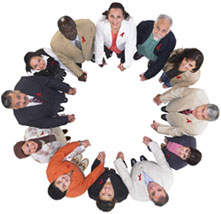 The Regional Office’s multilingual web site, publications and other resources ensure that health information reaches the people who need it in the languages they can understand. This makes access to health information both more equitable and effective, and ensures community participation, engagement and leadership.
Multilingual communication bridges gaps and fosters understanding between people. It allows WHO to more effectively identify the needs of people, respond to the challenges they face, guide public health practices, reach out to international audiences, and achieve better health outcomes worldwide. In this way, multilingual communication is an essential tool for improving health at all levels – individual health, community health, and global health
Three official languages
The three official languages of WHO in the Region are Arabic, English and French. Since the adoption of a 1998 World Health Assembly resolution, all governing bodies’ documents and corporate materials have been made available online in all official languages.
The World Health Assembly's most recent resolution on multilingualism, adopted in 2008, repeats the call for linguistic diversity across the Organization, and a five-year plan of action (2008–2013) is under way to meet this challenge.
WHO's multilingual web site
The Regional Office’s multilingual web site was launched in May 2012 in the three official languages. Web site content is carefully selected, edited, adapted and tailored to meet the needs of different readers and linguistic groups. While all essential content is available in the three official languages, some technical content is published only in some languages. Decisions on what content to publish in which language(s) are made based on meeting the needs of countries, and in response to emergency situations and crises.
Building partnerships for multilingualism
While the Regional Office gives priority to its three official languages, it recognizes that the people of the Region live and work in many more. Amazigh, Dari, Farsi, Kurdish, Pashto, Swahili, Somali, and Urdu are just a few examples. In order to broaden its reach to these audiences, the Regional Office grants licenses to external entities to translate and publish its health information in other national languages.
WHO is always seeking opportunities to expand its multilingual information, and external publishers are key partners in this process. WHO welcomes requests from health ministries, nongovernmental organizations, universities and commercial publishing houses to publish multilingual versions of its publications. As a result of such partnerships, WHO publications have been translated and published in over 63 different languages.
To find out more about this process or apply for a translation license for one or more WHO titles, contact us.
Connecting to multilingual content
Multilingual products are visible in many forms at WHO: web pages, publications, libraries, research tools, communications materials and official documents. Users can find and access these products in a number of languages using the structure of the web site, the search box, and the information resources interface (for publications in official and non-official languages).
Related links
Key multilingual publications