WHO EMRO
  • Regions
WHO EMRO
WHO Regional websites
Africa Africa
Americas Americas
Asie du Sud-Est Asie du Sud-Est
Europe Europe
Méditerranée orientale Méditerranée orientale
Pacifique occidental Pacifique occidental
  • Home
  • Health topics
  • Health topics
  • Data and statistics
  • Media centre
  • Information resources
  • Countries
  • Programmes
  • About Us
Search Search

Search

- All words: Returns only documents that match all words.
- Any word: Returns documents that match any word.
- Exact Phrase: Returns only documents that match the exact phrase entered.
- Phrase Prefix: Works like the Exact Phrase mode, except that it allows for prefix matches on the last term in the text.
- Wildcard: Returns documents that match a wildcard expression.
- Fuzzy query: Returns documents that contain terms similar to the search term. For example: If you search for Kolumbia. It will return search results that contain Columbia or Colombia.
  • Global
  • Regions
    WHO Regional websites
    Africa Africa
    Americas Americas
    Asie du Sud-Est Asie du Sud-Est
    Europe Europe
    Méditerranée orientale Méditerranée orientale
    Pacifique occidental Pacifique occidental
Search Search

Search

- All words: Returns only documents that match all words.
- Any word: Returns documents that match any word.
- Exact Phrase: Returns only documents that match the exact phrase entered.
- Phrase Prefix: Works like the Exact Phrase mode, except that it allows for prefix matches on the last term in the text.
- Wildcard: Returns documents that match a wildcard expression.
- Fuzzy query: Returns documents that contain terms similar to the search term. For example: If you search for Kolumbia. It will return search results that contain Columbia or Colombia.

Select your language
  • اللغة العربية
  • Français
WHO EMRO WHO EMRO
  • Home
  • Health topics
    • All Topics »
    • A
    • B
    • C
    • D
    • E
    • F
    • G
    • H
    • I
    • J
    • K
    • L
    • M
    • N
    • O
    • P
    • Q
    • R
    • S
    • T
    • U
    • V
    • W
    • X
    • Y
    • Z
  • Health topics
  • Data and statistics
  • Media centre
  • Information resources
  • Countries
  • Programmes
  • About Us
  1. Tuberculosis

Tuberculosis

Introduction

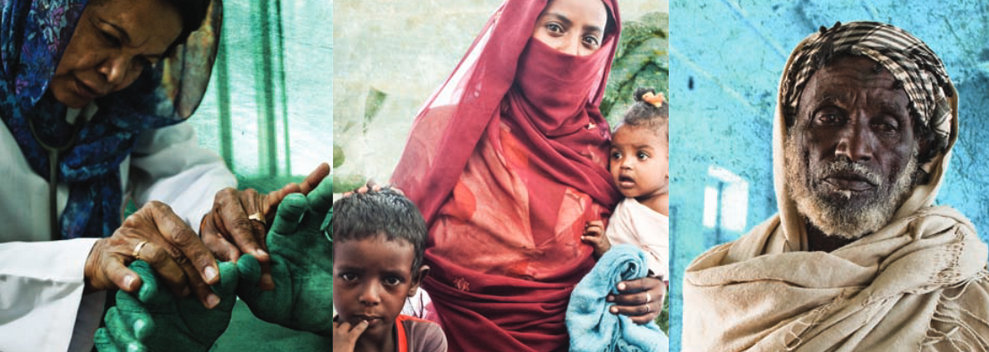
sudan-tb-portraits

What is TB?

Tuberculosis (TB) is caused by bacteria (Mycobacterium tuberculosis) that most often affect the lungs. TB is spread from person to person through the air. When people with lung TB cough, sneeze or spit, they propel the TB germs into the air. A person needs to inhale only a few of these germs to become infected. About a quarter of the world's population has latent TB, which means people have been infected by TB bacteria but are not (yet) ill with the disease and cannot transmit the disease.

Tuberculosis is curable and preventable

Read the tuberculosis factsheet

end-tbSustainable Development Goal target 3.3 includes ending the TB epidemic by 2030. The End TB Strategy defines milestones (for 2020 and 2025) and targets (for 2030 and 2035) for reductions in TB cases and deaths. The targets for 2030 are a 90% reduction in the number of TB deaths and an 80% reduction in the TB incidence rate (new cases per 100 000 population per year) compared with levels in 2015. The milestones for 2020 are a 35% reduction in the number of TB deaths and a 20% reduction in the TB incidence rate. The strategy also includes a 2020 milestone that no TB patients and their households face catastrophic costs as a result of TB disease.
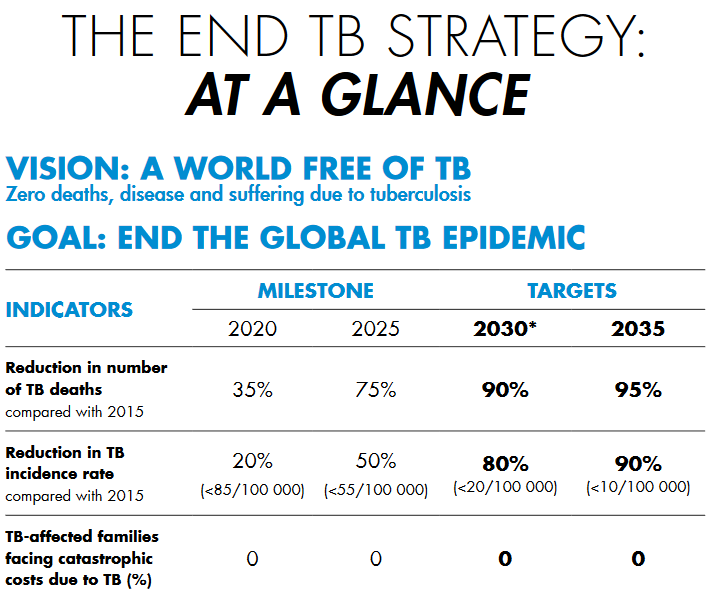
SDG target 3.3 includes ending the TB epidemic by 2030

The burden of TB in the Eastern Mediterranean Region is estimated at 810 000 cases annually, In 2018, only 537 761 cases were reported, which represents only 65% treatment coverage. Of the estimated 38 000 drug-resistant cases, only 4666 received treatment meaning that around one third of estimated cases were either undiagnosed, or diagnosed but not notified to the national TB programme. For multidrug-resistant or rifampicin-resistant tuberculosis, the detection rate is only around 13% of estimated cases.

Anti-TB medicines have been used for decades and strains that are resistant to one or more of the medicines have been documented in every country surveyed. Drug resistance emerges when anti-TB medicines are used inappropriately, through incorrect prescription by health care providers, poor quality drugs, and patients stopping treatment prematurely.

The missing third of TB cases represents a major challenge for TB control and care efforts. It reflects limited access to diagnostic services and/or failure to document all detected cases through a comprehensive surveillance system. Complex emergencies pose a serious challenge to ending TB in the Region.

Four countries (Afghanistan, Pakistan, Somalia and Sudan) are responsible for more than 80% of missed cases.

TB country profiles

WHO is working closely with countries, partners and civil society in scaling up the TB response. High-level political commitment and support is needed to address the key challenges of securing sustainable domestic financing, finding missing TB cases, addressing multidrug resistance and TB in children and fostering public–private partnership, establishing enabling environments and using efficient electronic surveillance systems and technologies.

Tuberculosis and COVID-19

As the world comes together to tackle the COVID-19 pandemic, it is important to ensure that essential services and operations for dealing with long-standing health problems continue to protect the lives of people with TB and other diseases or health conditions. Health services, including national programmes to combat TB, need to be actively engaged in ensuring an effective and rapid response to COVID-19 while ensuring that TB services are maintained.

COVID-19: Considerations for tuberculosis (TB) care

end-tb-strategy 

News

doctor-phc

Training workshop on programmatic management of drug-resistant tuberculosis
11 November 2021 

Webinar on latent TB infection management, prevention and screening in the Eastern Mediterranean Region
20–21 September 2021

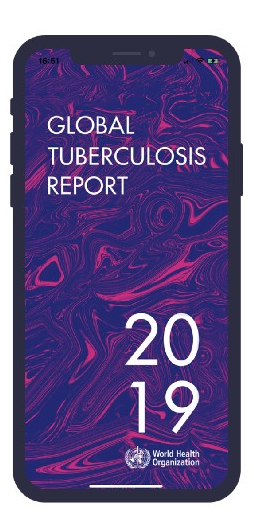
Global TB report app

tb-appGlobal TB report app

WHO's global TB report app provides easy access to the latest global TB data. The game-changing app brings to the users' fingertips current statistics and trends, country and region comparisons and quick search for indicators.

Some of the app’s main features include a summary of key facts about the TB epidemic and of global progress to end TB, detailed country and regional profiles, handy comparisons between countries and regions, and the ability to do a pinpoint search for statistics.

The app is available for free download on the Google Play Google Play and Apple App stores. It works both online and offline.

The data in the app is from WHO’s Global TB Report, which provides a comprehensive and up-to-date assessment of the TB epidemic, and progress in the response at global, regional and country levels. TB remains one of the top 10 causes of death worldwide and is the world’s top infectious killer.

Download on: AppStore | Google Play

World TB Day

Publications

Publications

thumbnail of tb in complex emergencies

Tuberculosis control in complex emergencies

thumbnail for strategic plan

Strategic plan for the prevention and control of multidrug-resistant and extensively drug-resistant tuberculosis in the Eastern Mediterranean Region

thumbnail for Tuberculosis control in the Eastern Mediterranean Region

Tuberculosis control in the Eastern Mediterranean Region

thumbnail for Tuberculosis: Voices of the unheard

Tuberculosis: Voices of the unheard

thumbnail for Diagnostic and treatment delay in tuberculosis

Diagnostic and treatment delay in tuberculosis

thumbnail for Framework for the Eastern Mediterranean partnership to stop TB

Framework for the Eastern Mediterranean partnership to stop TB

thumbnail for Endangering lives tuberculosis and mutation

Endangering lives tuberculosis and mutation

thumbnail for The human face of tuberculosis in Sudan

The human face of tuberculosis in Sudan

All publications

  • Site map
    • Home
    • Data and statistics
    • Health Topics
    • Media centre
    • Information Resources
    • Countries
    • Programmes
    • About Us
  • Help and services
    • Careers
    • Copyright
    • Privacy
    • Contact us
  • WHO Offices
    • WHO Headquarters
    • WHO African Region
    • WHO Region of the Americas
    • WHO European Region
    • WHO South-East Asia Region
    • WHO Western Pacific Region
WHO EMRO

Privacy policy

© WHO 2026