

Select your language
Islamic Republic of Iran provides mental health and psychosocial support services to people dealing with complicated grief and those experiencing loss during the COVID-19 pandemic
Introduction
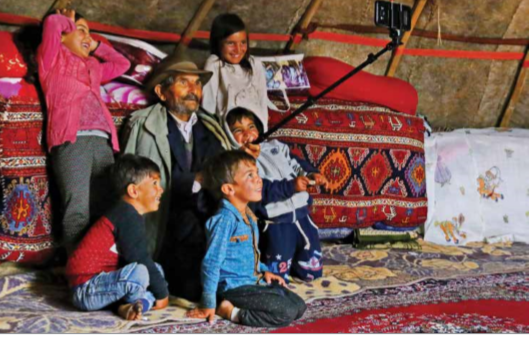
The Ministry of Health and Medical Education of the Islamic Republic of Iran has developed a set of measures aiming to support people who lost their loved ones in the COVID-19 pandemic. Grieving the loss of a loved one during the pandemic can be overwhelming. Safety precautions have placed limitations on traditional burial ceremonies and mourning rituals. Many families were deprived of the customary support or even had to face stigmatization when dealing with grief and loss. This increases the risk of complicated grief arising among some individuals which adversely impacts their mental health. Two main types of interventions were designed for the prevention of complicated grief and supporting coping among people experiencing loss.
Providing opportunities for the bereaved to mourn safely
Hospital staff was trained on delivering bad news and communication with family members of the deceased. In addition, the divisions in charge of handling bodies and safe burial received guidelines to be considerate towards emotional, cultural and religious matters alongside keeping up with safety protocols. At the same time family members were given guidance on the safe ways to commemorate their lost loved ones and organizing funerals.
Structured psychological counselling to support coping better with loss
Family members of people deceased from COVID-19 were offered face-to-face counselling sessions performed under safety standards of the Ministry of Health. Referral pathways for individuals in need of more specialized (psychiatric) care were also developed.
The project was delivered through collaboration between the Department for Mental Health and Substance Abuse of the Ministry of Health and Medical Education (as the focal point of the project), the Iranian Psychiatric Association, and Iran University of Medical Sciences who developed guidelines, training materials and workshops, and the workflow. Mental health staff of all 63 medical universities, covering all 31 provinces were trained through video-conference sessions.
Conclusion
Counselling sessions allowed for the detection of psychiatric and substance use disorders as well as finding cases of domestic violence. They also provided an opportunity to identify and refer families in need of social and financial support.
Although some family members were not eager to attend sessions due to cultural beliefs, others who lacked social support and opportunities to express their sorrow have appreciated the service and reported feeling better afterwards. Some families would have preferred group sessions, which are not yet feasible due to physical distancing measures.
Some of the individuals invited for the counselling sessions were unable to attend due to fear of virus transmission. Telephone-based counselling services were offered for this group.
World No Tobacco Day 2018
27 May 2018 – This year’s World No Tobacco Day 2018 campaign focuses on tobacco and heart disease. Cardiovascular disease is the leading cause of death and disease in most countries in WHO’s Eastern Mediterranean Region. In 2015, cardiovascular disease claimed nearly 1.4 million lives in the Region. Estimates show that in the next decade, deaths from cardiovascular disease, which in the Eastern Mediterranean Region is mostly linked to ischemic heart disease, will increase more significantly than in any other region of the world except Africa.
Tobacco use is a key risk factor for developing coronary heart disease, stroke and peripheral vascular disease. In the Eastern Mediterranean Region, tobacco use is alarming. Around 38% of men and 4% of women (21% of adults on average) are smokers. In some countries, as many as 52% of men and 22% of women smoke. Smoking among youth is particularly worrying, reaching 42% in boys and 31% in girls. This includes smoking shisha, which is more popular among youth than cigarettes. Smoking is expected to rise by 2025 in WHO’s Eastern Mediterranean Region, contrary to the trend for all other WHO regions. This will lead to an escalating epidemic of cardiovascular disease regionally.
Iran celebrates the World AIDS Day 2012: reaching zero HIV cases by 2015
Joining hands with the world community, the Ministry of Health and Medical Education celebrated the WAD 2012 under the theme of reaching zero HIV cases by 2015. The ceremony was attended by H.E. the Minister for Health and Medical Education, Deputy for Health, Director of the Center for Disease Control, high rank officials, chancellors of the medical universities, WHO, UNAIDS as well as heads of other UN agencies, media, and activists in the prevention and control of HIV/AIDS.
The celebration inaugurated by Dr Mesdaghina, Deputy for Health, welcome remarks and a summary on the current status of HIV/AIDS in I.R. Iran, challenges and achievements, as well as future plan to reach zero HIV/AIDS cases. He referred to Iran’s achievements for harm reduction among injecting drug users in and outside prisons, as the best practices in the world, and establishment of triangular clinics, drop-in centers for people at high risk, and counseling centers by the MOHME. He said the United Nations fund as well as GFATM allocated budget has decreased and this will be a serious threat for poor countries.
He explained about the national HIV/AIDS prevention and control programme, implemented in 3 phases with involvement and contribution of different authorities and stakeholders, by: increasing public awareness, providing free services in riangular clinics and counseling centers and methadone therapy, harm reduction, control and prevention of sexually transmitted diseases and risky behaviors, strengthening the infrastructures, safe blood transfusion, voluntary HIV test, yndromic surveillance and data management. There is an increase among women through sexually transmitted infections which needs immediate attention and consideration to avoid 3rd wave of HIV/AIDS infection.
The programme continued with delivery of the message of Secretary General, message of the UNAIDS Executive Director, as well as the message of the WHO Regional Director.
Dr Jihane Tawilah, the WHO representative in I.R. Iran, delivered the Regional Director’s message which was emphasizing on the HIV test: HIV testing and counseling services are an imperative gateway to HIV prevention, treatment and care. By knowing their HIV status, people living with HIV can access treatment and care services. With counseling and necessary behavior change interventions, people living with HIV can also prevent further transmission of the virus to others; and people who are HIV negative can assert their personal choices, which can help them maintain a life without HIV.
By the end of the message, Dr Tawilah appreciated the MOHME’s achievements and invaluable experience in prevention and control of HIV/AIDS especially addressing high risk groups and asked for technical input for the EMR countries. She also indicated that the problem of HIV in Iran is important and there is need of scale up of targeted interventions as well as cultural and political support.
In her remarks, the Minister for Health and Medical Education also referred to this year theme “reaching zero HIV/AIDS cases by 2015” as an ambitious goal, hard to achieve but not impossible like what has been done for elimination of malaria and polio. By looking at the HIV/AIDS prevalence history in the country and Iran’s achievements and significant efforts to prevent and control it, reaching to zero HIV/AIDS cases would be feasible. She referred to national HIV/AIDS programme, presented by Dr Mesdaghinia, and emphasized that prevention and control of sexually transmitted diseases and risky behaviors are the most important issues which needs proper planning and implementation through the referral system and family physician programme. According to the collected information and identified cases, there is a rise among women. This
can be also because of better surveillance system. The Minister also appreciated WHO’s efforts and technical support to the programme as well as participation and contribution of other UN agencies in Iran.
This year, a memorial postal stamp was revealed on the occasion of the WAD and with the print of the theme. It was revealed by the Minister and the WHO representative and other authorities and heads of UN agencies.
The ceremony continued with the speech of other national authorities including deputy to Minister of Cooperatives, Labour and Social Welfare, representative from Drug Control Headquarters, Head of State Welfare Organization and Head of Center for Disease Control.
The ceremony ended by giving appreciation notes to activists who had significant contribution in preventing and controlling HIV/AIDS.