


Select your language
Conference promotes safe childbirth, 16 July 2012
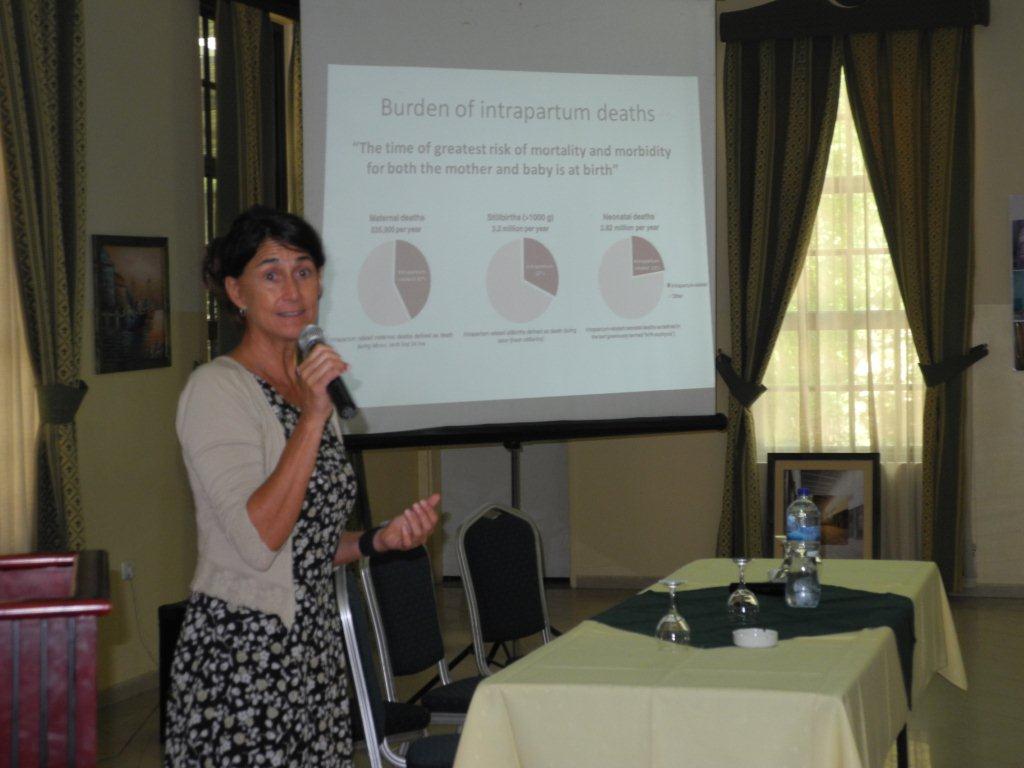 The safe childbirth methods programme promotes a midwifery-led approach for low-risk deliveries and improved early detection of complications during the perinatal periodGaza Strip, 16 July 2012 – Ministry of Health childbirth professionals presented the results of an innovative programme introduced into two hospitals in the Gaza Strip, with the technical support of WHO, to improve quality of care for mothers and newborn infants. The programme promotes a midwifery-led approach for low-risk deliveries and improved early detection of complications during the perinatal period. After the programme’s successful implementation in Nasser Hospital in Khan Younis (900 deliveries per month) and Tel al Sultan Hospital in Rafah (600 deliveries per month), representing about 30% of all deliveries in the Gaza Strip, the Ministry of Health to decide to introduce the programme into all maternity units in the Gaza Strip, including those newly established.
Children's health in the Gaza Strip indicators, January 2012
|
2000 |
2010 |
Change since 2000 |
|||||||||||
|
Palestine |
Gaza Strip |
West Bank |
Palestine |
Gaza Strip |
West Bank |
||||||||
|
Total Fertility Rate |
5.93 |
6.8 |
4.6 |
4.2 |
4.9 |
3.8 |
Positive |
||||||
|
Maternal Mortality per 100,000 live births (statistics are unreliable) |
42 (1998 study cited by MoH) |
29 (MoH and UNFPA, 2011, unpublished) |
Positive |
||||||||||
|
Infant Mortality Rate |
25.5 |
27.3 |
24.4 |
20.6 |
23.0 |
18.8 |
Positive |
||||||
|
Under-5 Child Mortality |
28.7 |
31.2 |
27.2 |
25.1 |
29.2 |
22.1 |
Positive |
||||||
|
Anaemia in children 6- 59 months |
38.0% (2002) |
41.6% |
35.5% |
19.4% |
25.6% |
13.4% |
Positive |
||||||
|
Exclusive breastfeeding 0-5 months |
16.7% |
14.5 |
17.9 |
26.5% |
25.3 |
27.4 |
Positive |
||||||
|
Under-5 Stunting (low height for age) |
7.5% |
7.9 |
7 |
10.6% |
9.9% |
11.3% |
Negative |
||||||
|
Under-5 Wasting (low weight for height) |
1.4% |
1.7 |
1.5 |
3.3% |
3.8% |
2.8% |
Negative |
||||||
|
Under-5 Underweight |
2.5% |
3.2 |
2.6 |
3.7% |
2.5% |
3.8% |
Negative |
||||||
|
Median age in years |
17.2 |
19.4 |
|||||||||||
Access to essential medicines and disposables in the Gaza Strip, 2012
While shortages of at least 10% of essential drugs have been reported by the MoH in West Bank and Gaza since the year 2000, during 2011 the MoH-Gaza reported average monthly zero stock levels of 32% of essential drugs and 22% of essential medical disposables throughout the year, indicating a crisis in provision of medical supplies. At the end of 2011, 148 of 480 essential drugs (31%) and 123 of 700 medical disposables (17.5%) were at zero stock in Gaza.
In December, the MoH-Gaza appealed directly to WHO, the ICRC and other international organizations to intervene to solve the shortages problem. Four items --- two powders and two solutions for decalcifying and disinfecting two types of hemodialysis machines --- that are required to maintain treatment for 450 chronic kidney patients were at critical levels, sufficient only until January 7, 2012. Other drug items at zero stock included: 20% anti infective drugs, 13.5% chemotherapy drugs, 10% urology and kidney dialysis, 5.5% ophthalmological preparations, 7% psychotherapeutics, and 4% for cardiovascular.
The causes of shortages are complex and include a combination of budgetary problems faced by the MoH in Ramallah, disconnection and distrust between West Bank and Gaza MoH information lines as a result of internal political issues, personnel changes of Central Drug Store staff in Gaza, and bureaucratic and transportation lags in the procurement and supply chain.
Critical kidney dialysis machine supplies
The ICRC, which has a limited $3.1M budget for medical disposables, provided 86 emergency/surgical care items to the MoH-Gaza in December; 15 of the items had been at zero stock. However, 123disposables were still reported to be at zero stock level, including non-drug supplies vital for the operation of kidney dialysis units (e.g., filters, adult and pediatric blood lines, and fistula needle), 33 surgical orthopedic items, and 40 items necessary for the operating theater.
Following an appeal by WHO and several human rights organizations to keep operations of the Artificial Kidney Unit (AKU) at Shifa Hospital from closing down due to shortages of filters, the MoH-Ramallah provided Gaza with 2000 hemodialysis filters, a two-week supply, with logistical assistance from the ICRC. Also, the MoH-Gaza received a donation of medical disposables from Islamic Relief through Egypt which included 6000 dialysis filters, at a cost of NIS 70,000.
Drugs supply and impact on patients
The MoH-Gaza uses an Essential Drugs list (EDL) of 480 items and an Essential Medical Disposables list of 700 items, deemed necessary for the basic functioning of public health services in Gaza. The EDL differs somewhat in the West Bank, which lists 523 essential drug items, reflecting additional needs of specialized hospital services. The MoH-Gaza is responsible for reporting shortages and requesting replenishments of stocks, usually every eight weeks. Procurement and provision of Essential Drugs is centralized by the MoH in Ramallah, which then distributes to MoH storage facilities in both the West Bank and Gaza. However, according to MoH-Gaza, only 389 drug items were in fact supplied by the MoH in Ramallah to Gaza during the year, sent in five shipments (valued at USD 6.1 million), compared to the cumulative total of 945 drug items (valued at USD 31 M) requested by MoH-Gaza, a provision of about 41% of items requested.
Physicians prescribe according to the chemical name of drugs on the Essential Drug list, so that if a drug is unavailable in the Primary Health Clinic pharmacy, the patient may try to find their prescription in another MoH facility, or UNRWA or NGO facility, or buy the drug out-of-pocket at a retail pharmacy. For elderly chronic patients, the monthly expense of purchasing drug prescriptions at full price can be prohibitive.
NB: No figures for zero stock were released by MoH-Gaza for October and November.