





Select your language
UN agencies call for respect of health premises and the right to health care
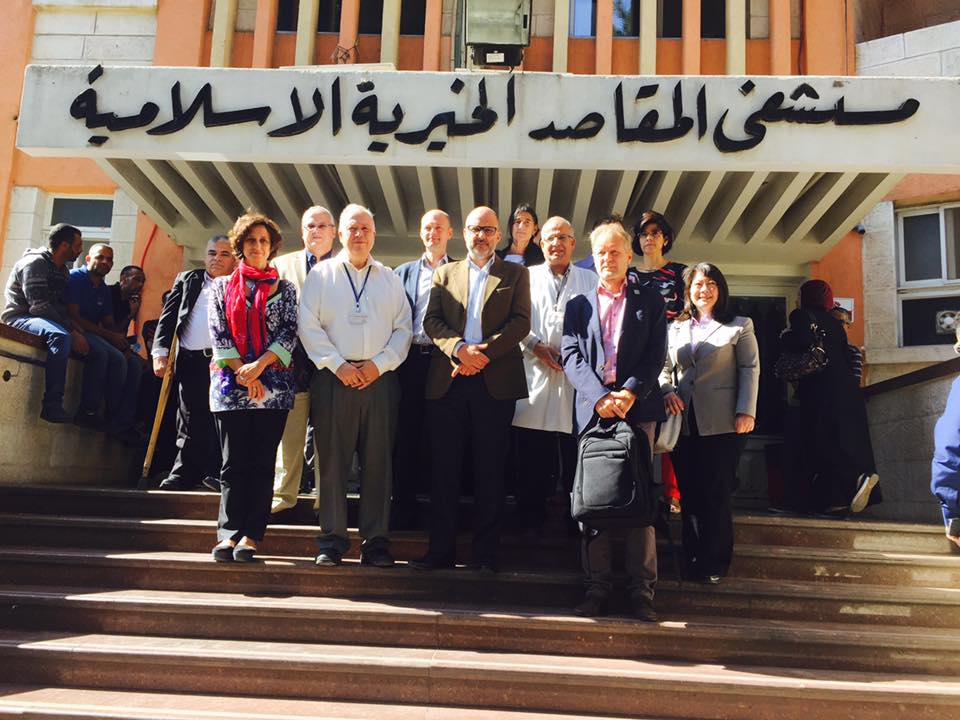 Photo credit: Al-Makassed hospital3 November 2015 – Jerusalem: The World Health Organization (WHO) facilitated a visit by the Humanitarian Coordinator for the occupied Palestinian territory (OPT), Robert Piper, to Makassed hospital in East Jerusalem on 1 November. Senior UN officials from the United Nations Relief and Works Agency, United Nations Educational, Scientific and Cultural Organization, UNICEF, United Nations Population Fund, and the United Nations Office for the Coordination of Humanitarian Affairs accompanied the visit. The Director of the hospital, Dr Rafiq Al Hussaine briefed them on a series of incidents that have hindered and delayed access to health care at the hospital.
Makassed hospital is the main referral destination for Palestinians from West Bank and Gaza, with 250 beds, and 750 employees. On 27 and 28 October armed police forcibly entered the hospital to reportedly obtain the medical files and security camera footage relating to a child who had been treated in the hospital before, and who is currently in Israeli custody. On 29 October, Israeli security forces fired tear gas canisters and other projectiles inside the hospital premises when medical staff were holding a peaceful protest against the recent events. The search operations disrupted health services and caused panic among patients and medical staff. In addition, medical services are being impeded by checkpoints recently established near Augusta Victoria Hospital, following the escalation in violence in East Jerusalem. These obstacles have delayed access of patients and staff.
Dr Gerald Rockenschaub, the WHO Head of Office, pointed out the importance of respecting the right to health by all parties, based on the principles of international humanitarian law and human rights law. He called for protection of health workers to be able to provide health care to all those in need.
“The right to health is a fundamental human right which Israel must respect and protect at all times,” Mr Piper concluded.
Related link
UN Agencies call for respect of health premises and the right to health care
Ministry of Health launches 5-year mental health strategy, June 2015
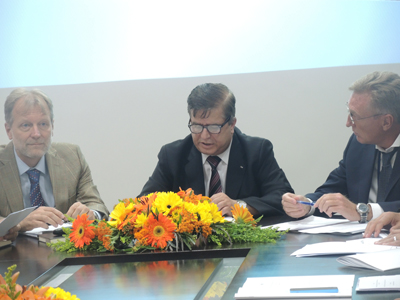 15 JUNE 2015: RAMALLAH - The Ministry of Health, supported by the European Cooperation and WHO, launched the National Mental Health Strategy for 2015–2019 today at a ceremony in Ramallah. A diverse group of stakeholders and partners collaborated to develop the new strategy, which uses a comprehensive public health approach to address the specific mental health needs of Palestinians in the West Bank and Gaza, especially relevant in view of the ongoing violence of protracted occupation.
The human rights-based strategy emphasizes three priorities: trauma and crisis intervention, integration of mental health services in general health facilities and community-based mental health services. The five-year blueprint is expected to improve coordination among the many donors and server providers in the sectors.
Minister of Health H.E. Jawwad Awad highlighted the importance of continued international support for Palestine’s efforts to meet international standards in health: “The collaboration and support of our partners helps us to ensure the sustainability of services so that every patient in Palestine will enjoy the full right to access high quality and safe health services, including mental health services.”
Mr. Paolo Curradi, the EU's acting Head of Cooperation, highlighted that ”a lack of investment in the mental health sector and a lack of awareness and understanding in society contribute to the stigmatization of people in mental health distress, and affects their well-being. This five-year road-map is concerned with placing the health and well-being of the individual at the center, rather than his illness."
WHO global and regional action plans provided a basis for the multi-sectoral approach which approaches mental health through coordinated services of the health, education, and social sectors, stressing promotion, prevention, treatment, rehabilitation, care and recovery.
For further information please contact:
WHO West Bank and Gaza office: 02-540-0595
Email:
Ministry of Health
Director of International Cooperation, Maria Y Al-Aqra'
Tel: 00972 9 2387275 /
Email:
Related links
Arabic Version of the Press Release