

Select your language
World Mental Health Day in West Bank: “My Mental Health First”, October 2017
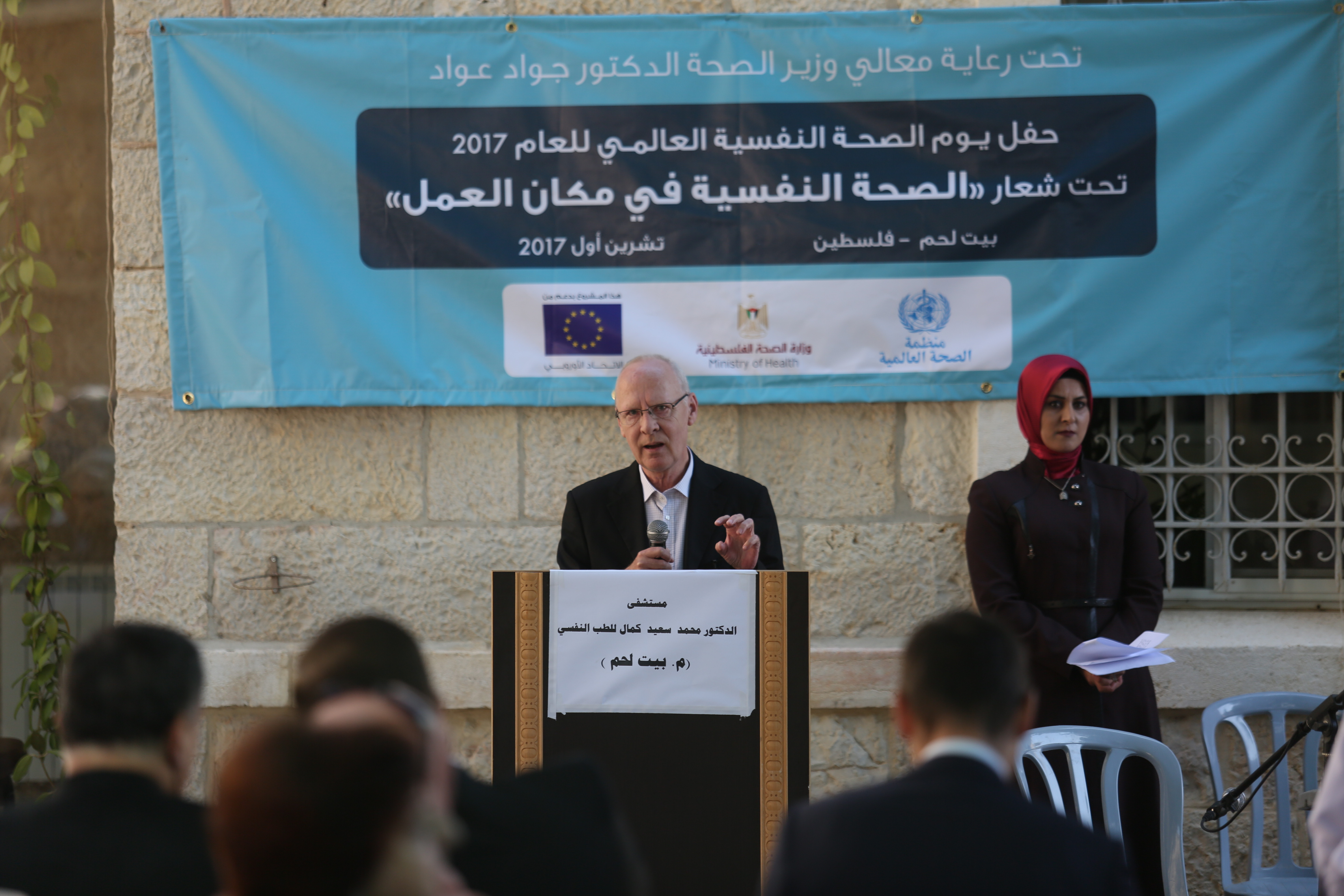
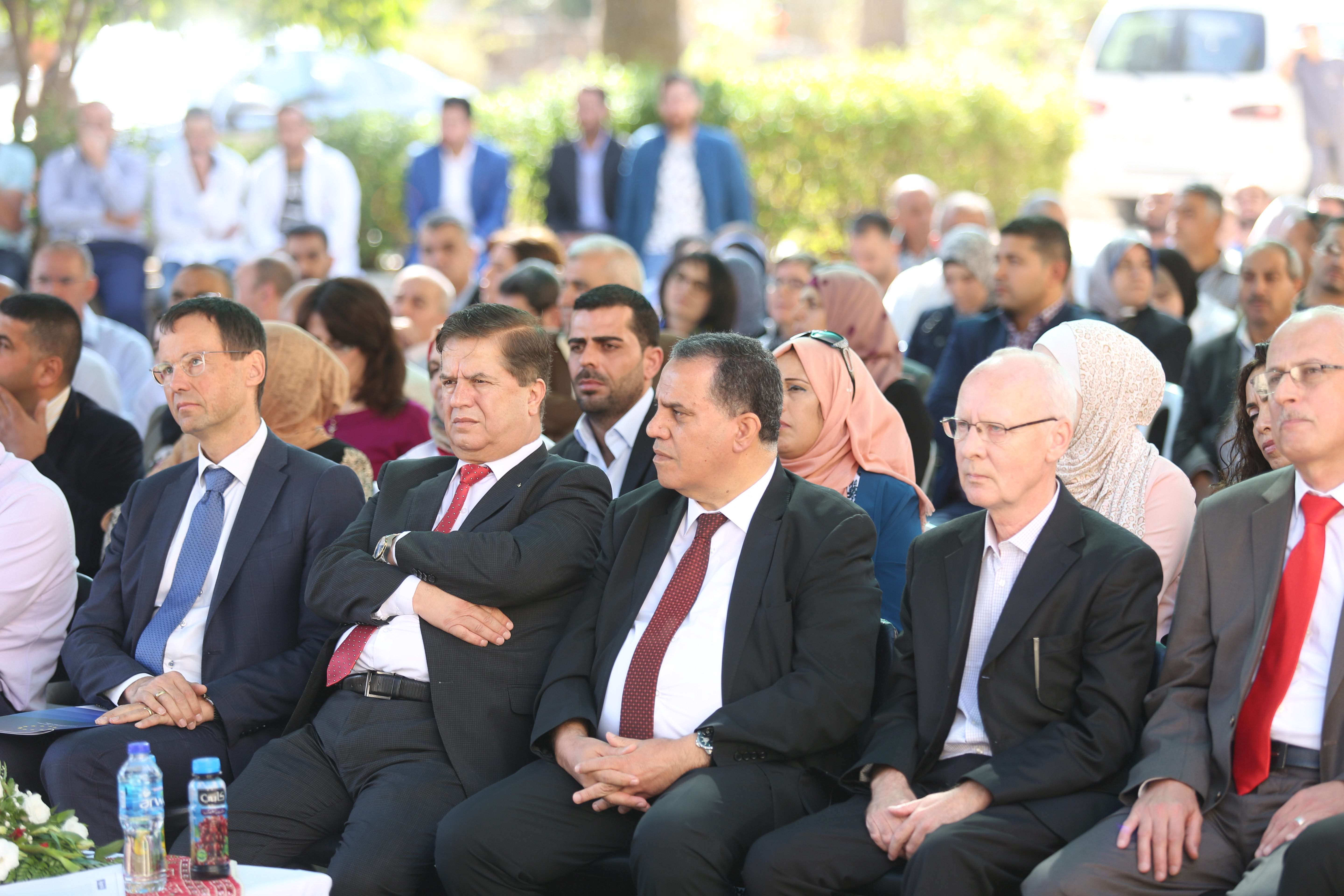 23 October 2017, Bethlehem – Minister of Health Dr Jawad Awad joined representatives from the World Health Organization and European Union to celebrate World Mental Health Day in Bethlehem Psychiatric Hospital. The hospital hosted a bazaar displaying handmade crafts, candles and embroidery prepared by the hospital’s service users. The event was attended by approximately 200 participants from civil society, the Palestinian Ministry of Health, UN agencies, local institutes and universities. World Mental Health Day is observed in October every year, to raise awareness of mental health issues and mobilize efforts to improve mental health.
Dr Awad said: “This hospital is the first psychiatric hospital in the Middle East. It is the only hospital in Palestine that provides practical training for mental health students and occupational therapy for mental health service users. The Ministry of Health is celebrating World Mental Health Day to demonstrate our commitment to integrating mental health in all health facilities. We are also committed to adopting occupational therapy for mental health service users to assure their integration in society.”
A celebration also took place last week in Gaza, with a football tournament to raise awareness about mental health issues. The two events are part of an ongoing project funded by the EU Building Palestinian resilience: improving psychosocial and mental health responses to emergency situations. This project addresses important gaps in the development of mental health services in Palestine, particularly in relation to mental health emergency response in Gaza, and seeks to build the capacity of health institutions to detect and respond to mental health needs.
 Explaining more on the project, Dr John Mahoney, WHO Mental Health project manager said: “Mental ill health is extremely common and will affect up to 300,000 women, children and men in the West Bank. Furthermore, people with long-term medical conditions (such as heart disease or diabetes) will have much worse outcomes if they also suffer from depression. Studies have shown up to three in ten people with long-term medical conditions also suffer from depression or other mental illnesses. Of particular concern, a recent study in the West Bank and Gaza showed that 30% of Palestinian women suffer with depression after childbirth. This can have a serious effect on both the mother and child”. Dr Mahoney expressed the sincere gratitude of WHO to the EU for its ongoing support since 2007 to improve the mental health of Palestinians.
Tomas Niklasson, the EU Deputy Representative, underlined the importance of mental health support to Palestine. He stated: “The EU’s support to mental health in Palestine is driven by facts and realties. Mental health is important at every stage, from childhood and adolescence through adulthood. In Palestine, more people are suffering from high levels of stress and mental health problems. This project will provide tangible support to Palestinians with regards to mental health services. This is vital not only for the short run, but also to build the foundations of a future Palestinian State in which all citizens are treated equally and have access to health services.”
Palestinians experience high levels of stress due to the protracted occupation, which is taking a heavy toll on mental health. Despite the high need and demand, there remains a substantial gap in the provision of mental health services and psycho-social interventions in the occupied Palestinian territory. The present EU-funded project aims to build the capacity of mental health services in both Ministry of Health facilities and primary health clinics of the United Nations Relief and Works Agency for Palestine Refugees in the Near East.
For further information, please contact:
Rajiah Abu Sway
WHO, Jerusalem office
Tel: 00972547179037
email:
Related links:
Read the Press Release in Arabic
World Mental Health event in Gaza
World Mental Health Day 2017 in Gaza: “My Mental Health First”, October 2017
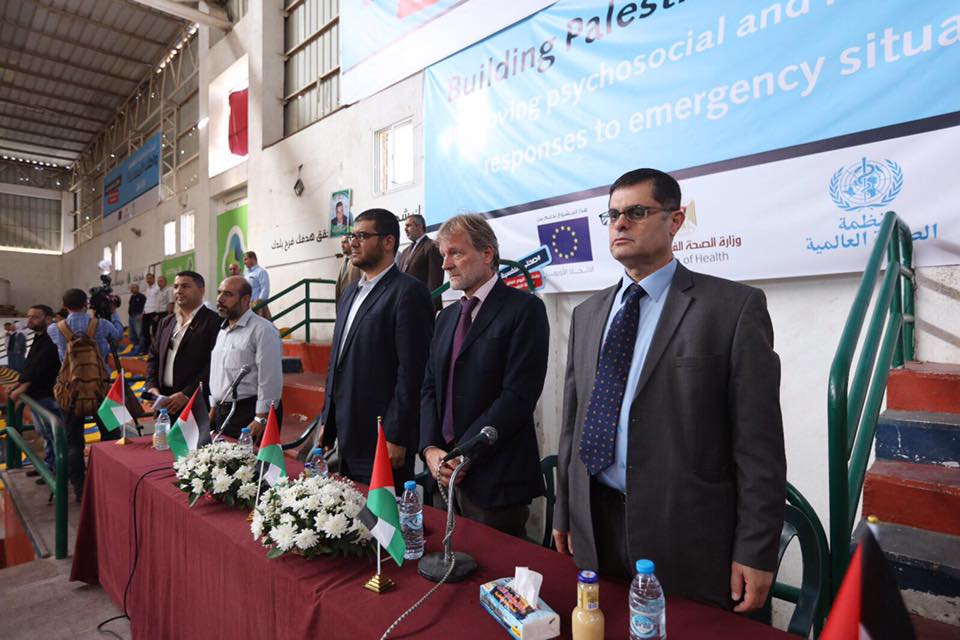 18 October 2017, GAZA – The World Health Organization (WHO), the European Union (EU) and the Ministry of Health (MoH) celebrated World Mental Health today in Gaza. The celebration had the theme “My Mental Health First”. This is part of the ongoing project “Building Palestinian resilience: improving psychosocial and mental health responses to emergency situations”, which is funded by the EU. This Project addresses important gaps in the development of mental health services in Palestine, particularly in relation to the mental health emergency response in the Gaza Strip.
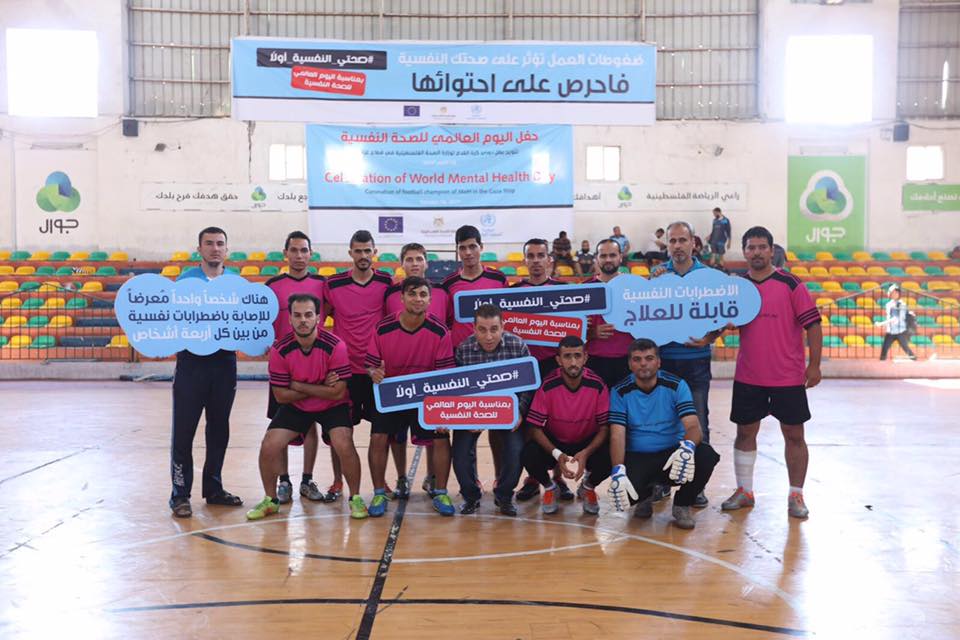
The day started with a football match between the team of Al-Rantisi pediatric hospital and Shuhada al-Aqsa Hospital. The two teams won the two days’ football tournament among MoH staff that took place earlier this week. The team of Shuhada Al-Aqsa Hospital won the game. The football match was followed by a bazaar that presented handmade crafts made by mental health service users at Gaza Psychiatric Hospital Day Care.
In his opening speech, Dr Yousef Abu Elreish, MoH representative, said “The goal of winning keeps the two teams going restlessly till the end of the game. And our goal at the Ministry of Health is to provide holistic mental health care to all Palestinians who are in need, and this goal will keep us going until we achieve it”.
The project will seek to mitigate the accumulated psychosocial consequence of the last three crises in Gaza, to build population’s resilience to withstand such crises and to continue personal and professional lives, and to increase key health institutions’ ability to respond to the mental health needs
Explaining more on the project, Dr Gerald Rockenschaub, WHO head of office in oPt, stated “Mental health problems are extremely common and will affect up to 400,000 women, children and men in Gaza. Furthermore people with long term medical conditions (such as heart disease or diabetes) will have much worse outcomes if they also suffer from depression. In Gaza and WB, around 30% of people with long term medical conditions attending PHC facilities also suffer from common mental health problems. Another recent study has shown that 30% of Palestinian women suffered from depression after the birth of their babies. This can have serious effects for both the mother and child”. In addition, he said that the WHO is extremely grateful to the EU who has been supporting the mental health of Palestinians since 2007.
 The event celebrated the World Mental Health Day, which is observed in October every year, with the overall objective of raising awareness of mental health issues and mobilizing efforts in support of better mental health. The World Health Organization (WHO) estimates that following Gaza conflict 2014 and the ongoing Israeli blockade, about 20% of the population of Gaza suffer from mental health problems and need short- to long-term support to recover. In addition, one third of people attending Palestinian Ministry of Health (MoH) Primary Health Care (PHC) centers in Gaza and the West Bank have suffered from common mental health problems. Despite this high need and demand for mental health services, there is still a huge gap between the mental health needs of the Palestinian population and the provision of mental health services and psycho-social interventions. The present EU funded project will significantly build the capacity of the mental health services in both Ministry of Health and UNRWA health facilities.
For further information, please contact:
Tel: 00972-598-944649
email:
Related links:
Read the Press Release in English
Read the Press Release in Arabic
Power outages, restrictions on movement and imports bringing Gaza health sector ‘to its knees’, warns WHO
WHO appeals for US$ 4.5 million for Gaza health response, mobilizes US$ 360 000 in emergency funds
17 July 2017 – Electricity cuts and continued shortages of medicines and medical supplies in the Gaza Strip are severely restricting the access of 2 million people to critical medical care, WHO has warned.
At least 30 hospitals, 70 primary health care centres and a blood blank are at risk of full or partial closure due to continued power outages and not enough fuel or spare parts for back-up generators.
“Without electricity, we have no ventilation during surgeries. This puts patients at increased risk of bacterial infections,” said Dr Marwan Abu Saada, Head of Surgery at Shifa Hospital.
Conditions quickly deteriorated after the closure of the Gaza Power Plant in mid-April and the reduction in the electricity supply from Israel to Gaza since late June.
Hospitals and health facilities face 18 to 20 hours of daily blackouts from the main grid.
This is having severe impacts on service delivery: reducing sterilization and cleaning of facilities; restricting access to desalinated water and diagnostic services; extending waiting times for surgery; and damaging equipment.
Essential medicines are also hard to come by. An estimated 36% of essential medicines and 32% of medical supplies are at zero stock levels or completely depleted.
The most vulnerable patients are particularly at risk; this includes adults and children suffering from cancer, phenylketonuria, cystic fibrosis, haemophilia, kidney failure, and hepatitis B and C.
Patients requiring treatment outside of Gaza are increasingly denied or delayed access to care by the Israeli authorities. On average in 2017, at least half (53%) of all applications for permits to exit Gaza through Erez checkpoint on medical grounds are routinely denied or delayed, according to the Palestinian Ministry of Health.
Fuel for generators is quickly running out. Available fuel stocks are unable to sustain lifesaving medical services beyond October 2017. Without functioning back-up generators, 113 newborns in neonatal intensive care, 100 patients in intensive care and 658 patients requiting haemodialysis twice or thrice a week will probably die.
The lack of fuel for electricity also has a severe impact on the supply of safe drinking-water and on the treatment and management of sewage. Access to clean water is becoming increasingly sporadic and the inability to treat raw sewage due to the electricity shortages poses a major public health hazard, increasing the risk of infectious diseases.
WHO has tapped into US$ 362 000 of internal emergency funds to scale up support to health authorities and prevent further deterioration of the health sector in Gaza. The funds will finance the purchase of fuel and life-saving drugs. WHO is also establishing an independent health sector monitoring system and leading the inter-agency response to health needs in Gaza.
“Deep power cuts, the lack of fuel for generators for hospitals, and the shortage in medicines and supplies are placing more lives at risk every day and bringing Gaza’s health sector to its knees,” said Dr Gerald Rockenshaub, head of WHO’s office in the occupied Palestinian territory. “We have received some internal funding to temporarily prevent a collapse of Gaza’s health system, but that is not enough. At least US$ 4.5 million in new humanitarian funding is needed to provide critical life-saving support to the health sector.”
The US$ 4.5 million required by WHO includes a request of US$ 2 million in the inter-agency appeal for US$ 8.5 million by health partners for priority interventions.
Related link