


Select your language
Crisis in the Libyan Arab Jamahiriya
 Fighting between pro-Qadhafi troops and opposition forces has escalated in north-west Libya, particularly in the areas around Ziltan, Khums, Brega and Misrata and parts of the Nafusa Mountains. Battle lines are constantly shifting: opposition forces have gained control over most of the western mountains and are reportedly advancing towards Tripoli.
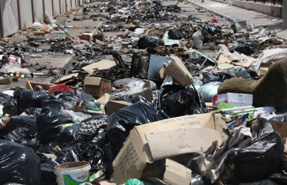
Municipal services in many cities have collapsed because of unpaid salaries and fuel shortages. Waste is piling up in the streets, increasing the risk of communicable disease outbreaks at a time when the country's disease surveillance and response system is weak.
The Libyan Government and the interim Transitional National Council have asked the UN Secretary-General for assistance in releasing frozen funds to purchase food and medical supplies for the whole of Libya.
UN declares famine in Somalia
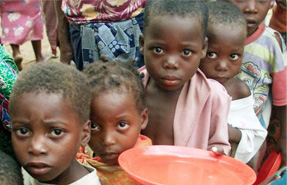 The United Nations declared that famine exists in two regions of southern Somalia: southern Bakool and Lower Shabelle. Across the country, nearly half of the Somali population - 3.7 million people - are now in crisis, of whom an estimated 2.8 million people are in the south.
"The situation will worsen further in the coming months due to poor harvests, malnutrition, unhygienic living conditions and infectious disease outbreaks, such as measles, acute watery diarrhoea and pneumonia," says Marthe Everard, WHO's Representative for Somalia. "In addition to buying food and supplying safe drinking-water and shelter, we need more resources to provide emergency health services to save the lives of thousands of Somalis."
Lack of safe drinking-water and overcrowding in refugee camps greatly increase the risk of acute watery diarrhoea and cholera outbreaks, as communities are forced to live in unhealthy living conditions and to use contaminated water sources.
High numbers of wounded children in Somalia's latest outbreak of violence
High number of wounded children in Somalia
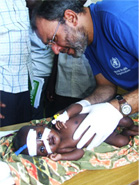 31 May 2011 ¦ Nairobi "“ The World Health Organization (WHO) is concerned about the steep rise in the numbers of children under five years old who have been wounded in Somalia's latest outbreak of violence. The number of patients treated for weapon-related injuries at Mogadishu's three main hospitals reached a new peak in May 2011. Almost half the 1590 injuries reported were in children under five, compared to only 3.5% in April. "Many of these children are suffering from very severe wounds, burns and other injuries from bullets, blast injuries and shrapnel" says Marthe Everard, WHO's representative for Somalia.