



Select your language
WHO and health partners stand in solidarity with vulnerable communities in Al Mirkez affected by the recent confiscation of a mobile health clinic caravan
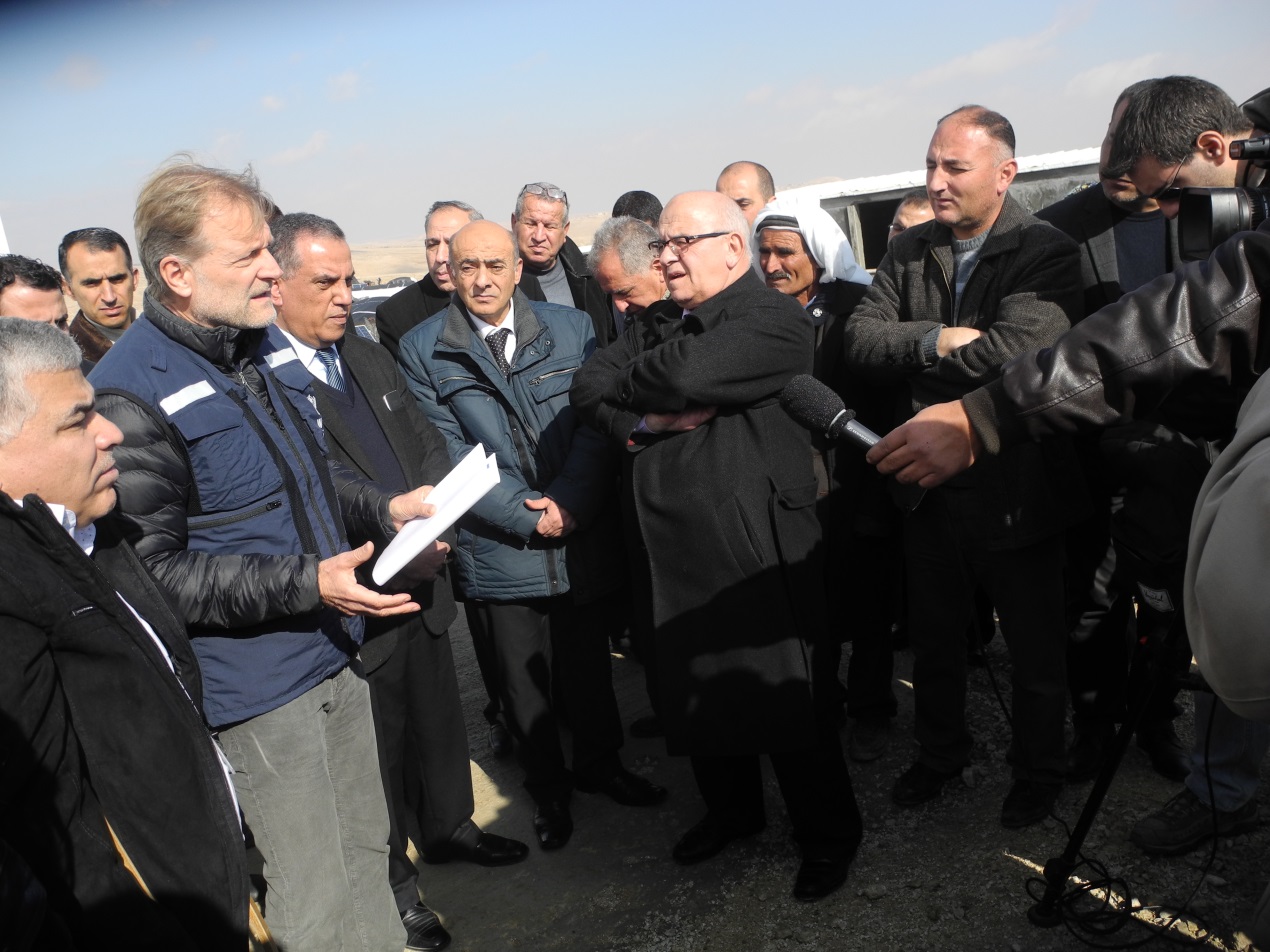 20 December 2016, South Hebron - WHO and the Ministry of Health, as the co-leads of the Health Cluster, organized a field visit to Massafir Yatta, south of Hebron, to express “solidarity and concern” over the confiscation of a mobile health clinic caravan that had been installed in Al Mirkez to serve the Al Mirkez community and nearby Halaweh community.
WHO Head of Office in the occupied Palestinian territory, Dr. Gerald Rockenschaub, joined the Deputy Minister of Health Dr. Asaad Ramlawi, the Head of OCHA in the oPt Mr. David Carden, UN partners from UNFPA, UNICEF, UNRWA, and international and local NGO representatives to meet and consult with the Director of Primary Healthcare for South Hebron and members of the Yatta municipality. Eyewitnesses gave accounts of the chain of events that occurred on December 13th, when the Israeli Civil Administration in the occupied territory confiscated a caravan that Palestinians had begun using as a primary healthcare clinic in the Al-Mirkez community of Massafir Yatta.
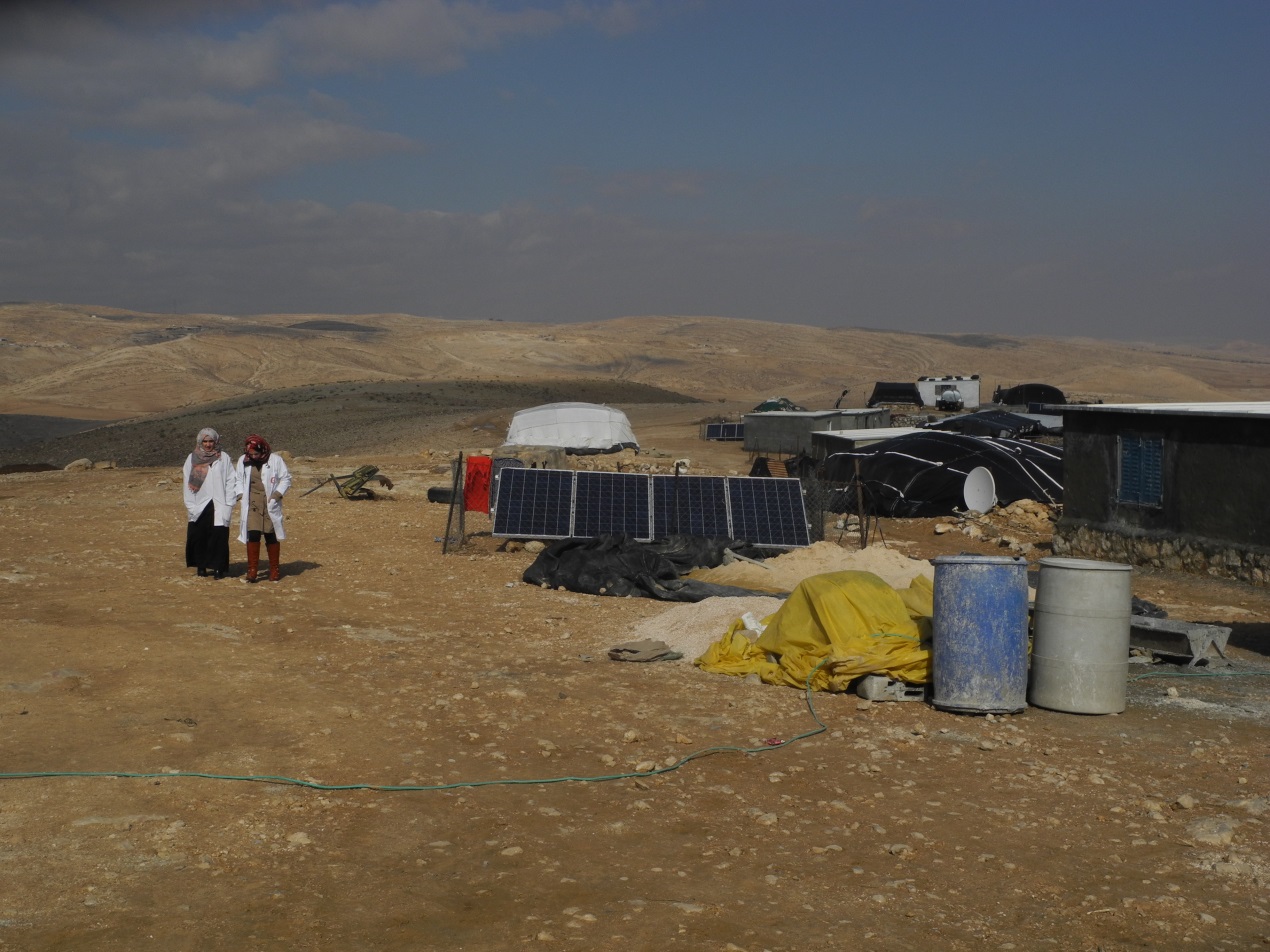 Since October 3rd 2016, the Ministry of Health has been providing primary healthcare services to the Al Mirkez community, staffed by a doctor, a nurse and a laboratory technician. Previously medical care had to be provided in tents or in community residences. The installation of the caravans was to provide privacy to women seeking essential health services with the clinics and to allow easier access for residents from the community during harsh winter conditions. The primary healthcare caravan was to operate once a week and to provide essential services to two communities, Al Mirkez and Al Halaweh, which comprise 39 households with a total population of 203, including 93 children. Two similar healthcare clinic caravans have also recently been installed to serve the adjacent villages of Safai and Majaz. The caravans have been provided by an international NGO, through donations from the Italian Cooperation. Israeli forces have alleged that the caravan in Al Mirkez was installed without a suitable permit in the Firing Zone Area 918. They have notified the Palestinian communities that they also intend to confiscate the remaining two medical clinic caravans.
“Life in Mirkaz is very difficult. We cannot move freely and we face harassment from Israeli soldiers and settlers. We have asked the Palestinian Ministry of Health to provide us with health services all year round. My son has a disability and it’s hard for us to get the services he needs.” said a local resident from the Mirkaz community.
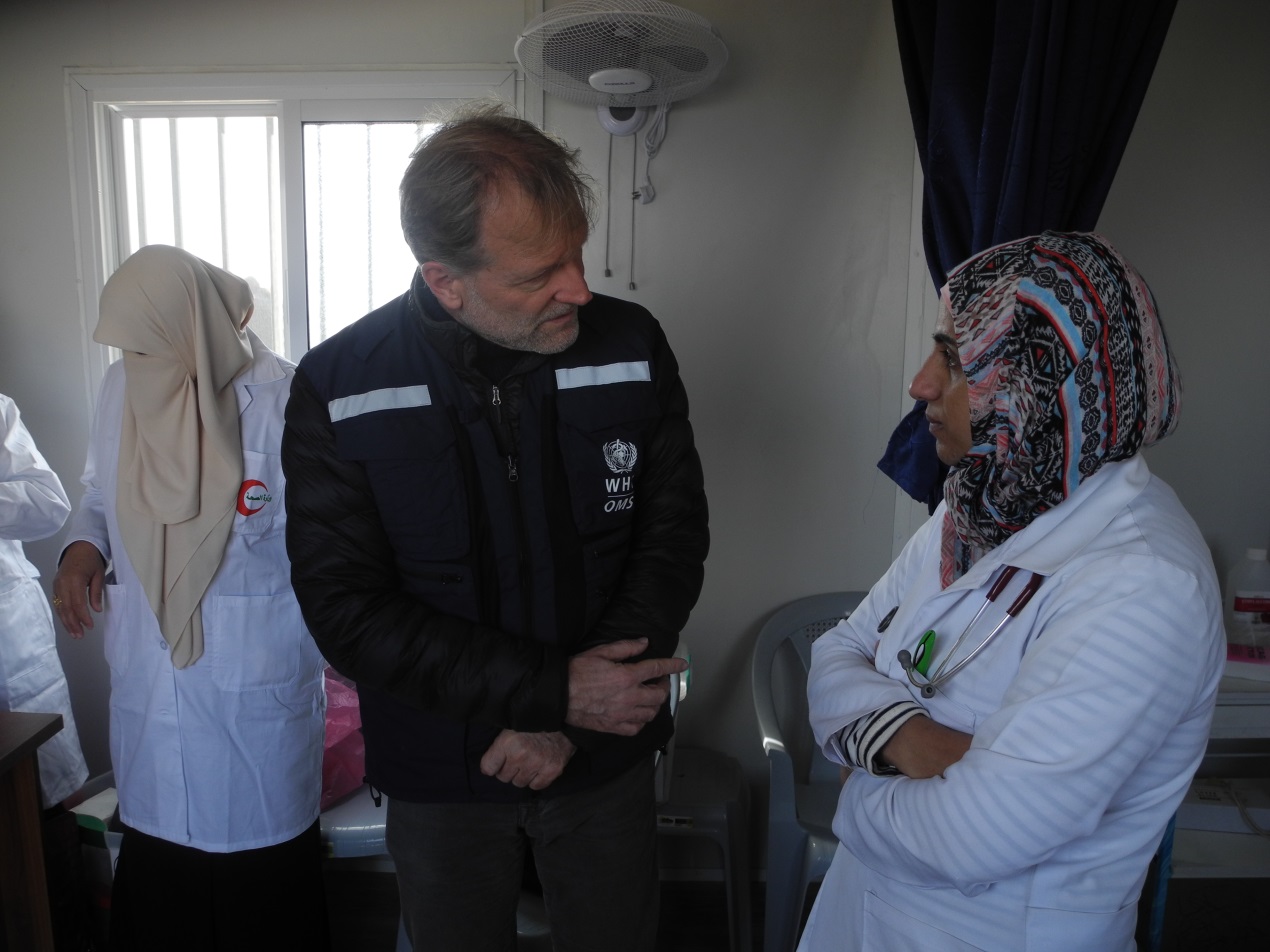 The UN Coordinator for Humanitarian Aid and Development Activities, Mr. Robert Piper has confirmed the serious vulnerability of those Bedouin and herder communities in Massafir Yatta and their need for humanitarian assistance. The 2017 and 2016 Humanitarian Needs Overviews (HNO) clearly identified these communities as having substantial unmet needs for healthcare, shelter rehabilitation, water, sanitation and hygiene, education and protection. In order to ensure access to basic services, in particular to essential health care, mobile health clinics are provided by aid organizations. Those primary healthcare caravans address an urgent humanitarian need of these hard-to-reach communities. There are no alternative clinics in either of the two communities and families - in the absence of the mobile clinics - would have to travel to distant clinics, which are barely accessible in bad weather conditions.
Dr Rockenschaub stated: “It is heart-breaking to see the hardship that the people of Massafir Yatta have to endure. WHO will continue to advocate for the “right to health” of these very vulnerable communities. Their essential health needs can only be met through these mobile health services on the ground.”
Vacancy notice, April 2017
WHO in the occupied Palestinian territory is seeking to recruit a Procurement assistant in its Gaza office. Details of the position are available from the following link:
Procurement assistant, Gaza Strip
Applications must be submitted by 26 April 2017 to United Nations Development Programme
Applications must be in English and include your CV.
Only Palestinians are eligible to apply.
WHO has a smoke-free environment and does not recruit smokers or users of any form of tobacco.
Statement by the United Nations Coordinator for Humanitarian Assistance and Development Aid, Robert Piper, on Israel’s continued practice of administrative detention
Jerusalem, 2 February 2016 - “I am deeply concerned about the continued practice of administrative detention in Israeli jails and detention centers.
In particular, I am alarmed by the rapidly deteriorating health of Palestinian administrative detainee, Mohammed Al-Qiq, who is on hunger strike in protest against the arbitrary nature of his detention and ill-treatment.
After 69 days of hunger strike, Mr Al-Qiq is in a dangerous state of health and his physicians have informed him of the possibility of irreversible damage. I reiterate the United Nations’ longstanding position that all administrative detainees – Palestinian or Israeli - should be charged or released without delay. All allegations of ill-treatment must also be independently and promptly investigated.”