



Select your language
Vacancy announcement: consultant on social determinants of health needed in Gaza
The World Health Organization is seeking a short-term consultant for a report on social determinants of health (SDH) in Gaza. The consultant will report to the WHO representative and in close communication with WHO Regional Office for the Eastern Mediterranean and WHO headquarters, and social determinants of health experts.
Terms of reference
The consultant will be expected to:
- gather relevant health inequity and Social Determinants of Health (SDH) data, analysis and reports relevant and specific to the Gaza Strip
- with assistance from WHO experts, analyse/systematize the above information in order to identify key, priority health inequities and their underlying determinants
- gather all relevant information from documents and in interviews with key actors (within the health sector and beyond) on actions, polices, strategies, projects addressing SDH and their measured or intended impact in reducing health inequities in the Gaza Strip
- with the above information prepare a draft SDH report for Gaza (outline and objectives to be provided) which should be the basis of the SDH WHO mission and meeting. The report should focus on evidence-based recommended SDH strategic public policy priorities, including key actors and governance mechanisms.
- assist in the preparation and the running of a mission to the oPt and meeting (in Gaza).
Requirements
Senior Public Health/Public Policy/Social or Political sciences expert with knowledge in WHO's work in the area of social determinants of health and experience in:
- assessing health inequities from quantitative and qualitative data sources
- identifying social determinants of health and public policies for addressing them in order to reducing health inequities
- political, public policy and institutional (thorough) knowledge of the country.
The candidiate must have good writing skills in English.
Time period
3 weeks. Final report to be submitted 31 August, 2015 (draft to be submitted 5 days earlier).
Deadline for expressions of interest
August 7, 4:00 pm. Interested consultants should send their CV and sample of previous research to “WHO Advocacy” at
Joint statement by 30 international aid agencies: “We must not fail in Gaza”, February 2015
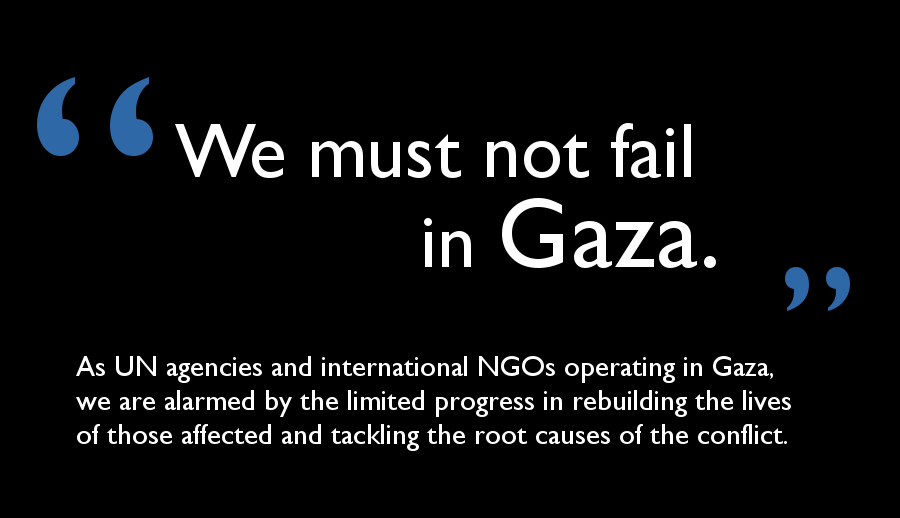 26 February 2015 – WHO West Bank and Gaza joined with 29 other UN agencies and international aid organizations working in Gaza to issue a joint statement today to call attention to the limited progress in rebuilding the lives of those affected and tackling the root causes of the conflict, six months after the ceasefire that ended 50 days of violence in Gaza in summer 2014.
A new approach to mental illness in Bethlehem, November 2014
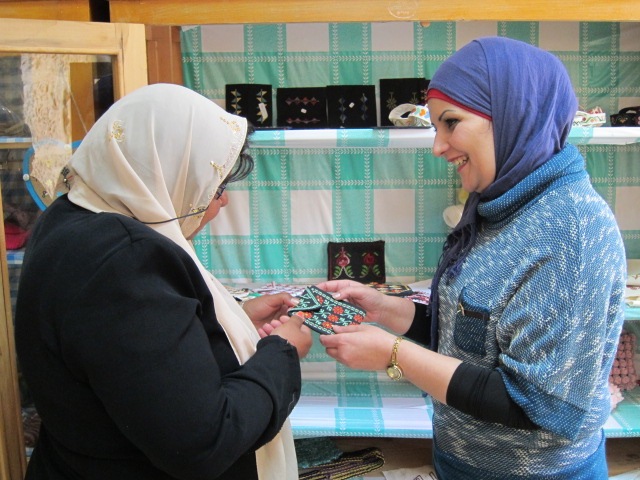 Sama (left) shows Dyala a wallet she has made during occupational therapyNovember 2014, In an area where the psychiatric illness is often misunderstood and stigmatized, a residential psychiatric hospital with a trailblazing occupational therapy programme, offers new hope for mentally ill Palestinians.
Bethlehem Psychiatric Hospital provides the only facilities of this type in the occupied Palestinian territory. Currently 180 psychiatric patients can be accommodated here, receiving the support and therapy they need to manage their conditions and, sometimes, develop the necessary life skills to eventually move back in with their families.
Dyala Abualia became one of the first occupational therapists in the oPt when she started work at the hospital in 2002. She was in only the second group of students to graduate from Bethlehem University’s occupational therapy (OT) course, and says she was attracted to the area as it was a “new profession” and she liked the idea of being “one of the pioneers”.
Her enthusiasm for innovation has helped develop the OT department, which is a crucial component of the hospital’s rehabilitation programme, over the 12 years she has been there. Her proposal for a greenhouse was supported by WHO soon after she began at the hospital, and she is currently planning a candle making project.
One patient she describes witnessing remarkable improvement in is Omar (not his real name), a chronic schizophrenic who had been in the hospital for 10 years before OT started. He has a wife and four children, but they only visited once a year, occasionally taking him home for a day or two at Eid.
After he started work in the greenhouse, he began to develop work and personal skills such as tolerance and problem solving, Dyala says. As he improved, his wife started to visit more often.
“His wife joined therapy sessions to talk about her fears about if he came back home,” Dyala says, explaining that his wife had not known he was schizophrenic when she married him, and was scared by his erratic and sometimes aggressive behaviour. “Through these sessions she started to understand and accept him more, and we started to close the gap between the patient and his family.”
When Omar first earned money from his work in the greenhouse he would spend it on coffee and cigarettes, says Dyala. Then he started wanting to buy clothes and shoes. Then one Eid he decided to buy presents for his family. It was the first time he had been able to give any support to his family in years. And that Eid, four years from when he started OT, he stayed at home for four months.
Since then he has been back to the hospital for a month or two at a time, but has been home since June this year. Living at home he is able to work part-time in his brother’s shop and continue to help support his family.
Another patient who participates in OT activities is Sama (not her real name), who has been living in the hospital for more than 15 years. Sama says she likes sewing and enjoys using the gym equipment in the OT department.
Before she came to the hospital she says she was scared – her brother used to threaten her by saying he would send her away, and she didn’t know anyone there. But once she began OT, things improved.
“I liked being around the OT students [university students on placements] and I started to get to know other patients, and that made me more relaxed. In occupational therapy I felt like I could do things I wanted to do,” Sama says.
Sama makes embroidered wallets, wall hangings and other items. With the money she earns she buys items such as clothes, shampoo and accessories.
Dyala says the programme has enhanced Sama’s self esteem and has helped her gain skills in self-care and hygiene. Dyala adds that initially Sama had difficulty managing money and would often be overcharged by shopkeepers, but now she is a good negotiator. “She’s better than me, I should take her to the market with me,” jokes Dyala.
“People with chronic mental health problems who have been institutionalized for long periods of time tend to loose their social and daily life skills, as well as occupational skills. Regaining these skills and being able to earn an income again helps them regain their status in society, and lessens the stigma they face,” says WHO Mental Health Officer Rajiah Abu Sway. “The rehabilitation programme supports patients to develop skills, according to their needs.”
WHO has supported the development of mental health services in the West Bank and Gaza for over a decade. Currently WHO implements a project to strengthen mental health service provision and to improve awareness and address stigma concerning mental illness. The project aims to shift the focus of mental health care from a traditional psychiatric hospital-based model of care towards community based services. Project component include policy development, capacity building, integration of mental health services into primary health care, and establishment of mental health friends and family associations. WHO promotes a recovery approach, aimed at reintegration of mental health patients into community life.
WHO supports the programme at Bethlehem Psychiatric Hospital with funding from the European Union.