

Select your language
A targeted outbreak response: reaching out to Somalia’s high-risk populations
In the Horn of Africa polio outbreak, immunization efforts are focusing on a group known as “special populations”.
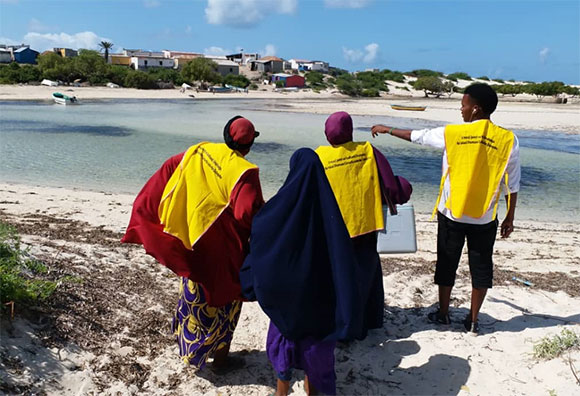
19 December 2018 - Since polio was confirmed in Somalia in late 2017, health authorities have led a complex response to twin outbreaks of circulating vaccine-derived poliovirus type 2 and type 3 (cVDPV2 and cVDPV3), paying special attention to high-risk populations: nomads, internally displaced people (IDPs), and people living in peri-urban slums and rural areas.
Somalia has a rich culture of people leading pastoral lifestyles, raising livestock and moving with them as the seasons and the weather change. Nomadism has a long history in Somalia and nomads have a special place in Somali society: almost a third of Somalia’s people are nomads. According to an expert from the Core Group Polio Project, which focuses on vaccinating children from families living along the borders of Somalia, Ethiopia and Kenya, Somane Mohamed, communities living in these areas share cultural, family and economic ties. They do not observe formal international borders – just like the poliovirus. For health workers, this context poses a significant challenge: How can you be sure you have vaccinated every last child when so many children are on the move?
So far, five of Somalia’s 12 infected children are from nomadic communities, and another four are from internally displaced families living in urban areas. To boost immunization among eligible children in these populations, vaccination activities have placed a special focus on reaching these communities.
For health workers, this means searching for polio symptoms in more than 900 health facilities across the country, as well as nutritional centres, camps for the internally displaced, and key sites along Somalia’s borders. At transit points, along borders and at water collection points, polio teams work to vaccinate children moving in and out of areas experiencing conflict, or with limited access to health services. In high-risk areas, the Somali Government, WHO and UNICEF hire local vaccinators – people known and trusted by their communities – and when additional security is necessary, polio partners provide it.
Gaining high-level political goodwill
Even in an emergency, cross-border collaboration like this isn’t always easy to come by. In the Horn of Africa outbreak, regional collaboration moved into high gear in September, when health ministers from across the region and representatives from the Intergovernmental Authority on Development (IGAD) countries came together in the bustling Kenyan town of Garissa to reiterate their commitment to ending polio.
One of the event’s key messages was around the risks posed by the easy and frequent mobility of communities across borders. Kenya’s national polio immunization ambassador, former UN Person of the Year and polio survivor Harold Kipchumba spoke at the event, reminding parents of their obligation to make the right decisions on behalf of their children – decisions that include sparing their children from the risk of paralysis. Speaking directly to the pastoral communities in the region, Kipchumba highlighted their focus on vaccinating animals, and urged parents in these communities to use the same vigor to vaccinate their children against polio, so they are able to serve as future herders for their families.
A regional response to support high-risk populations
The Technical Advisory Group, an independent body of experts that monitors outbreaks and offers guidance, recommended that countries in the region strengthen their coordination. In response, the Horn of Africa Coordination Unit coordinates joint responses among HoA countries – work that includes monitoring current outbreaks, and collaboratively planning, mapping, conducting immunization campaigns and communicating with various audiences. This ensures that countries work together in partnership rather than in silos, viewing the outbreak as one epidemiological block.
At regional and district levels, teams have spent the last few months building records of every settlement in their area, by lifestyle (nomad, IDP, peri-urban slums, rural). The highest priority: locating special populations – internally displaced persons, refugees, nomadic families, people living in informal settlements in urban areas and communities living in access-compromised areas – in order to reach them with vital polio vaccine.
Using technology to reach more children
A vital step in reaching more children, particularly those on the move, has been to move away from paper records and use electronic tools to collect data on children reached and missed during campaigns. This gives data specialists and decision-makers timely, accurate information, allowing them to analyze data in real time and flag areas with where high numbers of children are missed, so teams can revisit these households the following day.
Getting vaccines to the doorstep is not the only challenge for polio eradication teams in Somalia. Parents and caregivers also need information to ensure their children are vaccinated – something Kipchumba spoke to. On rare occasions, vaccinators meet families unconvinced of the need for vaccinations, particularly when the family has a newborn child or a sick child. In the lead up to every campaign, teams of social mobilizers, sometimes joined by influential Islamic leaders or scholars, visit communities to alert them of dates of polio immunization campaigns and the benefits of vaccination. Here, too, special attention is paid to nomadic communities, as polio teams liaise with elders from these communities in order to learn more about these communities and their needs, and to inform community members in appropriate ways about immunization dates and benefits of vaccination.
WHO and Somali Government roll out process to deliver quality health services to all Somalis
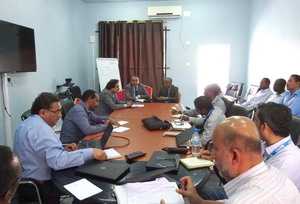 Participants at the UHC meeting in Somalia. WHO SomaliaWork begins to develop a roadmap to attain universal health coverage in Somalia
In a country where around three quarters of the population lives under US$2 per day, financial hardship is one of the key reasons why Somalis do not access or seek health services. Somalia also falls far below the minimum global expectation of doctor/patient ratio. Currently, there are only four doctors, nurses or midwives for every 10 000 people in Somalia. In addition, one out of every 12 women dies due to causes related to pregnancy, and 1 out of every 7 Somali children dies under the age of 5.
WHO is working with the Somali Government and partners to change this situation. Together, they convened a meeting on 8 November in Mogadishu to develop a roadmap to attain universal health coverage (UHC) in Somalia to ensure that everyone, everywhere can access essential, quality health services, without facing financial hardship.
Led by the Somali Ministry of Health, this meeting saw senior technical government staff and United Nations (UN) agencies discuss key issues related to Somalia’s health sector in an effort to advance UHC in the country. The development of the roadmap began with government representatives, UN agencies, nongovernmental organizations and donors conducting an in-depth review of the Somali health situation at a seminar held in Nairobi in April 2018. Participants at this seminar explored ways to localize the UN Sustainable Development Goal (SDG) 3 – good health and well-being – in the Somali context, compared the products delivered by the Somali essential package of health services, and discussed global best practices contained in “Disease Control Priorities” (third edition).
Reiterating WHO’s commitment towards ensuring equitable health care for all in Somalia, WHO Somalia Representative, Dr Ghulam Popal stated, “WHO is dedicated to changing the rhetoric in Somalia with support from our partners. We are committed to support Somalia to make progress in providing essential services to all individuals and communities in need, while ensuring they do not suffer financial hardship.”
Currently, WHO is working with the Ministry of Health, with substantive support from the Government of Japan, to conduct a series of consultations with Somali stakeholders to develop a common understanding of the roadmap to attaining UHC, and to ensure the plan is realistic, comprehensive, reaches out to a wide range of beneficiaries, complements health-related SDGs, and considers national health strategic priorities.
The Director-General for the Somali Ministry of Health, Dr Abdullahi Hashi, outlined the importance of involving different stakeholders to develop an effective roadmap on UHC. “Reactivating health sector coordination in Somalia will be important for us to have a more effective response towards attaining UHC,” Hashi said, adding that the plan should set realistic baselines and targets, adopt cost-effective interventions, and develop a joint nexus with the humanitarian work in the country.
At the Mogadishu meeting, partners explored options for health financing and health governance reforms, while emphasizing the importance of delivery of essential services through both development and humanitarian approaches.
Following the in-country consultations, WHO and the Ministry of Health will conduct a workshop in Nairobi to finalize the UHC roadmap, with support from the Government of Japan.
Somali stakeholders acknowledge the role of the Somali Ministry of Health and WHO in providing a platform for setting common strategic directions in Somalia’s weak health sector. They reiterated the importance of having similar discussions and regular joint reviews around health in Somalia to ensure the country’s progress in attaining development goals.
For additional information on universal health coverage in Somalia, kindly contact:
Dr Humayun Rizwan
WHO Somalia
Medical Officer, Health Systems Strengthening
Email:
Acknowledging bold steps taken – and needed – to protect Somali children from polio
MOGADISHU, Somalia, 24 October 2018 – This World Polio Day, UNICEF and WHO are taking a moment to acknowledge the tremendous efforts made by the polio eradication workforce and partners over the last two decades in Somalia. By way of one recent example, UNICEF, WHO, health authorities and partners are working tirelessly to stop two concurrent outbreaks of vaccine-derived polioviruses that were confirmed late in 2017 in Somalia.
“Today, we face a persistent lack of access to children due to insecurity, population displacement driven by conflict and natural disasters, and a struggling health system, all of which have contributed to low immunization rates in children,” said Dr Ghulam Popal, WHO Representative for Somalia. “This has seen the emergence of polioviruses that are highly contagious and spread through poor hygiene. But a simple series of doses of the polio vaccine will protect a child for life.”
The theme for this year’s World Polio Day is ‘Bold Steps to End Polio’, which is exactly what the Government and health workers are doing today: taking bold steps to control these outbreaks, ensuring all children have access to vaccines.