

Select your language
Remarks of the WHO Regional Director for the Eastern Mediterranean for the Brussels Syria side event
24 March 2021 – A few months ago, I visited Damascus, Homs and Hama, witnessing firsthand the devastating impact of the decade-long conflict and the resulting humanitarian crisis, now worsened by COVID-19.
While there, I met frontline workers who continue to brave dangerous working conditions to save lives.
I spoke to parents desperate for a better future for their children. In Damascus, I visited a WHO-rehabilitated emergency wing of a hospital which treats hundreds of children daily, suffering burns, injuries and life-threatening infections.
Nonetheless, I was struck by the resilience and positive spirit of people who remain resolute in restoring peace and prosperity to Syria.
After 10 years of fighting, the situation in Syria remains dire. In fact, humanitarian needs are increasing. Today, 90% of the population live below the poverty line and more than half are in urgent need of humanitarian health assistance – a statistic that has increased due to COVID-19.
Safe drinking-water and adequate food are not readily available for many, resulting in an increasingly complex disease profile. One third of the population, most of whom are women and children, are internally displaced within camps and other settings across the northwest and northeast pockets of the country.
Internally displaced people in Syria, in camp and settlements, and among the host population, represent the most vulnerable subsets of the population. Due to the overcrowded nature and poor hygiene in camps, practising COVID-19 preventive public health and social measures is difficult. This presents an ever-looming possibility of a potentially disastrous outbreak; particularly as ongoing conflict may lead to further displacement.
By some estimates, 60%–70% of health professionals have left the country and only 53% of all primary health care centres are functional and are unable to cope with rapidly rising health needs. Acute shortages of quality medical equipment, supplies and medicines serve to compound an already devastated health system. Reduced humanitarian access and attacks on health care workers and health care facilities – such as the latest attack on a hospital in Aleppo just a few days ago – additionally prevent a full-scale and appropriate health response. Numbers of vulnerable populations requiring health assistance have further increased since 2020.
To date, a total of 47 966 cases of COVID-19 have been reported in Syria, with approximately 2168 fatalities. Over the past 2 weeks, we have observed a sharp increase in the number of cases, especially in government-controlled areas and the northeast of the country. This is similar to trends we are currently observing across the Region and, indeed, in other parts of the globe. Specimens have recently been sent to a regional laboratory to help us determine whether one of the new variants that is driving increases in cases in other countries is circulating in Syria. Public adherence to protective measures such as wearing masks and physical distancing is low. Frontline workers are also at high risk of contracting the virus due to insufficient stockpiles of personal protective equipment. The upcoming holy month of Ramadan will pose additional challenges as people traditionally gather for prayers and to break their fast.
The global rollout of COVID-19 vaccines presents a glimmer of hope for us all. I would like to take this opportunity to express my appreciation for the COVAX Facility, which aims to ensure fair and equitable allocation of vaccines across the globe.
Against the backdrop of a larger humanitarian emergency, WHO is working closely with partners to launch a comprehensive response to COVID-19, including through the COVAX Facility. We will leverage the existing immunization programmes to vaccinate 20% of Syria’s population, including frontline workers and high-risk Syrians, by the end of 2021. Vulnerable and underserved groups across the whole of Syria will be included in vaccination campaigns managed from both Damascus and Gaziantep; the humanitarian ‘buffer’ represents an option if these groups cannot be covered through current plans and micro-plans. We commit to working with health authorities and partners on the microplanning and distribution to ensure that there is fair and equitable distribution of the vaccines.
To date, a small number of health workers have already been vaccinated in Syria; despite global vaccine shortages, we are working hard with COVAX to ensure that Syrians all over the country have access to these tools, including people living in hard-to-reach areas. However the global community may be presented with challenges related to vaccine production/manufacturing which may cause some delays for countries across the globe to actually receive and start the vaccination as was hoped in quarter 2 of this year. In parallel, we are continuing to expand COVID-19 surveillance, testing and isolation capacity throughout Syria, as well as training medical personnel on COVID-19 clinical management, and public health teams on rapid response.
Multisectoral partnership and collaboration have been key to WHO’s work in Syria over the years – and this has been especially critical over the past year. In 2020, WHO worked alongside donors, partners, and local communities to provide essential health services, including over 11 million outpatient consultations, 10 million treatments, 271 000 trauma consultations and 241 000 mental health consultations across the whole of Syria.
Although COVID-19 is currently at the forefront of our priorities, I would like to commend the efforts by partners on the ground who are ensuring minimal disruption to essential health services. This level of cooperation is vital in providing a lifeline to the Syrian people. WHO is committed to continued engagement with partners under the whole-of-Syria approach, applying all modalities so that we can collectively optimize the delivery of essential health services.
Risk communication and community engagement plays a critical role in slowing the transmission of COVID-19 and protecting communities. Localizing the response further and outreach to affected communities in newly accessible areas is central to this. Shifting towards community engagement to ensure participatory approaches, build trust and social cohesion are vital to controlling COVID-19 and to mitigating the negative impact of the pandemic. Coordination with different stakeholders, including non-state actors, and generating evidence will ultimately support these efforts. Capacity building is a continuous process but this needs to be targeted and innovative.
Syria is one of the most complex and politicized emergencies in the world. Shortfalls in humanitarian funding severely threaten assistance to millions of Syrians at this very crucial moment, and will lead to preventable losses of lives. Under our regional Vision, we strongly believe in “Health for All by All”, which means nobody is left behind. To achieve this, further investment in gaps faced by the health sector is crucial.
I call on the international community to deliver on our promise to the Syrian people. We must remind them that there is hope. COVID-19 has shown us that the only way we can all succeed is through solidarity. Let us now build on this momentum and work together to fulfil our humanitarian and moral obligations.
We remain with the Syrian people every step of the way.
WHO response to Salheen & Al-Fardos neighborhoods and Al-Atareb Hospital attacks, Aleppo, Syria
Related links
Statement by WHO's Regional Director for the Eastern Mediterranean on the 10th year of the Syria crisis
15 March 2021
Syria to get first deliveries of COVAX vaccines within weeks: WHO official
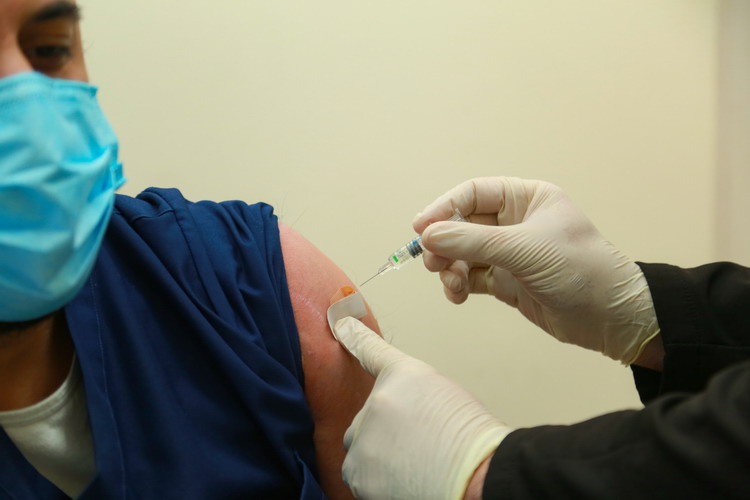
AMMAN (Reuters) – Syria will take delivery within weeks of its first COVID-19 vaccines from the global vaccine sharing platform COVAX, allowing it to kick off its national inoculation programme as early as next month, the U.N. health agency’s country head said on Wednesday.
WHO and the Government of Japan strengthen health services in north-east Syria
9 February, Damascus, Syria – WHO Syria and the Government of Japan sealed a strategic agreement to rehabilitate and renovate the Al-Qamishli National Hospital in Al-Hassakeh Governorate of Syria. By signing the agreement, the Government of Japan has demonstrated its continuous commitment to reviving the Syrian health system fatigued by the decade-long crisis.
The generous US$ 6 million grant will assist in renewing the 40-year-old infrastructure of the hospital, while revamping secondary health care services at a hospital that serves as the main referral centre for many areas in north-east Syria. Once the hospital is renovated, health workers and doctors with different specialties will have an opportunity to regain their profession and help people in need of health services.
Al-Hassakeh governorate serves as the base for most of WHO’s humanitarian health operations in the north-east. Some of Syria’s major camps for internally displaced persons (IDP) are located in this governorate. The Al-Qamishli National Hospital, built in 1982, was once renovated in 2005. However, the hospital with just the 200-bed capacity and overburdened since the crisis in Syria started, requires major rehabilitation. Currently, it is the only functional hospital in the Region, yet it struggles with outdated infrastructure and equipment.
Though the hospital is in a pressing urgent need of overall maintenance as well as replacement of its outdated medical equipment, WHO, with support from the people of Japan, will prioritize the vital functions such as the burns unit, intensive care unit, emergency, dialysis, magnetic resonance imaging, and isolation sections.
Furthermore, modern medical equipment will be procured to meet the needs of all the departments in the hospital.
Japan’s support will cover the critical gaps to avoid further deterioration of health services, as well as strengthening the country’s capacity to respond to public health emergencies due to major outbreaks.
WHO’s response strategy revolves around expanding the availability of health care services, as well as delivering medicines and supplies to hospitals to help them manage the influx of patients. Once renovated, the hospital will serve the needs of 1.6 million people, including 600 000 IDPs in the 3 northeastern governorates of Al-Hasakeh, Ar-Raqqa and Deir-Ez-Zor.
“WHO continues to contribute to the regional vision of Health for All by All and to make sure that no one is left behind,” said Dr Akjemal Magtymova, WHO Representative in Syria. “We are very grateful for the generous contribution of the Government of Japan which will play a crucial role in addressing the shortage of life-saving health services that have been exacerbated by the COVID-19 pandemic and the Syrian war,” Dr Akjemal noted.
“Japan stays engaged in humanitarian assistance to support children, youth and women wherever they are in Syria to meet their urgent needs,” said Mr Akira Endo, Special Coordinator for Syria and Charge d'Affaires of the Embassy of Japan in Syria. “The humanitarian crisis in Syria has become more complicated, especially as a result of the impact of COVID-19, which has negatively affected the health and living conditions of thousands of households. We sincerely hope that our contribution will find its way to people in need of assistance and alleviate the suffering of as many Syrian people as possible.”