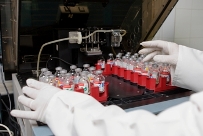
 Culture preparation using liquid media for multi-drug resistant TB diagnosisMulitdrug-resistant TB (MDR-TB) is characterized by resistance of TB bacilli to the first line anti-TB drugs, mainly rifampicin and isoniazid.
This resistance is a result of irregular use of the TB drugs and poor treatment management including administration of improper treatment regimens and failure to ensure that patients complete the whole course of treatment.
Drug-resistant TB is a threat to TB control efforts. While drug-susceptible TB can be cured within six months, forms of drug-resistant TB (such as MDR-TB) require extensive chemotherapy (with drugs which have more side effects) for up to two years.
It was estimated in 2010 that there were 650 000 prevalent MDR-TB cases globally among the 12 million prevalent TB cases.
There were an estimated 14 000 MDR-TB cases among all notified TB cases in 2010 in the WHO Eastern Mediterranean Region. However, only 829 MDR-TB cases were notified in 2010 according to the Global TB Report (2011).
Extensively drug-resistant TB
Extensively drug-resistant TB (XDR TB) is defined as TB that is resistant to isoniazid and rifampin, plus resistant to any fluoroquinolone and at least one of three injectable second-line drugs (i.e. amikacin, capreomycin or kanamycin).
Because XDR-TB is resistant to first-line and second-line drugs, patients are left with treatment options that are much less effective, and treatment results are usually very poor.
Culture preparation using liquid media for multi-drug resistant TB diagnosisMulitdrug-resistant TB (MDR-TB) is characterized by resistance of TB bacilli to the first line anti-TB drugs, mainly rifampicin and isoniazid.
This resistance is a result of irregular use of the TB drugs and poor treatment management including administration of improper treatment regimens and failure to ensure that patients complete the whole course of treatment.
Drug-resistant TB is a threat to TB control efforts. While drug-susceptible TB can be cured within six months, forms of drug-resistant TB (such as MDR-TB) require extensive chemotherapy (with drugs which have more side effects) for up to two years.
It was estimated in 2010 that there were 650 000 prevalent MDR-TB cases globally among the 12 million prevalent TB cases.
There were an estimated 14 000 MDR-TB cases among all notified TB cases in 2010 in the WHO Eastern Mediterranean Region. However, only 829 MDR-TB cases were notified in 2010 according to the Global TB Report (2011).
Extensively drug-resistant TB
Extensively drug-resistant TB (XDR TB) is defined as TB that is resistant to isoniazid and rifampin, plus resistant to any fluoroquinolone and at least one of three injectable second-line drugs (i.e. amikacin, capreomycin or kanamycin).
Because XDR-TB is resistant to first-line and second-line drugs, patients are left with treatment options that are much less effective, and treatment results are usually very poor.