

Select your language
Art competition
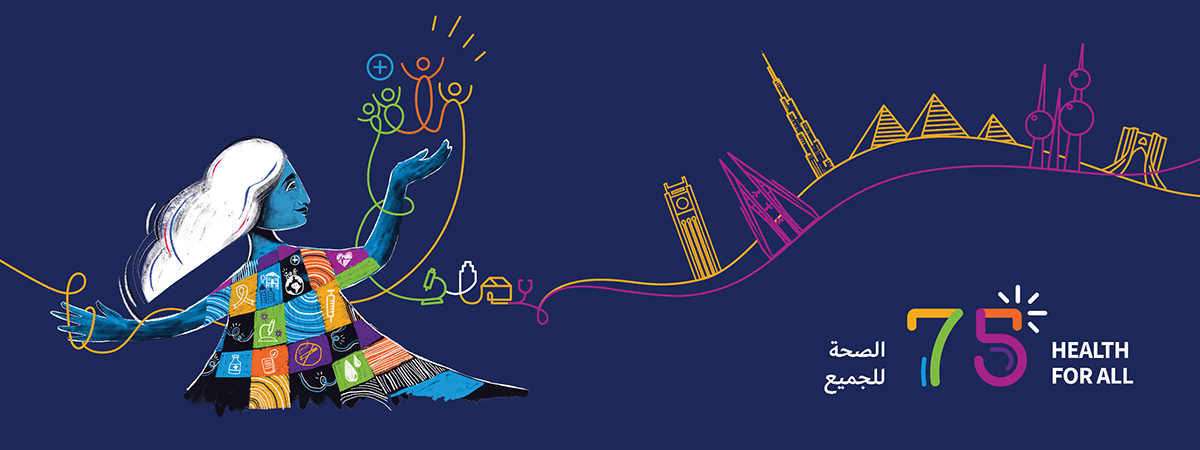
World Health Day 2023: 75 years of improving public health

Art competition
Painting a healthier and safer future together

In a memorable art night held on the occasion of the WHO 75th anniversary, a selection of children’s artworks who won the WHO art competition for school students in the Region, were on display. The competition was organized during World Health Day 2023.
The WHO Regional Office for the Eastern Mediterranean has been holding this annual art competition for school students on World Health Day for more than 30 years.
Through this platform, we have engaged children from across the WHO Eastern Mediterranean Region to use their creativity and artistic talents to increase their knowledge on public health. At the same time, the initiative has raised awareness of health issues among the general public across the Region – not least through the stories conveyed by the children’s drawings themselves.
World Health Day 2023 was also WHO’s 75th anniversary. School students taking part in last year’s art competition were therefore invited to reflect on public health successes and challenges of the past 75 years. More than 2000 drawings were received in total, from children aged 8–17 years across 14 countries of the Region. Three independent artists reviewed all the submissions and selected the 32 drawings that are displayed in this exhibition.
8-9
Hagar Abd Aljaleel Mansour
Age group: 8-9
Bahrain
Elena Helmy Ali Abdulaziz Elnady
Age group: 8-9
Egypt
Nika Vaziri
Age group: 8-9
Islamic Republic of Iran
Ronya Azizi Takanloi
Age group: 8-9
Islamic Republic of Iran
Niki Manoochehri
Age group: 8-9
Islamic Republic of Iran
Rateel Anas Hatem Mustafa
Age group: 8-9
Jordan
Ali Omar Alhumaidi Almutairi
Age group: 8-9
Kuwait
10-11
Ava Yeke Dehghan
Age group: 10-11
Islamic Republic of Iran
Aylin Shakibazadeh
Age group: 10-11
Islamic Republic of Iran
Sepehr Moradi
Age group: 10-11
Islamic Republic of Iran
Seyed Danial Masbough
Age group: 10-11
Islamic Republic of Iran
May Hatim
Age group: 10-11
Morocco
Mohammad Mahmoud Mahmoud Dalloul
Age group: 10-11
Occupied Palestinian territory
12-13
Moaz Mahmoud El Mabareedy
Age group: 12-13
Egypt
Yaman Mostafa Sabah
Age group: 12-13
Iraq
Fatemeh Zahra Soheily
Age group: 12-13
Islamic Republic of Iran
Layan Omar Mohammad Al Zyoud
Age group: 12-13
Jordan
Ruba Ahmed Masoud
Age group: 12-13
Libya
Tuqa Aldakkak
Age group: 12-13
Syria
Alaa Tayechi
Age group: 12-13
Tunisia
14-15
Youssef Ibrahim Mahmoud Ibrahim
Age group: 14-15
Kuwait
Shirin Alhour
Age group: 14-15
Occupied Palestinian territory
Maha Aly Alhaj
Age group: 14-15
Qatar
Eshna Tripathi
Age group: 14-15
United Arab Emirates
Sainath Manikandan
Age group: 14-15
United Arab Emirates
Remas Mohammad Faris Al Shougran
Age group: 14-15
Jordan
16-18
Masooma Mirza
Age group: 16-18
Bahrain
Fatemah Abdelhamid
Age group: 16-18
Bahrain
Toqa Alaa Elshazly
Age group: 16-18
Egypt
Marya Rajeh Ahmad Abujmea
Age group: 16-18
Jordan
Abdallah Jaafar Hasan Alsaffar
Age group: 16-18
Kuwait
Aesha Bint Mohammed Ben Khadem Alhass
Age group: 16-18
Oman
Basmala Mohamed
Age group: 16-18
Qatar
Ibrahim Amgad
Age group: 16-18
Qatar
WHO champions
World Health Day 2023: 75 years of improving public health
WHO champions
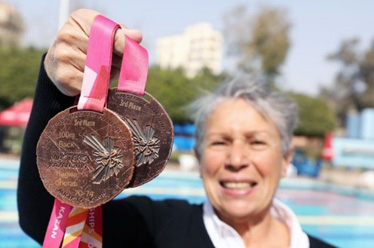
Nagwa Ghorab
Nagwa Ghorab is an 80-year-old Egyptian women’s World Masters swimming champion, who dove back into the pool and participated in world championships at the age of 68, following her retirement.
The WHO Regional Office for the Eastern Mediterranean has selected Nagwa Ghorab as a regional WHO75 champion (April 2023April 2024). As a WHO75 champion in the WHO Eastern Mediterranean Region, Nagwa will help raise awareness on the importance of engaging in physical activity for better mental health and well-being.
Through her inspiring story and ability to reach new audiences, Nagwa will help motivate people to embrace WHO’s recommendations and messages on sports for health, with a focus on the well-being of women and girls.
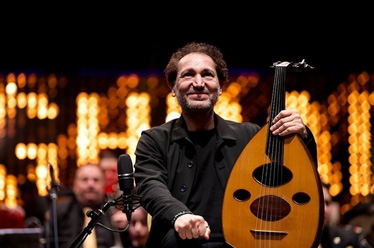
Naseer Shamma
Naseer Shamma is a world-renowned Iraqi oud musician, recognized through over 75 international awards for his achievements in the preservation of oud music and advancing its presence on the world's stage. The WHO Regional Office for the Eastern Mediterranean has selected him as a regional WHO75 champion (April 2023 ̶ April 2024).
Naseer is a humanitarian and was made an UNESCO Artist for Peace in 2017, with two consecutive re-appointments since then. He has long advocated using music for peace and has used online platforms and his international stature to raise awareness on emergencies in the Eastern Mediterranean Region. He has also established humanitarian initiatives such as "The Flower Road" and "Ahluna" to help children and displaced people, and created "Alaq Baghdad", an initiative to reconstruct Baghdad’s main squares and sites to rejuvenate the city and its culture.
As a regional WHO75 champion, Naseer will help raise awareness about public health emergencies and advocate for investing in children’s health and access to quality health care in the Region.
Key achievements, challenges and initiatives
World Health Day 2023: 75 years of improving public health
Key achievements, challenges and initiatives
The development of new medicines and vaccines has helped to protect us, our families and communities from diseases like tuberculosis, cholera, leprosy, malaria, hepatitis and many childhood diseases.
Universal health coverage means that people can access a full range of good quality health services when and where they need them without facing financial hardship because of the cost of paying for their health care.
There are some diseases that younger people have never heard of because they have been eradicated, such as smallpox. Smallpox was one of the most devastating diseases known to humanity and it caused millions of deaths before it was eradicated in 1980. Its eradication is among the most notable and profound public health successes in history.
In the early 20th century, polio, which is incurable, paralysed hundreds of thousands of children every year but with the introduction of a vaccine polio has been brought under control and most parts of the world are now polio-free. The world is close to eradicating polio.
In 2015, all the countries in the United Nations adopted the 2030 Agenda for Sustainable Development, which sets out 17 Goals. The 17 Sustainable Development Goals (SDGs) aim to transform our world. They are a call to action to end poverty and inequality, protect the planet, and ensure that all people enjoy health, justice and prosperity, so that no one is left behind.
“Health for All by All” means that all people have good health for a fulfilling life in a peaceful, prosperous, and sustainable world.
COVID-19 and other health emergencies, overlapping humanitarian and climate crises, economic constraints, and war, have made every country's journey to #HealthForAll more urgent.