Regional tools and activities
The Child and Adolescent Health and Development programme of the Regional Office has developed a number of documents for planning and carried out activities to maximize their use, in its efforts to support countries to plan for and implement the IMCI (Integrated management of child health) community component.
Sound planning is a pre-requisite for any public health initiative. Concerning the IMCI community component the following points have been considered.
First, a clear understanding is needed of what this component is and how it differs from other child health interventions at community level, in order to know which areas should be considered in planning.
Next, the existence of a planning tool would facilitate the planning process to guide it step by step.
Finally, the availability of training, monitoring and evaluation tools and job aids would support implementation.
Regional tools
Framework for the community component of the integrated child care strategy (2002)
Guide to planning for the IMCI community component at national level (2003)
The Regional office has also developed a checklist for planning for the community health worker-based initiative on caring for sick children in the community.
Regional activities
Field-testing of the regional training materials on “Caring for the sick child in the community” (2010)
Review of the regional training materials on “Caring for the sick child in the community” (2010)
Inter-country demonstration training course on "Caring for the sick child in the community" (2010)
Inter-country orientation and planning workshop on the global community health workers package on child care (2009)
Third intercountry workshop on the IMCI community component (2005)
Second intercountry workshop on planning and implementation of the IMCI community child care component in five countries of the Eastern Mediterranean Region (2003)
Intercountry workshop on planning and implementation of the IMCI community child care component in five countries of the Eastern Mediterranean Region (2002)
Intercountry meeting on integrated management of childhood illness (IMCI) documentation and community component (2001)
Framework for the community component of the integrated child care strategy
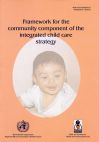 |
The Regional office for the Eastern Mediterranean (EMRO) developed a “Framework for the community component of the integrated child care strategy” in 2002 to guide national public health managers in planning community actions in the context of the IMCI (Integrated management of child health) strategy.
Table of content
Arabic (pdf 1.58 Mb)
English (pdf 752 Kb)
French (pdf 955 Kb)
|
This framework is meant to be dynamic, incorporating specific country experiences as they become available.
The Framework has then been used to facilitate planning for the IMCI community component by 11 countries.
The Framework comprises two main aspects:
the foundation
the planning process
The foundation on which the community component must rely is represented by a wide-sector partnership at central and implementation level.
The Framework lists 10 key steps of the planning process at national and implementation level as a guide to planning at these levels. Much emphasis is given to building district capacity for situation analysis and planning.
A description is given of:
- the five “specific elements” of a community child care strategy, i.e. those that characterize the Integrated Management of Child Health (IMCI) as key features as compared to traditional community interventions, and
- eight essential “planning principles” that should always be considered when planning for the community component.
Indicators and targets
Any plan should include clear, measurable indicators and set quantitative targets so as to enable regular monitoring of what has been done (‘process’) and what this has led to (‘outcome’).
To assist in this task, a special section of the Framework for the community component of the integrated child care strategy describes, with practical examples, relevant measurable indicators (from process to outcome indicators) and related targets that should always be part of a plan, as useful management tools to monitor implementation.
It is emphasized that, when selecting indicators, attention should be paid to which monitoring instruments should be used to follow up progress of implementation, identify constraints and address them accordingly.
Monitoring methodology should be adapted or developed locally and be simple, inexpensive and integrated in monitoring systems wherever these exist, to avoid creating new vertical projects. As much as possible, monitoring should allow for the collection of information on both process and outcomes and help link activities with results.
Documentation of inputs (resources made available for the intervention), outputs of activities, experience with implementation and outcomes of the intervention is necessary to identify strengths and weaknesses and describe lessons learnt, as well as for advocacy.
The situation analysis carried out by eleven countries participating in two inter-country planning workshops has clearly showed that the community interventions reviewed were often poorly or incompletely documented, limiting the value of those experiences. This makes it difficult to learn from such experiences and make reliable conclusions. On the other hand, the example of the Lady Health Worker programme in Pakistan has shown the importance and value of a thorough documentation, to provide effective feedback to those concerned, reinforce programme components and continue to receive the required political and financial support.
Guide to the planning process
A number of programme managers’ questions help in preparing for planning for the community component of the IMCI (Integrated management of child health) strategy. The steps are based on the “Framework for the community component of the integrated child care strategy”.
Several practical examples are given to assist programme managers in conducting a thorough situation analysis as the basis for the development of their plans.
A separate section of the website is dedicated to community health workers.
Community and sustainability
The community component of the Integrated Management of Child Health (IMCI) strategy is potentially seen as one of the key answers to the issue of sustaining over time the achievements made by the whole strategy.
However, mechanisms should clearly be devised to ensure that the community interventions themselves and the improvement of child care practices accomplished through them are sustainable over time.
These mechanisms should rely on full involvement of the community in the intervention and strong links between the community and the health systems.
Linking the community with teaching institutions
The establishment of close links between the community and teaching institutions has been identified in this Region as vital for ensuring sustainability in the long term.
In many countries in the Eastern Mediterranean Region, medical graduates should serve in rural areas before working with the Ministry of Health.
In some other countries, service in rural areas is a pre-requisite for registration with the medical council and enrolment in postgraduate studies.
This rural service has been seen as a good opportunity for doctors to understand the reality in the field and the importance of community work.
Even before then, while at university, medical students are often exposed to the community through outreach field visits during the community medicine, family medicine and paediatric rotations. They may collect data from the community for operational research, be involved in educating the community on health topics and assist it in addressing health issues. Thus, a good and useful link could be set up between the community and teaching institutions.
To formalize the approach, there is a need to orient teaching staff of community medicine, family medicine and paediatrics departments to the Integrated Management of Child Health (IMCI) strategy and its community component, and include them in community working groups at various levels. The staff would need to participate in planning, implementation, monitoring, and evaluation of community activities.
Results of evaluations and operational community research conducted by the medical schools could be presented in medical conferences and meetings of professional societies, to promote the importance of public health work and its relationship with everyday medical practice. Some countries in the Region are taking steps in this direction.
Related link:
Pre-service education
Page 6 of 6
Linking the community with teaching institutions
The establishment of close links between the community and teaching institutions has been identified in this Region as vital for ensuring sustainability in the long term.
In many countries in the Eastern Mediterranean Region, medical graduates should serve in rural areas before working with the Ministry of Health.
In some other countries, service in rural areas is a pre-requisite for registration with the medical council and enrolment in postgraduate studies.
This rural service has been seen as a good opportunity for doctors to understand the reality in the field and the importance of community work.
Even before then, while at university, medical students are often exposed to the community through outreach field visits during the community medicine, family medicine and paediatric rotations. They may collect data from the community for operational research, be involved in educating the community on health topics and assist it in addressing health issues. Thus, a good and useful link could be set up between the community and teaching institutions.
To formalize the approach, there is a need to orient teaching staff of community medicine, family medicine and paediatrics departments to the Integrated Management of Child Health (IMCI) strategy and its community component, and include them in community working groups at various levels. The staff would need to participate in planning, implementation, monitoring, and evaluation of community activities.
Results of evaluations and operational community research conducted by the medical schools could be presented in medical conferences and meetings of professional societies, to promote the importance of public health work and its relationship with everyday medical practice. Some countries in the Region are taking steps in this direction.
Related link:
Pre-service education