

Cholera is an acute diarrhoeal infection caused by eating or drinking food or water that is contaminated with the bacterium Vibrio cholerae. Cholera is an extremely serious disease that can cause severe acute watery diarrhoea with severe dehydration. It takes between 12 hours and 5 days for a person to show symptoms after consuming contaminated food or water. Cholera affects both children and adults and can kill within hours if untreated.
Select your language
Latest updates
Biweekly reports
2023
Archived weekly and monthly updates
Weekly cholera updates
2021
2020
2019
2018
2017
2016
Monthly cholera updates
- 2021
- Cholera in Somalia, November 2021
- Cholera in Somalia, October 2021
- Cholera in Somalia, September 2021
- Cholera in Somalia, August 2021
- Cholera in Somalia, July 2021
- Cholera in Somalia, June 2021
- Cholera in Somalia, May 2021
- Cholera in Somalia, April 2021
- Cholera in Yemen, April 2021
- Cholera in Somalia, March 2021
- Cholera in Yemen, March 2021
- Cholera in Somalia, February 2021
- Cholera in Yemen, February 2021
- Cholera in Somalia, January 2021
- Cholera in Yemen, January 2021
- 2020
- Cholera in Yemen, December 2020
- Cholera in Somalia, December 2020
- Cholera in Yemen, November 2020
- Cholera in Somalia, November 2020
- Cholera in Yemen, October 2020
- Cholera in Somalia, October 2020
- Cholera in Yemen, September 2020
- Cholera in Somalia, September 2020
- Cholera in Yemen, August 2020
- Cholera in Somalia, August 2020
- Cholera in Yemen, July 2020
- Cholera in Somalia, July 2020
- Cholera in Yemen, June 2020
- Cholera in Somalia, June 2020
- Cholera in Yemen, May 2020
- Cholera in Somalia, May 2020
- Cholera in Yemen, April 2020
- Cholera in Somalia, April 2020
- Cholera in Yemen, March 2020
- Cholera in Somalia, March 2020
- Cholera in Yemen, February 2020
- Cholera in Somalia, February 2020
- Cholera in Yemen, January 2020
- Cholera in Somalia, January 2020
- 2019
- Cholera in Yemen, December 2019
- Cholera in Somalia, December 2019
- Cholera in Yemen, November 2019
- Cholera in Somalia, November 2019
- Cholera in Yemen, October 2019
- Cholera in Somalia, October 2019
- Cholera in Yemen, September 2019
- Cholera in Somalia, September 2019
- Cholera in Yemen, August 2019
- Cholera in Somalia, August 2019
- Cholera in Yemen, July 2019
- Cholera in Somalia, July 2019
- Cholera in Yemen, June 2019
- Cholera in Somalia, June 2019
- Cholera in Yemen, May 2019
- Cholera in Somalia, May 2019
- Cholera in Yemen, April 2019
- Cholera in Somalia, April 2019
- Cholera in Yemen, March 2019
- Cholera in Somalia, March 2019
- Cholera in Yemen, February 2019
- Cholera in Somalia, February 2019
- Cholera in Yemen, January 2019
- 2018
- Cholera in Somalia, December 2018
- Cholera in Yemen, December 2018
- Cholera in Somalia, November 2018
- Cholera in Yemen, November 2018
- Cholera in Somalia, October 2018
- Cholera in Yemen, October 2018
- Cholera in Somalia, September 2018
- Cholera in Yemen, September 2018
- Cholera in Somalia, August 2018
- Cholera in Yemen, August 2018
- Cholera in Somalia, July 2018
- Cholera in Yemen, July 2018
- Cholera in Somalia, June 2018
- Cholera in Yemen, June 2018
- Cholera in Somalia, May 2018
- Cholera in Yemen, May 2018
- Cholera in Somalia, April 2018
- Cholera in Yemen, April 2018
- Cholera in Somalia, March 2018
- Cholera in Yemen, March 2018
- Cholera in Somalia, February 2018
- Cholera in Yemen, February 2018
- Cholera in Somalia, January 2018
- Cholera in Yemen, January 2018
- 2017
- Cholera in Somalia monthly situation update, December 2017
- Cholera in Yemen monthly situation update, December 2017
- Cholera in Yemen monthly situation update, November 2017
- Cholera in Somalia monthly situation update, November 2017
- Cholera in Somalia monthly situation update, October 2017
- Cholera in Yemen, monthly situation update, October 2017
- Cholera in Somalia monthly situation update, September 2017
- Cholera in Yemen, monthly situation update, September 2017
- Cholera in Somalia, monthly situation update, August 2017
- Cholera in Somalia, monthly situation update, July 2017
- Cholera in Yemen, monthly situation update, July 2017
- Cholera in Somalia, monthly situation update, June 2017
- Cholera in Yemen, monthly situation update, June 2017
- Cholera in Yemen, monthly situation update, May 2017
- Cholera in Somalia, monthly situation update, May 2017
- Cholera in Somalia, monthly situation update, April 2017
- Cholera in Somalia, monthly situation update, February 2017
- Cholera in Yemen, monthly situation update, January 2017
- Cholera in Somalia, monthly situation update, January 2017
- 2016
- Update on cholera cases reported in Yemen, December 2016
- Cholera cases in Yemen, 24 November 2016
- Cholera update, Yemen, 17 November 2016
- Cholera in Yemen, monthly situation update, November 2016
- Cholera update in Yemen, 6 November 2016
- Cholera in Somalia, monthly situation update, November 2016
- Additional cholera cases reported in Yemen
- Cholera in Yemen, monthly situation update, October 2016
- Update on the cholera situation in Yemen, 30 October 2016
- Cholera update in Yemen, 23 October 2016
- Cholera in Somalia, monthly situation update, October 2016
- Cholera in Somalia, monthly situation update, September 2016
Questions and answers
What is cholera?
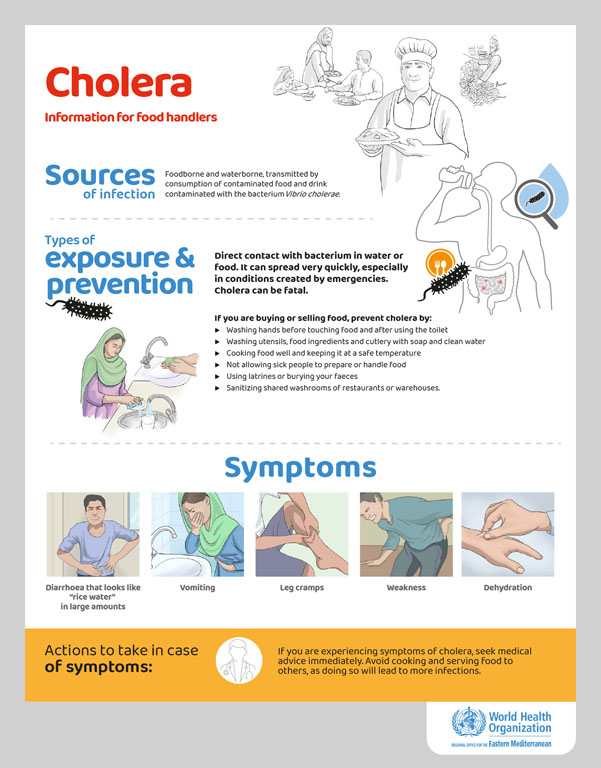
How to avoid cholera?
Use safe water for drinking and cooking.
Wash your hands with soap after using the toilet.
Wash your hands with soap before consuming food.
Ensure that vegetables and meat are washed thoroughly with safe water and that food is properly cooked.
If you do not have a safe piped water system, ensure that the water source is away (at least 30 metres) from the toilet.
How do I know if I have cholera?
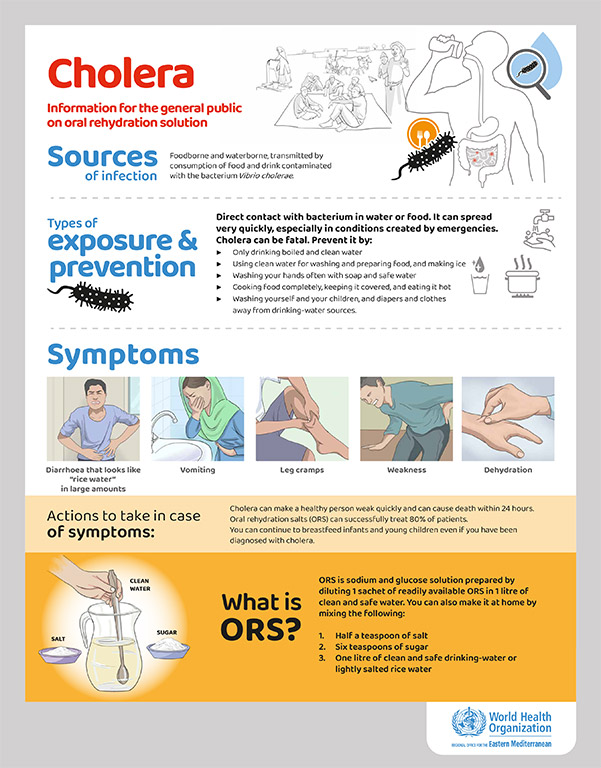
Any person suffering from watery stool for 3 or more times, within 24 hours, with or without vomiting, might be developing cholera symptoms.
Cholera symptoms also include the following:
Diarrhoea that looks like “rice water” in large amounts.
Muscles cramps .
Weaknesses (fatigue) .
Signs of dehydration.
* If you suspect that you have cholera, consult a physician at the nearest health facility immediately and start drinking oral rehydration solution (ORS).
How long does it take to show cholera symptoms?
It takes between 12 hours and 5 days for a person to show cholera symptoms after ingesting contaminated food or water.
How is cholera treated?
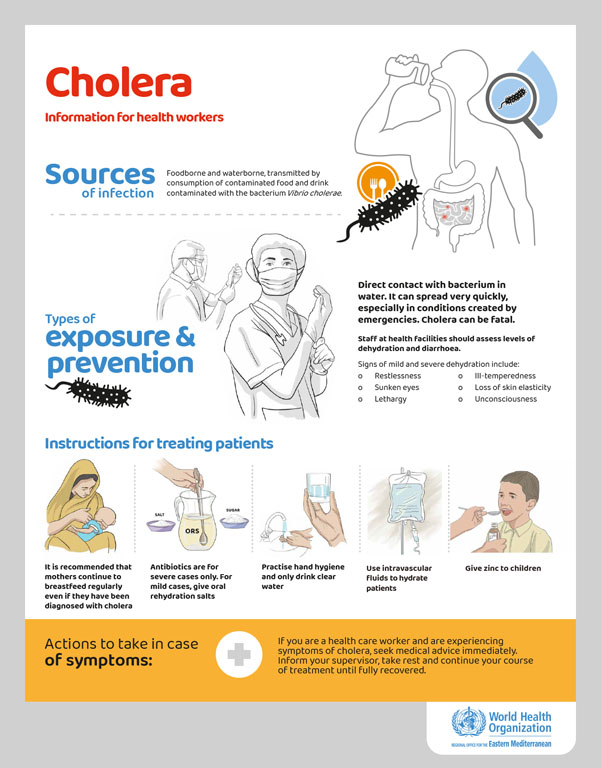
Cholera is an easily treatable disease. Most people can be treated successfully through prompt administration of ORS.
If the disease is severe, hospital admission is necessary for the rapid administration of intravenous fluids and for prescribing appropriate antibiotics, as needed.
Zinc is an important adjunctive therapy for children younger than 5 years old, which also reduces the duration of diarrhoea and may prevent future episodes of other causes of acute watery diarrhoea. Breastfeeding should also be promoted for children who are suspected of having cholera symptoms.
* If you suspect that you have cholera, consult a physician at the nearest health facility immediately and start drinking ORS.
What is oral rehydration solution (ORS)?
ORS is sodium and glucose solution prepared by diluting one sachet of readily available ORS in one litre of clean and safe water. ORS is a special combination of dry salts that, when properly mixed with safe water, can help rehydrate the body when a lot of fluid has been lost due to diarrhoea.
Who can take the cholera vaccine?
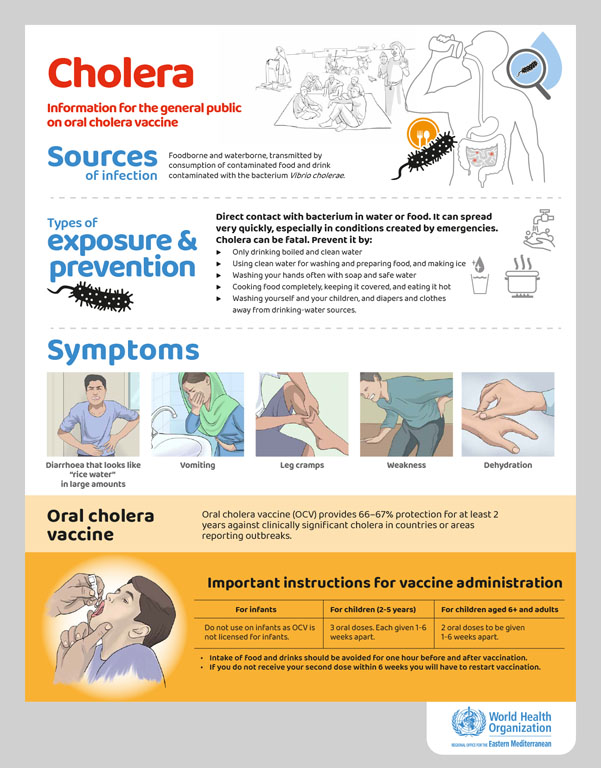
The cholera vaccine is safe and effective, and the target age group is anyone above one-year-old.
Currently, there are 3 WHO pre-qualified oral cholera vaccines (OCV): Dukoral®, Shanchol™, and Euvichol®. All three vaccines require 2 doses for full protection.
Is the cholera vaccine safe?
Yes, it is safe.
In both pre-licensure studies and post-marketing surveillance, available cholera vaccines have shown to have a good safety profile, including when used during pregnancy and in HIV-infected individuals or other immunocompromised individuals (individuals with a weak immune system). In clinical trials involving around 240 000 participants, adverse events were no more common in vaccinees than in placebo recipients.
Can I take the cholera vaccine if I have cholera symptoms?
Yes.
Can I stop cholera from spreading?
To avoid spreading cholera, take the following measures:
Boil water and bring it to a complete boil for at least one minute.
Cook food well for at least 30 minutes at 60 °C and keep it covered.
Eat the food while it is hot, and peel fruit and vegetables.
Wash your hands before eating or preparing food and before feeding your children.
Wash your hands after using latrine or toilet.
Wash your hands after taking care of someone who has diarrhoea, touching them, their stool, vomit or clothes.
Avoid defaecation in the open or near water sources and use latrines or other sanitation facilities to dispose of faeces.
Use one of the locally available water treatment products for drinking.
Add household bleach (chlorine) to the water and wait 30 minutes before using it for hand washing and cleaning surfaces or clothes.
Can cholera transmit between people?
Human beings are the only reservoir for Vibrio cholerae. An infected person can shed the bacteria in the environment through faeces and if these excreta are not well treated or managed it will be the source of environmental contamination and will be transmitted through the orofaecal route to other individuals.
How can I take care of someone infected with cholera and protect myself?
If you are taking care of someone infected with cholera, make sure to take the following precautious measures:
Always wear gloves whenever you are in direct contact with the patient’s vomit or stool.
Always wash your hands with soap and safe and clean water, after being in direct contact with the patient, and always clean the surface and clothes with safe chlorinated water.
Always properly and thoroughly clean and wash raw vegetables and fruit before consumption.
Always wash your hands with soap and safe and clean water before preparing food, eating or feeding others.
Information resources
Posters
Videos
Resources
Resources on advocacy, case management, oral cholera vaccine, surveillance, and WASH
Courses
openWHO: Introduction to cholera
openWHO: Revised cholera kits and calculation tool
Meeting reports
Related links
Global Task Force on Cholera Control (GTFCC)
Pandemic- and epidemic-prone diseases