

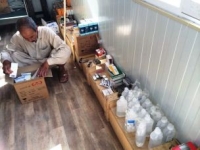
 Some of the supplies provided by WHO will be distributed by the national health authorities to clinics such as this one in Garmawa camp, Dohuk Erbil, Iraq, 5 July – The World Health Organization has provided medicines and medical supplies for more than 170 000 beneficiaries in areas affected by the recent crisis in Iraq. Many of these areas are experiencing ongoing clashes, creating challenges for affected populations requiring health services in the midst of insecurity.
In the Sinjar district of Ninewah governorate, more than 8000 internally displaced persons are living in schools, houses under construction and rented accommodation.
Health facilities are reporting severe shortages in medicines, medical supplies and fuel, as well as shortages in food, water, electrical generators, mattresses and blankets. Sinjar Hospital is overburdened with patients and is receiving more than 1000 outpatients daily, compared to 200 prior to the crisis. Earlier this week, WHO provided two interagency emergency health kits for 20 000 beneficiaries for three months to Sinjar in a UNICEF convoy containing other essential items for families and children.
Despite challenges in access to Mosul as a result of the insecurity, WHO was able to provide one interagency emergency health kit for 10 000 beneficiaries for three months to the directorate of health in Mosul with the support of the International Committee of the Red Cross.
Clashes in Al Hamdaneya district have resulted in health facilities reporting shortages in medicines and medical supplies. In response, WHO provided one interagency emergency health kit for 10 000 beneficiaries for three months and 1 diarrhoeal disease kit for 400 beneficiaries.
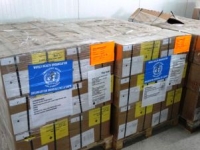 In June, WHO provided medicines and medical supplies for more than 170 000 people in northern and central Iraq, as well as the Kurdistan region of Iraq To ensure the continued flow of medicines to Ninewah governorate, WHO has facilitated the transportation of more than 15 tonnes of medicines from the central supply store in Baghdad via military aircraft to Erbil. These medicines will be distributed by the central ministry of health to health facilities in the Ninewah governorate of northern Iraq, including Mosul.
In Kirkuk, where clashes are ongoing, WHO has provided interagency emergency health kits, trauma kits, oral rehydration salts and diarrhoeal disease kits for more than 35 000 direct beneficiaries.
WHO has also provided medicines to Fallujah, where the health system was severely damaged as a result of the clashes in January. "Only the emergency unit of the main hospital is functioning In Falluja," said Dr Syed Jaffar Hussain, WHO representative in Iraq. "WHO was able to provide the hospital with medicines and surgical supplies to treat almost 45 000 people." The delivery of these supplies took place with the support of the International Committee of the Red Cross and the Iraqi Ministry of Health.
In the Kurdistan region of Iraq, health facilities are overburdened with the arrival of more than 500 000 internally displaced persons. Health facilities usually receive 40%-50% of their medicines and medical supplies from the central supply store in Baghdad. Due to blocked roads as a result of the recent insecurity, this flow of medicines and medical supplies has been halted and hospitals are now reporting severe shortages.
"Hospitals are in desperate need of help," said Dr Raad Najmaddin, liaison for internally displaced persons and refugees with the Erbil Directorate of Health. "Since the crisis in June, we have been facing increasing caseloads of patients with chronic diseases, including kidney failure diseases, as well as diarrhoeal diseases. So far, we have distributed medicines from WHO to four areas hosting IDPs and the emergency hospital. It’s crucial that we continue to provide health services for these people: we need to provide them with medicines, follow-up and a healthy and safe environment to live in.