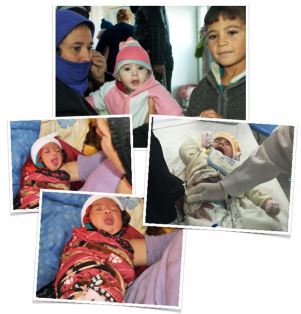
 Baghdad, 3 February 2016 – Immunization is one of the most important preventive health actions in children’s lives as it provides protection against the most dangerous childhood diseases.
Iraqi children are set to receive protection from 6 major childhood diseases after the country’s introduction of the inactivated polio vaccine (IPV) as part of its national immunization programme. It is given to children at the age of 2 months, 4 months and 6 months. The IPV is introduced as a combination vaccine that contains antigens against polio, diphtheria, tetanus, whooping cough, hepatitis B and Haemophilus influenzae type B (the bacteria that causes meningitis, pneumonia and otitis). Introduction of IPV is one of the key pillars in the global polio eradication effort, which seeks to completely eliminate this terrible disease. To date, the polio virus has been eliminated from every country except for some small areas of Afghanistan and Pakistan.
Achieving immunization through administration of vaccines to children is a priority because of major risks of contracting diseases, such as measles, whooping cough and others. These diseases can be fatal in some cases and may lead to long-term debilitating effects on survivors. Through decades of polio eradication efforts, one lesson learnt was that a combination of innovations tailored to the specific country context can deliver success in even the most challenging conditions.
"WHO acknowledges the Government of Iraq's commitment to childhood vaccination and supports the introduction of IPV-containing vaccine as part of the Endgame Strategic Plan for the Global Polio Eradication Initiative," said acting WHO Representative Altaf Musani.
A polio-free world will also lay the foundation for a better public health system that provides critical health services for children in the poorest and most inaccessible places.
“Polio eradication activities have pioneered multiple innovations and demonstrated that health service can, and must reach every child. The introduction of IPV into the Iraq public health structure is one step forward to ensure that Iraqi children are protected from polio, and also that they have equitable access to all health services,” added Peter Hawkins, UNICEF Country Representative in Iraq.
In May 2015, Iraq was removed from the list of infected countries, a landmark achieved through the continued support of WHO, UNICEF and multiple partners in Global Polio Eradication Initiative.
Related links
Polio Eradication and Endgame Strategic Plan 2013–2018
More information on polio
Eradicating Polio – UNICEF
For more information, please contact:
Ms Rosane Lopes
Communications Officer
World Health Organization
Iraq Country Office
This email address is being protected from spambots. You need JavaScript enabled to view it.
+964 7809 288 614
Ms Ajyal Sultany
Communications Officer
World Health Organization
Iraq Country Office
This email address is being protected from spambots. You need JavaScript enabled to view it.
+964 7510 101 469
Mr Jeffrey Bates
Chief of Communications
UNICEF Iraq
This email address is being protected from spambots. You need JavaScript enabled to view it.
+964 780 196 4524
Mr Karim Elkorany
Communications Specialist
UNICEF Iraq
This email address is being protected from spambots. You need JavaScript enabled to view it.
+964 780 925 8542
Baghdad, 3 February 2016 – Immunization is one of the most important preventive health actions in children’s lives as it provides protection against the most dangerous childhood diseases.
Iraqi children are set to receive protection from 6 major childhood diseases after the country’s introduction of the inactivated polio vaccine (IPV) as part of its national immunization programme. It is given to children at the age of 2 months, 4 months and 6 months. The IPV is introduced as a combination vaccine that contains antigens against polio, diphtheria, tetanus, whooping cough, hepatitis B and Haemophilus influenzae type B (the bacteria that causes meningitis, pneumonia and otitis). Introduction of IPV is one of the key pillars in the global polio eradication effort, which seeks to completely eliminate this terrible disease. To date, the polio virus has been eliminated from every country except for some small areas of Afghanistan and Pakistan.
Achieving immunization through administration of vaccines to children is a priority because of major risks of contracting diseases, such as measles, whooping cough and others. These diseases can be fatal in some cases and may lead to long-term debilitating effects on survivors. Through decades of polio eradication efforts, one lesson learnt was that a combination of innovations tailored to the specific country context can deliver success in even the most challenging conditions.
"WHO acknowledges the Government of Iraq's commitment to childhood vaccination and supports the introduction of IPV-containing vaccine as part of the Endgame Strategic Plan for the Global Polio Eradication Initiative," said acting WHO Representative Altaf Musani.
A polio-free world will also lay the foundation for a better public health system that provides critical health services for children in the poorest and most inaccessible places.
“Polio eradication activities have pioneered multiple innovations and demonstrated that health service can, and must reach every child. The introduction of IPV into the Iraq public health structure is one step forward to ensure that Iraqi children are protected from polio, and also that they have equitable access to all health services,” added Peter Hawkins, UNICEF Country Representative in Iraq.
In May 2015, Iraq was removed from the list of infected countries, a landmark achieved through the continued support of WHO, UNICEF and multiple partners in Global Polio Eradication Initiative.
Related links
Polio Eradication and Endgame Strategic Plan 2013–2018
More information on polio
Eradicating Polio – UNICEF
For more information, please contact:
Ms Rosane Lopes
Communications Officer
World Health Organization
Iraq Country Office
This email address is being protected from spambots. You need JavaScript enabled to view it.
+964 7809 288 614
Ms Ajyal Sultany
Communications Officer
World Health Organization
Iraq Country Office
This email address is being protected from spambots. You need JavaScript enabled to view it.
+964 7510 101 469
Mr Jeffrey Bates
Chief of Communications
UNICEF Iraq
This email address is being protected from spambots. You need JavaScript enabled to view it.
+964 780 196 4524
Mr Karim Elkorany
Communications Specialist
UNICEF Iraq
This email address is being protected from spambots. You need JavaScript enabled to view it.
+964 780 925 8542