WHO supports a vital pediatric hospital in Iraq, bringing quality care to the most vulnerable.
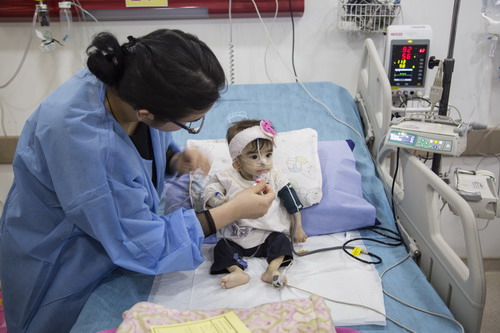 Lina tends to her daughter Karla in the pediatric ICU at the Duhok Pediatric Teaching Hospital. © WHO Iraq/S.Meyer
“My daughter had some problems with her chest, so I brought her in for a checkup,” says Lina Addulmasseh.
The young mother is sitting beside her ten-month-old baby, Karla, in the intensive care unit (ICU) in Duhok’s Heevi Pediatric Hospital. The unit’s five other beds are full, and mothers sit quietly at their babies’ sides. Several babies are connected to High Flow Nasal Connula machines, which assist their breathing.
“I was worried and scared,” Lina said, after receiving a diagnosis that no parent wants to hear: Karla’s checkup had identified a congenital heart defect and pneumonia.
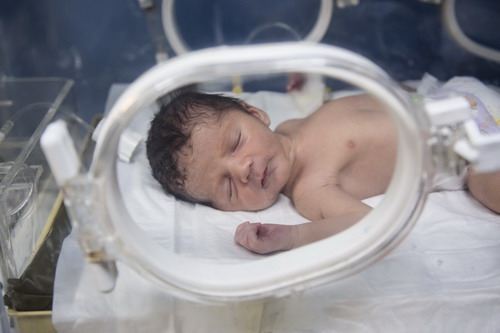 Baby Masrour is kept warm in an incubator in the pediatric ICU. © WHO Iraq/S.Meyer
Heevi is the only specialist pediatric hospital in northern Iraq. Support from the World Health Organization (WHO) has been critical to its mission to provide quality tertiary treatment to Iraq’s most vulnerable families.
Working with NGO Italian Association for Solidarity among People (AISPO) and the Duhok Directorate of Health (DoH), the hospital has been renovated and equipped with sophisticated machinery. A pediatric ICU has been created and a semi intensive neo-natal unit (NICU) expanded and equipped. Staff have been trained to international standards.
“Two hundred and fifty four children have been admitted to the NICU since August 2016. Seventy per cent were successfully treated. If there was no NICU, most of these children would have died,” says hospital Director Dr Nizar Bekir.
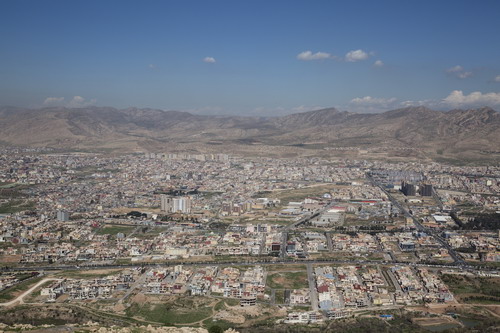 The city of Dohuk in Iraq’s Kurdistan Region. © WHO Iraq/S.Meyer
The influx of Syrian refuges in 2013 and displaced Iraqi families in 2014 has placed a heavy burden on health services. Up to 60 per cent of Heevi patients are refugees or displaced people. The hospital has 158 beds in total and an occupancy rate of 98 per cent. Sometimes wards are so full that staff are obliged to put two or three patients in one bed. The NICU has an overflow ward.
“There are 2.2 million people in Duhok province and 50 per cent are under the age of 18. This is the only pediatric hospital for tertiary care. These ICU beds are the only six beds for one million people. And the NICU, with nine beds, is the same,” says AISPO Head of Mission Alessandra Rossi.
Next door in the NICU, Almas, 15, sits by the side of her daughter Amila, who is just four days old. Amila is her first child and Almas, a displaced Yazidi, gave birth one month prematurely.
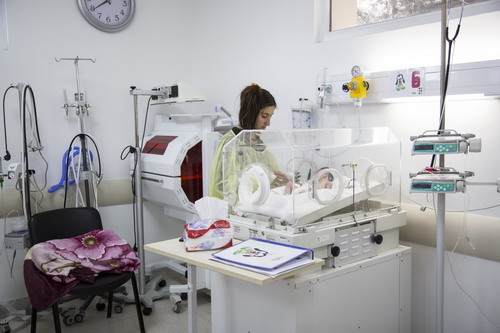 Almas with her daugher Amila in the NICU. © WHO Iraq/S.Meyer
“She’s weak but the staff are taking care of her,” she says.
There are now around 430,000 displaced Iraqis in Duhok – more than 179,000 live in camps. There are also 87,000 Syrian refugees in the region. The majority of displaced and refugee families live in host communities, often in sub-standard conditions.
“There are problems, especially during the winter. Children are exposed to disease and suffer from bronchitis. They come to hospital needing oxygen. We need more space for critical beds,” says Dr Bekir.
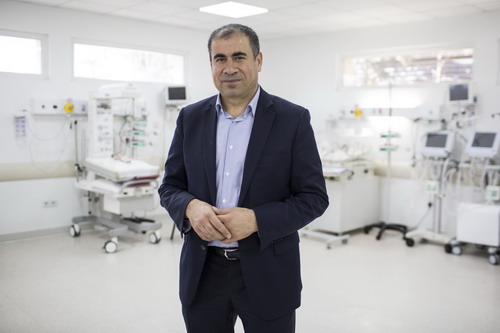 Dr Nizar Bekir, Director of the Pediatric Teaching Hospital. © WHO Iraq/S.Meyer
After 40 days in hospital, Karla has the strength to sit up, and her doctors are waiting for her pneumonia to clear up before operating on her heart.
Her mother is not as worried. She knows her daughter is in good hands—she’s getting the best possible care, and it’s free.
“AISPO and WHO have left a positive footprint in our hospital. This work is going to remain forever. We help critically ill children to live. They will always be part of this place,” says Dr Bekir.
###
WHO’s emergency health support in Iraq is funded by generous donations from OFDA, ECHO, Italy, Germany, Kuwait, Japan, Korea, China, OCHA/CERF, and UNDP. In 2018, WHO and health cluster require US$ 64.7 million to support health needs in Iraq, of which approximately 10% is currently funded.
More on the health crisis in Iraq.
Medium example of this story
WHO supports a vital pediatric hospital in Iraq, bringing quality care to the most vulnerable.
Lina tends to her daughter Karla in the pediatric ICU at the Duhok Pediatric Teaching Hospital. © WHO Iraq/S.Meyer
“My daughter had some problems with her chest, so I brought her in for a checkup,” says Lina Addulmasseh.
The young mother is sitting beside her ten-month-old baby, Karla, in the intensive care unit (ICU) in Duhok’s Heevi Pediatric Hospital. The unit’s five other beds are full, and mothers sit quietly at their babies’ sides. Several babies are connected to High Flow Nasal Connula machines, which assist their breathing.
“I was worried and scared,” Lina said, after receiving a diagnosis that no parent wants to hear: Karla’s checkup had identified a congenital heart defect and pneumonia.
Baby Masrour is kept warm in an incubator in the pediatric ICU. © WHO Iraq/S.Meyer
Heevi is the only specialist pediatric hospital in northern Iraq. Support from the World Health Organization (WHO) has been critical to its mission to provide quality tertiary treatment to Iraq’s most vulnerable families.
Working with NGO Italian Association for Solidarity among People (AISPO) and the Duhok Directorate of Health (DoH), the hospital has been renovated and equipped with sophisticated machinery. A pediatric ICU has been created and a semi intensive neo-natal unit (NICU) expanded and equipped. Staff have been trained to international standards.
“Two hundred and fifty four children have been admitted to the NICU since August 2016. Seventy per cent were successfully treated. If there was no NICU, most of these children would have died,” says hospital Director Dr Nizar Bekir.
The city of Dohuk in Iraq’s Kurdistan Region. © WHO Iraq/S.Meyer
The influx of Syrian refuges in 2013 and displaced Iraqi families in 2014 has placed a heavy burden on health services. Up to 60 per cent of Heevi patients are refugees or displaced people. The hospital has 158 beds in total and an occupancy rate of 98 per cent. Sometimes wards are so full that staff are obliged to put two or three patients in one bed. The NICU has an overflow ward.
“There are 2.2 million people in Duhok province and 50 per cent are under the age of 18. This is the only pediatric hospital for tertiary care. These ICU beds are the only six beds for one million people. And the NICU, with nine beds, is the same,” says AISPO Head of Mission Alessandra Rossi.
Next door in the NICU, Almas, 15, sits by the side of her daughter Amila, who is just four days old. Amila is her first child and Almas, a displaced Yazidi, gave birth one month prematurely.
Almas with her daugher Amila in the NICU. © WHO Iraq/S.Meyer
“She’s weak but the staff are taking care of her,” she says.
There are now around 430,000 displaced Iraqis in Duhok – more than 179,000 live in camps. There are also 87,000 Syrian refugees in the region. The majority of displaced and refugee families live in host communities, often in sub-standard conditions.
“There are problems, especially during the winter. Children are exposed to disease and suffer from bronchitis. They come to hospital needing oxygen. We need more space for critical beds,” says Dr Bekir.
Dr Nizar Bekir, Director of the Pediatric Teaching Hospital. © WHO Iraq/S.Meyer
After 40 days in hospital, Karla has the strength to sit up, and her doctors are waiting for her pneumonia to clear up before operating on her heart.
Her mother is not as worried. She knows her daughter is in good hands—she’s getting the best possible care, and it’s free.
“AISPO and WHO have left a positive footprint in our hospital. This work is going to remain forever. We help critically ill children to live. They will always be part of this place,” says Dr Bekir.
###
WHO’s emergency health support in Iraq is funded by generous donations from OFDA, ECHO, Italy, Germany, Kuwait, Japan, Korea, China, OCHA/CERF, and UNDP. In 2018, WHO and health cluster require US$ 64.7 million to support health needs in Iraq, of which approximately 10% is currently funded.
More on the health crisis in Iraq.
Medium example of this story