 WHO team visits health facility providing health care to internally displaced persons and Syrian refugees in Kurdistan regionErbil, 18 June 2015 – Kuwait's generous contribution of US$ 10 million to Iraq in July 2014 is supporting the efforts of United Nations agencies and humanitarian organizations to provide humanitarian assistance to displaced populations, refugees and host communities in the country.
Since the beginning of 2014, the upsurge in violence in Iraq has displaced over 2.9 million people who are in urgent need of health care among other essential basic needs, such as water, food, shelter, sanitation and protection from violence.
“Due to the overwhelming numbers of Iraqis who have been displaced from Anbar, Salah-Aldine, Ninewa, Kirkuk and Diyala, plus the additional 248 000 Syrian refugees living in 9 camps located in Dohuk, Erbil, Sulaymaniyah, and Anbar governorates, it has become increasingly challenging to respond to all health needs of these displaced populations,” said Dr Jaffar Hussain, WHO Representative and Head of Mission in Iraq. Dr Hussain added that “The provision of health care services in Iraq continues to be a challenge that requires the urgent support and attention of the humanitarian community.”
Despite the immensity of health needs which has placed a huge strain on already stretched health systems, WHO, with the support of the international community, has ensured that internally displaced people (IDPs) and Syrian refugees in Iraq have access to preventive and curative health care services through close coordination with national health authorities and partners and complementary programmes and activities for the best possible use of available resources.
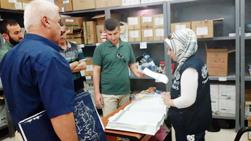
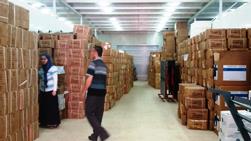 WHO warehouse in Erbil where medications are prepared for shipping to Syrian refugees and internally displaced persons camps in the Kurdistan regionThrough the contribution of the Government of Kuwait, WHO has been able to provide support to the Ministries of Health (federal and Kurdistan Regional Government) in term of technical support and monitoring and evaluation of health service provision to affected populations. Since August 2014, 5 health projects in all areas hosting IDPs and refugees have been developed and implemented; these include:
- strengthening access to primary health care services for Syrian refugees inside and outside camps
- improving access of Syrian refugees with chronic diseases to medical and follow-up services
- improving water quality and establishing waste management measures in the refugee camps
- strengthening coordination and health system components
- strengthening disease surveillance.
In 2014, IDPs and Syrian refugees living in camps in Iraq have been receiving essential primary health care services despite the fact that access to health care in many areas poses enormous challenges, including high levels of out-of-pocket expenditure and unavailability of services in hard-to-reach areas.
Dr Hussain explained that appropriate utilization of services remained a challenge. He said that WHO would continue prioritizing communicable diseases and polio and measles campaigns throughout the Region. In May's campaign, a total of 5.3 million children under the age of 5 were vaccinated against polio, and 4.4 million children were vaccinated against measles from 6 April 2014 to 28 February 2015.
Despite substantial progress made in addressing the health needs of IDPs, the current alarmingly low level of funding, at a time when the number of IDPs is dramatically increasing, will lead to a reduction or even suspension of some activities that are critical to addressing health needs of IDPs.
In May 2015, WHO and its partners warned that 84% of health projects in Iraq would be closed by 30 June if funds were not made available. This situation would leave more than 3 million IDPs and Syrian refugees exposed to increasing risk of diseases as a consequence of the suspension in life-saving and health care services and the closure of mobile clinics serving IDPs on the move and providing health services in hard-to-reach areas and in remote IDP camps.
To maintain its health operations in Iraq for 2015–2016, WHO has appealed to the international community for urgent funding to the amount of US$ 60 million to meet health needs until the end of 2015.
Related link
Urgent funding needed to prevent imminent closure of health care projects in Iraq
Media contacts
Ms Ajyal Sultany
Communications Officer
WHO Iraq Office
This email address is being protected from spambots. You need JavaScript enabled to view it.
+964 7510 101 469
WHO team visits health facility providing health care to internally displaced persons and Syrian refugees in Kurdistan regionErbil, 18 June 2015 – Kuwait's generous contribution of US$ 10 million to Iraq in July 2014 is supporting the efforts of United Nations agencies and humanitarian organizations to provide humanitarian assistance to displaced populations, refugees and host communities in the country.
Since the beginning of 2014, the upsurge in violence in Iraq has displaced over 2.9 million people who are in urgent need of health care among other essential basic needs, such as water, food, shelter, sanitation and protection from violence.
“Due to the overwhelming numbers of Iraqis who have been displaced from Anbar, Salah-Aldine, Ninewa, Kirkuk and Diyala, plus the additional 248 000 Syrian refugees living in 9 camps located in Dohuk, Erbil, Sulaymaniyah, and Anbar governorates, it has become increasingly challenging to respond to all health needs of these displaced populations,” said Dr Jaffar Hussain, WHO Representative and Head of Mission in Iraq. Dr Hussain added that “The provision of health care services in Iraq continues to be a challenge that requires the urgent support and attention of the humanitarian community.”
Despite the immensity of health needs which has placed a huge strain on already stretched health systems, WHO, with the support of the international community, has ensured that internally displaced people (IDPs) and Syrian refugees in Iraq have access to preventive and curative health care services through close coordination with national health authorities and partners and complementary programmes and activities for the best possible use of available resources.
WHO warehouse in Erbil where medications are prepared for shipping to Syrian refugees and internally displaced persons camps in the Kurdistan regionThrough the contribution of the Government of Kuwait, WHO has been able to provide support to the Ministries of Health (federal and Kurdistan Regional Government) in term of technical support and monitoring and evaluation of health service provision to affected populations. Since August 2014, 5 health projects in all areas hosting IDPs and refugees have been developed and implemented; these include:
- strengthening access to primary health care services for Syrian refugees inside and outside camps
- improving access of Syrian refugees with chronic diseases to medical and follow-up services
- improving water quality and establishing waste management measures in the refugee camps
- strengthening coordination and health system components
- strengthening disease surveillance.
In 2014, IDPs and Syrian refugees living in camps in Iraq have been receiving essential primary health care services despite the fact that access to health care in many areas poses enormous challenges, including high levels of out-of-pocket expenditure and unavailability of services in hard-to-reach areas.
Dr Hussain explained that appropriate utilization of services remained a challenge. He said that WHO would continue prioritizing communicable diseases and polio and measles campaigns throughout the Region. In May's campaign, a total of 5.3 million children under the age of 5 were vaccinated against polio, and 4.4 million children were vaccinated against measles from 6 April 2014 to 28 February 2015.
Despite substantial progress made in addressing the health needs of IDPs, the current alarmingly low level of funding, at a time when the number of IDPs is dramatically increasing, will lead to a reduction or even suspension of some activities that are critical to addressing health needs of IDPs.
In May 2015, WHO and its partners warned that 84% of health projects in Iraq would be closed by 30 June if funds were not made available. This situation would leave more than 3 million IDPs and Syrian refugees exposed to increasing risk of diseases as a consequence of the suspension in life-saving and health care services and the closure of mobile clinics serving IDPs on the move and providing health services in hard-to-reach areas and in remote IDP camps.
To maintain its health operations in Iraq for 2015–2016, WHO has appealed to the international community for urgent funding to the amount of US$ 60 million to meet health needs until the end of 2015.
Related link
Urgent funding needed to prevent imminent closure of health care projects in Iraq
Media contacts
Ms Ajyal Sultany
Communications Officer
WHO Iraq Office
This email address is being protected from spambots. You need JavaScript enabled to view it.
+964 7510 101 469