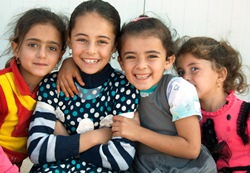
 13 March 2016 – Amira, aged 5, from Ramadi City, Iraq, is one of the tens of thousands of refugees and migrants in need of health care. The arrival of a mobile primary health care clinic is giving her a reason to smile.
“I was sick and I was afraid of what could happen to me. The mobile clinic staff provided me with a sense of protection. I now have the strength to help my family, think about my future and I can’t wait to go back to school,” she said.
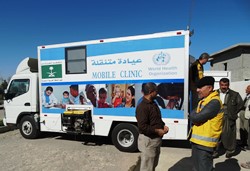 This mobile clinic, supported by WHO, operates in one of the Amriyat Al-Fallujah camps. The clinics have been in circulation in Iraq for about a year and are linked to the health care system. Clinics are located in Anbar and Baghdad governorates, Kirkuk, Diyala, Erbil, Dohuk and Sulaymaniyah.The scale of this emergency has increased exponentially and has become increasingly complex. There is a pressing need to reach every person, especially the most disadvantaged with much needed health care.
WHO, health cluster partners and the Ministry of Health of Iraq work together to engage local public health partners, citizens, key stakeholders and civil society in the planning and implementation of community-based health initiatives using efficient and local solutions and sharing information directly with the community.
One of the initiatives has been to establish mobile clinics in hard-to-reach areas in Iraq. The mobile clinic project is geared to improve health outcomes and the quality of life in internally displaced persons camps through provision of direct medical and health care services, health promotion and disease prevention activities, social support, case management services and referral to medical and social resources in the community.
Amira is one of the many people among adults and children requiring care at the clinic. Today, according to United Nations reports, approximately 3.3 million people are displaced and would benefit from direct access to health care services.
Acting WHO Representative for Iraq Altaf Musani pointed out that “Mobile clinics give us an insight into people’s health histories to be able us to prevent and treat health conditions accordingly. Moreover, those displaced feel a sense of security when seeing a doctor in the field”.
We need to expand this type of service throughout Iraq by December this year. Outreach health services are being provided in and out of the camps and communities are being equally empowered, he adds.
Currently, WHO has provided Iraq with 27 mobile medical clinics and 30 ambulances and health personnel are being trained to ensure provision of quality health care.
For more information, please contact:
Ms Rosane Lopes
Communications Officer
World Health Organization
Iraq country office
This email address is being protected from spambots. You need JavaScript enabled to view it.
+964 7809 288 614
Ms Ajyal Sultany
Communications Officer
World Health Organization
Iraq country office
This email address is being protected from spambots. You need JavaScript enabled to view it.
+964 7510 101 469
13 March 2016 – Amira, aged 5, from Ramadi City, Iraq, is one of the tens of thousands of refugees and migrants in need of health care. The arrival of a mobile primary health care clinic is giving her a reason to smile.
“I was sick and I was afraid of what could happen to me. The mobile clinic staff provided me with a sense of protection. I now have the strength to help my family, think about my future and I can’t wait to go back to school,” she said.
This mobile clinic, supported by WHO, operates in one of the Amriyat Al-Fallujah camps. The clinics have been in circulation in Iraq for about a year and are linked to the health care system. Clinics are located in Anbar and Baghdad governorates, Kirkuk, Diyala, Erbil, Dohuk and Sulaymaniyah.The scale of this emergency has increased exponentially and has become increasingly complex. There is a pressing need to reach every person, especially the most disadvantaged with much needed health care.
WHO, health cluster partners and the Ministry of Health of Iraq work together to engage local public health partners, citizens, key stakeholders and civil society in the planning and implementation of community-based health initiatives using efficient and local solutions and sharing information directly with the community.
One of the initiatives has been to establish mobile clinics in hard-to-reach areas in Iraq. The mobile clinic project is geared to improve health outcomes and the quality of life in internally displaced persons camps through provision of direct medical and health care services, health promotion and disease prevention activities, social support, case management services and referral to medical and social resources in the community.
Amira is one of the many people among adults and children requiring care at the clinic. Today, according to United Nations reports, approximately 3.3 million people are displaced and would benefit from direct access to health care services.
Acting WHO Representative for Iraq Altaf Musani pointed out that “Mobile clinics give us an insight into people’s health histories to be able us to prevent and treat health conditions accordingly. Moreover, those displaced feel a sense of security when seeing a doctor in the field”.
We need to expand this type of service throughout Iraq by December this year. Outreach health services are being provided in and out of the camps and communities are being equally empowered, he adds.
Currently, WHO has provided Iraq with 27 mobile medical clinics and 30 ambulances and health personnel are being trained to ensure provision of quality health care.
For more information, please contact:
Ms Rosane Lopes
Communications Officer
World Health Organization
Iraq country office
This email address is being protected from spambots. You need JavaScript enabled to view it.
+964 7809 288 614
Ms Ajyal Sultany
Communications Officer
World Health Organization
Iraq country office
This email address is being protected from spambots. You need JavaScript enabled to view it.
+964 7510 101 469