

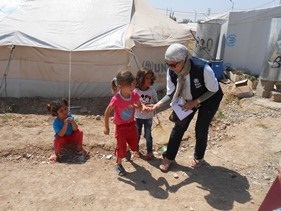
 13 August, 2014 – The World Health Organization is supporting the delivery of urgently needed health services to people affected by insecurity in northern Iraq, including tens of thousands of children, women and men trapped on Sinjar Mountain and many more who have escaped to safer areas.
“The health situation on Sinjar Mountain is precarious for approximately tens of thousands of people believed trapped there, while more than 60,000 who have crossed the FeshKhabour border-point through Syria to enter back into Iraq at Dohuk,” said Dr Jaffar Hussain, WHO’s Representative to Iraq.
Read more about WHO's response in northern Iraq