

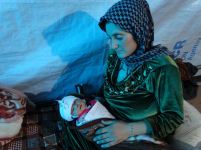
 Two-day-old baby Asel Shamo being held by her mother inside unfinished building. Photo credit: WHO/P Ajello 13 November 2014 - Asel Shamo, a 2-day-old baby, starts her new life in an unfinished building on Zakho road in a warehouse with her 21-year-old mother (Nasima Kachol) and 19 other people in a little tarpaulin covered space.
Asel, Raveen Sadiq, a 20-day-old baby, as well as hundreds of other children are at risk of contracting communicable diseases, as well as experiencing adverse health outcomes due to exposure to cold weather conditions. Currently living conditions are open spaces in unfinished buildings. A child’s growth and development depend on many factors, including access to health services, clean water, food security and shelter.
In Zakho road, children and their parents live in tarpaulins put together to separate one family space from another, while others live in unsafe mud structures; negatively impacting on their lives and livelihoods. Given the overcrowding within these poor structures children are at higher risk of adverse health outcomes. The increased risk of food- and waterborne diseases will have a direct impact on a child's normal development.
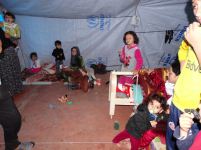 Two-day-old baby Asel Shamo, 20-day-old Raveen Sadiq, and 10 other children live inside this tented area. Photo credit: WHO/P Ajello “We need warm clothing, food and access to medicines. All the children in this closed and overcrowded space are coughing and have flu. They are sick and they have nothing to protect them from cold; when we fled our homes we only left with what we were wearing. It’s hard, it is difficult and we worry for the health and safety of our children,” said Buhar Khalid, mother of Raveen. She adds that 3 families of 20 people (12 children, 6 women and 4 men) live in one tiny covered space inside an unfinished building.
Increasing mobile medical teams to provide health care to those displaced will help alleviate some poor health outcomes. However, funding remains a major gap.
WHO through funding from Saudi Arabia is supporting the Directorate of Health, Duhok, to fund mobile medical services to address the health care gaps and ensure that children like Asel, Sadiq and hundred others have access to essential health services in areas of displacement.
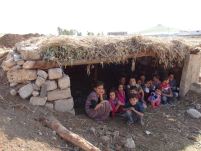 Due to limited space in the unfinished building some of the internally displaced are living in this mud shelter, which represents a real risk to the health of children, women and the elderly. Photo credit: WHO/P Ajello WHO requires US$ 187 million to support health interventions but has only received US$ 54 million thus far. A funding gap of 71%. In the coming month, the health situation is expected to deteriorate further among the displaced people and host communities due to winterization.