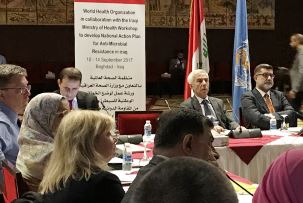
 11 September 2017, Baghdad, Iraq -- A consultative workshop from 10 to 14 September 2017 to develop Iraq’s national action plan to address antimicrobial resistance began yesterday in Baghdad. The workshop is a joint activity between the WHO Regional Office for the Eastern Mediterranean and the Ministry of Health of Iraq, with the participation of all concerned stakeholders in the fields of human health, animal health, agriculture and environment, including the Food and Agriculture Organization of the United Nations (FAO) and the World Organisation for Animal Health (OIE).
During the opening session, the Deputy Minister of Health Dr Zamel Al-‘Arebi, on behalf of H.E the Minister of Health, welcomed WHO’s initiative to support the country's efforts to respond to antimicrobial resistance as a serious public health problem. He highlighted the importance of collaboration among the three levels of health care to provide quality health services to citizens. He stressed the importance of strengthening the health system to reduce the threat posed by antimicrobial resistance.
In his opening remarks, Dr Ihsan Jaffal Ahmed, Director General of Public Health Department, said that antimicrobial resistance represented an immense threat to human health and the global economy. He stressed the importance of providing comprehensive health care services, in line with the Sustainable Development Goals, and the need to adopt preventative measures to address the issue and ensure availability of effective treatment through ensuring rational use of medicines and antibiotics.
Dr Ali Akber delivered the opening message of Mr Altaf Mussani, WHO Representative in Iraq, and said that the threat being faced was due to the misuse and overuse of antibiotics and action must be taken to contain the problem. 10 million deaths were expected to occur and US$ 100 trillion would be lost by 2050 if the problem of antimicrobial resistance was not addressed.
The outcome of the workshop will be the development of a draft national action plan on antimicrobial resistance based around 5 strategic areas:
- improving awareness and understanding of antimicrobial resistance through effective communication, education and training;
- strengthening knowledge through surveillance and research;
- reducing the incidence of infection through improved infection prevention and control measures;
- optimizing the use of antimicrobial agents in human and animal health;
- promoting research and innovation at the national level.
The workshop is being facilitated by a multi-disciplinary team of experts from the WHO Regional Office and WHO will continue to provide technical support to the development and eventual implementation of the plan.
Related links
Global Action Plan on Antimicrobial Resistance (2015)
Food and Agriculture Organization of the United Nations
World Organisation for Animal Health
11 September 2017, Baghdad, Iraq -- A consultative workshop from 10 to 14 September 2017 to develop Iraq’s national action plan to address antimicrobial resistance began yesterday in Baghdad. The workshop is a joint activity between the WHO Regional Office for the Eastern Mediterranean and the Ministry of Health of Iraq, with the participation of all concerned stakeholders in the fields of human health, animal health, agriculture and environment, including the Food and Agriculture Organization of the United Nations (FAO) and the World Organisation for Animal Health (OIE).
During the opening session, the Deputy Minister of Health Dr Zamel Al-‘Arebi, on behalf of H.E the Minister of Health, welcomed WHO’s initiative to support the country's efforts to respond to antimicrobial resistance as a serious public health problem. He highlighted the importance of collaboration among the three levels of health care to provide quality health services to citizens. He stressed the importance of strengthening the health system to reduce the threat posed by antimicrobial resistance.
In his opening remarks, Dr Ihsan Jaffal Ahmed, Director General of Public Health Department, said that antimicrobial resistance represented an immense threat to human health and the global economy. He stressed the importance of providing comprehensive health care services, in line with the Sustainable Development Goals, and the need to adopt preventative measures to address the issue and ensure availability of effective treatment through ensuring rational use of medicines and antibiotics.
Dr Ali Akber delivered the opening message of Mr Altaf Mussani, WHO Representative in Iraq, and said that the threat being faced was due to the misuse and overuse of antibiotics and action must be taken to contain the problem. 10 million deaths were expected to occur and US$ 100 trillion would be lost by 2050 if the problem of antimicrobial resistance was not addressed.
The outcome of the workshop will be the development of a draft national action plan on antimicrobial resistance based around 5 strategic areas:
- improving awareness and understanding of antimicrobial resistance through effective communication, education and training;
- strengthening knowledge through surveillance and research;
- reducing the incidence of infection through improved infection prevention and control measures;
- optimizing the use of antimicrobial agents in human and animal health;
- promoting research and innovation at the national level.
The workshop is being facilitated by a multi-disciplinary team of experts from the WHO Regional Office and WHO will continue to provide technical support to the development and eventual implementation of the plan.
Related links
Global Action Plan on Antimicrobial Resistance (2015)
Food and Agriculture Organization of the United Nations
World Organisation for Animal Health