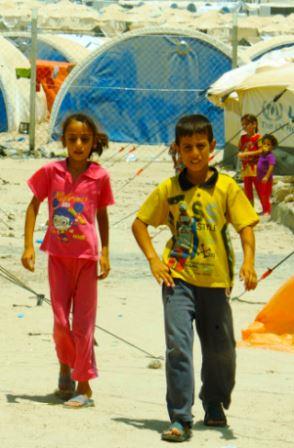
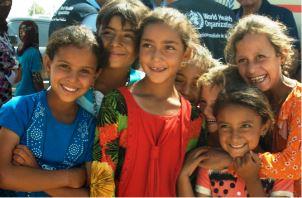
 Baghdad, 19 September 2016 – The Debaga internally displaced person (IDP) camp in Erbil governorate hosts around 33 000 persons from villages near the Qayyara district in the Ninewa governorate. This displacement occurred as the Government of Iraq engages in military action in preparation to regain control of Mosul. Over 15 000 children in Debaga camp were at very high risk of measles and polio due as they have had no access to immunization activities for about 2 years.
The Erbil Directorate of Health, with the Ministry of Health in Baghdad, the Ministry of Health of the Kurdistan Regional Government, UNICEF and WHO, implemented a 9-day vaccination campaign that started on 30 August 2016 to immunize children against polio and measles. The campaign targeted 15 000 children under 15 years old for polio vaccine and children between 9 months and 15 years for the measles vaccine.
The post campaign assessment supported by WHO, carried out by volunteers from the Iraqi Red Crescent Society, found that more than 95% of children were reached in this campaign.
Altaf Musani, WHO Representative in Iraq, said, “It doesn’t end there. The polio vaccine has to be administered at least 3 times to each child, so more efforts are needed to ensure immunization services established for IDPs to protect them against all vaccine-preventable diseases.
“Immunization activities like the one in Debaga camp are at the heart of UNICEF’s work. These children have been deprived of so much, and vaccination will protect them against killer diseases so they can continue to learn and grow,” added Peter Hawkins, UNICEF Iraq Country Representative.
Polio is an incurable, contagious disease that is easily preventable if children receive vaccines. In May 2016, Iraq was removed from the list of polio-vulnerable countries, a landmark achievement made through the continued support of WHO and UNICEF to the Central Government and the Kurdistan Regional Ministries of Health. Although Iraq has not reported a single polio case since April 2014, it remains at risk of polio importation due to difficult access to vaccination services for about 20% of its population.
 More resources are needed to ensure that all vulnerable children in Iraq live safe and healthy lives. Upward of US$ 3 million are needed to support vaccination services for populations affected by the operations in Mosul.
For more information, please contact:
Ms Rosane Lopes
Communications Officer
World Health Organization
Iraq Country Office
This email address is being protected from spambots. You need JavaScript enabled to view it.
+964 7809 288 614
Ms Ajyal Sultany
Communications Officer
World Health Organization
Iraq Country Office
This email address is being protected from spambots. You need JavaScript enabled to view it.
+964 7510 101 469
Mr Jeffrey Bates
Chief of Communications
UNICEF Iraq
This email address is being protected from spambots. You need JavaScript enabled to view it.
+964 780 196 4524
Related links
Polio Eradication and Endgame Strategic Plan 2013–2018
Read more about polio
Eradicating polio – UNICEF
Baghdad, 19 September 2016 – The Debaga internally displaced person (IDP) camp in Erbil governorate hosts around 33 000 persons from villages near the Qayyara district in the Ninewa governorate. This displacement occurred as the Government of Iraq engages in military action in preparation to regain control of Mosul. Over 15 000 children in Debaga camp were at very high risk of measles and polio due as they have had no access to immunization activities for about 2 years.
The Erbil Directorate of Health, with the Ministry of Health in Baghdad, the Ministry of Health of the Kurdistan Regional Government, UNICEF and WHO, implemented a 9-day vaccination campaign that started on 30 August 2016 to immunize children against polio and measles. The campaign targeted 15 000 children under 15 years old for polio vaccine and children between 9 months and 15 years for the measles vaccine.
The post campaign assessment supported by WHO, carried out by volunteers from the Iraqi Red Crescent Society, found that more than 95% of children were reached in this campaign.
Altaf Musani, WHO Representative in Iraq, said, “It doesn’t end there. The polio vaccine has to be administered at least 3 times to each child, so more efforts are needed to ensure immunization services established for IDPs to protect them against all vaccine-preventable diseases.
“Immunization activities like the one in Debaga camp are at the heart of UNICEF’s work. These children have been deprived of so much, and vaccination will protect them against killer diseases so they can continue to learn and grow,” added Peter Hawkins, UNICEF Iraq Country Representative.
Polio is an incurable, contagious disease that is easily preventable if children receive vaccines. In May 2016, Iraq was removed from the list of polio-vulnerable countries, a landmark achievement made through the continued support of WHO and UNICEF to the Central Government and the Kurdistan Regional Ministries of Health. Although Iraq has not reported a single polio case since April 2014, it remains at risk of polio importation due to difficult access to vaccination services for about 20% of its population.
More resources are needed to ensure that all vulnerable children in Iraq live safe and healthy lives. Upward of US$ 3 million are needed to support vaccination services for populations affected by the operations in Mosul.
For more information, please contact:
Ms Rosane Lopes
Communications Officer
World Health Organization
Iraq Country Office
This email address is being protected from spambots. You need JavaScript enabled to view it.
+964 7809 288 614
Ms Ajyal Sultany
Communications Officer
World Health Organization
Iraq Country Office
This email address is being protected from spambots. You need JavaScript enabled to view it.
+964 7510 101 469
Mr Jeffrey Bates
Chief of Communications
UNICEF Iraq
This email address is being protected from spambots. You need JavaScript enabled to view it.
+964 780 196 4524
Related links
Polio Eradication and Endgame Strategic Plan 2013–2018
Read more about polio
Eradicating polio – UNICEF