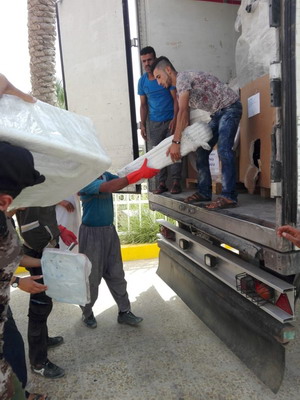
 WHO supports Hawija General Hospital in Kirkuk with essential livesaving medicines (Photo: WHO)
24 July 2018 – Al Hawija District, 45 km west of Kirkuk in Iraq, has suffered severe shortages of critical supplies, including food, water and medicines, since the conflict and displacement crisis in 2014.
The district health facilities were significantly impacted by the fight which led medical staff to leave the area and consequently deprived significant numbers of people of the medical assistance they need.
Al Hawija General Hospital, the only major health facility in the district and which used to serve the district populations of approximately 300 000 inhabitants, was extensively damaged in the last 3 years of the crisis before the district liberation in September 2017.
“Some parts of the only hospital we have in Hawija were totally damaged, like the paediatric ward. Some were burned, like the emergency room and the operating theatres. The majority of the assets were looted and stolen,” said Dr Falah Sami, a paediatric doctor in the hospital.
Responding to the immense need of the newly operational hospital, the Directorate of Health in Kirkuk rehabilitated the emergency room, while WHO arranged for a large consignment of medicines, medical supplies, equipment and furniture to support the hospital.
The consignment included 2 surgical kits sufficient to support 200 operations, 5 trauma A kits sufficient to treat 500 injuries, 5 trauma B kits enough for 500 patients, and a list of medical furniture of 24 items including beds, wheelchairs, trolleys, stretchers and other items.
“This support from WHO came as a lifeline for the hospital,” said Dr Imad Aldin Ahmed, a surgeon staff of the hospital. “It will help the medical staff in the hospital to work more efficiently and save more lives.”
“The hospital has been struggling to provide secondary health care services for the affected population in Hawija. So this WHO donation will provide the urgent intervention that many lives have been waiting for,” added Hameed Nima, a paramedic with over 19 years of service in the hospital.
The above support was in response to 2 assessment missions that were conducted by WHO to assess the health services in the district; and, with the number of returnees to Hawija steadily increasing and based on the availability of resources, WHO is considering an official request to expand Hawija General Hospital and to equip an additional operating theatre, currently under construction in the facility.
This urgent lifesaving support to Hawija General Hospital was made possible through generous contributions from donors and health partners especially USAID-OFDA, ECHO, and the Government and People of Germany.
WHO supports Hawija General Hospital in Kirkuk with essential livesaving medicines (Photo: WHO)
24 July 2018 – Al Hawija District, 45 km west of Kirkuk in Iraq, has suffered severe shortages of critical supplies, including food, water and medicines, since the conflict and displacement crisis in 2014.
The district health facilities were significantly impacted by the fight which led medical staff to leave the area and consequently deprived significant numbers of people of the medical assistance they need.
Al Hawija General Hospital, the only major health facility in the district and which used to serve the district populations of approximately 300 000 inhabitants, was extensively damaged in the last 3 years of the crisis before the district liberation in September 2017.
“Some parts of the only hospital we have in Hawija were totally damaged, like the paediatric ward. Some were burned, like the emergency room and the operating theatres. The majority of the assets were looted and stolen,” said Dr Falah Sami, a paediatric doctor in the hospital.
Responding to the immense need of the newly operational hospital, the Directorate of Health in Kirkuk rehabilitated the emergency room, while WHO arranged for a large consignment of medicines, medical supplies, equipment and furniture to support the hospital.
The consignment included 2 surgical kits sufficient to support 200 operations, 5 trauma A kits sufficient to treat 500 injuries, 5 trauma B kits enough for 500 patients, and a list of medical furniture of 24 items including beds, wheelchairs, trolleys, stretchers and other items.
“This support from WHO came as a lifeline for the hospital,” said Dr Imad Aldin Ahmed, a surgeon staff of the hospital. “It will help the medical staff in the hospital to work more efficiently and save more lives.”
“The hospital has been struggling to provide secondary health care services for the affected population in Hawija. So this WHO donation will provide the urgent intervention that many lives have been waiting for,” added Hameed Nima, a paramedic with over 19 years of service in the hospital.
The above support was in response to 2 assessment missions that were conducted by WHO to assess the health services in the district; and, with the number of returnees to Hawija steadily increasing and based on the availability of resources, WHO is considering an official request to expand Hawija General Hospital and to equip an additional operating theatre, currently under construction in the facility.
This urgent lifesaving support to Hawija General Hospital was made possible through generous contributions from donors and health partners especially USAID-OFDA, ECHO, and the Government and People of Germany.