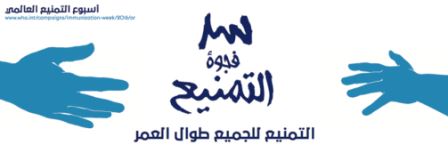
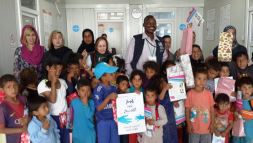
Baghdad, 26 April, 2016. World Immunization Week is celebrated from 24 to 29 April 2016 – this week aims to promote the use of vaccines to protect people of all ages against vaccine preventable diseases. Immunization saves millions of lives and is widely recognized as one of the world’s most successful and cost-effective public health interventions.
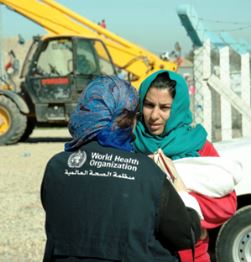 One of many examples The Kurdistan Health Ministry, promoted in BAHERKA Camp - Erbil and in Arbat IDPs – Sulaymania - activities to raise awareness about the importance of immunization, increase demand for it by communities and improve vaccination delivery services so the benefits of immunization are available equitably to all peopleThis year’s slogan for the week is “Close the immunization gap and immunization for ALL throughout life”.
Through outreach programmes, Ministry of Health with support from WHO and partners like UNICEF strive to reach all children who have been missed by the routine delivery system. It is estimated that 1 out of every 5 children under 5 years of age is not immunized against vaccine preventable diseases. The 2015 data analysis by the Expanded Programme on Immunization (EPI) in Iraq shows that an upwards of 340 000 children could not get their third dose of oral polio vaccine (OPV) through routine immunization services due the crisis affecting the country.
WHO is subsequently supporting the Minister of Heath in Iraq in close coordination with UNICEF to have uniformly high immunization coverage among all children, with a special focus on refugees and internally displeced persons (IDPs).
“It is important to highlight due to the continued efforts of the Minister of Health staff in Iraq at grass-roots levels, along with highly dedicated EPI managers, there have been no polio cases in the county since 7 April 2014. Unfortunately, the first half of the last year witnessed an outbreak of measles and the second half an outbreak of mumps cases. These outbreaks occurred in the central governorates of Baghdad and Resafa. Outbreaks of vaccine preventable disease are, stark reminders that uniformly high routine vaccination coverage at sub-governorate levels is vital to achieve the next most important goal of immunization programme in Iraq—interrupting endemic measles transmission,” said Altaf Musani Representative WHO in Iraq. WHO assures that it in coordination with UNICEF will continue to provide maximum possible support to vaccination program activities and surveillance and monitoring of vaccines preventable diseases.
“True equity in Iraq can only be achieved when all children have access to high quality health care services. Routine immunization is at the core of community level health care, and along with WHO and the Ministry of Health, UNICEF will work to ensure that routine immunization in Iraq is rolled out and can serve as the backbone of community focused health care delivery,” remarked Peter Hawkins, UNICEF Iraq Country Representative.
The 2016 Immunization week campaign additionally stresses the need for immunization among adolescents and adults - throughout life. This campaign draws the world’s attention to the critical importance of reaching vulnerable population living in conflict situations or in the wake of emergencies.
WHO and UNICEF encourages governments and health partners for implementing the 2016 Immunization Week campaign and help raise awareness about the importance of immunization, increase demand for it by communities and improve vaccination delivery services so the benefits of immunization are available equitably to all people.
Related link
World Immunization Week
For more information, please contact:
Ms Rosane Lopes
Communications Officer
World Health Organization
Iraq Country Office
This email address is being protected from spambots. You need JavaScript enabled to view it.
+964 7809 288 614
Ms Ajyal Sultany
Communications Officer
World Health Organization
Iraq Country Office
This email address is being protected from spambots. You need JavaScript enabled to view it.
+964 7510 101 469
Mr Jeffrey Bates
Chief of Communications
UNICEF Iraq
This email address is being protected from spambots. You need JavaScript enabled to view it.
+964 780 196 4524
Baghdad, 26 April, 2016. World Immunization Week is celebrated from 24 to 29 April 2016 – this week aims to promote the use of vaccines to protect people of all ages against vaccine preventable diseases. Immunization saves millions of lives and is widely recognized as one of the world’s most successful and cost-effective public health interventions.
One of many examples The Kurdistan Health Ministry, promoted in BAHERKA Camp - Erbil and in Arbat IDPs – Sulaymania - activities to raise awareness about the importance of immunization, increase demand for it by communities and improve vaccination delivery services so the benefits of immunization are available equitably to all peopleThis year’s slogan for the week is “Close the immunization gap and immunization for ALL throughout life”.
Through outreach programmes, Ministry of Health with support from WHO and partners like UNICEF strive to reach all children who have been missed by the routine delivery system. It is estimated that 1 out of every 5 children under 5 years of age is not immunized against vaccine preventable diseases. The 2015 data analysis by the Expanded Programme on Immunization (EPI) in Iraq shows that an upwards of 340 000 children could not get their third dose of oral polio vaccine (OPV) through routine immunization services due the crisis affecting the country.
WHO is subsequently supporting the Minister of Heath in Iraq in close coordination with UNICEF to have uniformly high immunization coverage among all children, with a special focus on refugees and internally displeced persons (IDPs).
“It is important to highlight due to the continued efforts of the Minister of Health staff in Iraq at grass-roots levels, along with highly dedicated EPI managers, there have been no polio cases in the county since 7 April 2014. Unfortunately, the first half of the last year witnessed an outbreak of measles and the second half an outbreak of mumps cases. These outbreaks occurred in the central governorates of Baghdad and Resafa. Outbreaks of vaccine preventable disease are, stark reminders that uniformly high routine vaccination coverage at sub-governorate levels is vital to achieve the next most important goal of immunization programme in Iraq—interrupting endemic measles transmission,” said Altaf Musani Representative WHO in Iraq. WHO assures that it in coordination with UNICEF will continue to provide maximum possible support to vaccination program activities and surveillance and monitoring of vaccines preventable diseases.
“True equity in Iraq can only be achieved when all children have access to high quality health care services. Routine immunization is at the core of community level health care, and along with WHO and the Ministry of Health, UNICEF will work to ensure that routine immunization in Iraq is rolled out and can serve as the backbone of community focused health care delivery,” remarked Peter Hawkins, UNICEF Iraq Country Representative.
The 2016 Immunization week campaign additionally stresses the need for immunization among adolescents and adults - throughout life. This campaign draws the world’s attention to the critical importance of reaching vulnerable population living in conflict situations or in the wake of emergencies.
WHO and UNICEF encourages governments and health partners for implementing the 2016 Immunization Week campaign and help raise awareness about the importance of immunization, increase demand for it by communities and improve vaccination delivery services so the benefits of immunization are available equitably to all people.
Related link
World Immunization Week
For more information, please contact:
Ms Rosane Lopes
Communications Officer
World Health Organization
Iraq Country Office
This email address is being protected from spambots. You need JavaScript enabled to view it.
+964 7809 288 614
Ms Ajyal Sultany
Communications Officer
World Health Organization
Iraq Country Office
This email address is being protected from spambots. You need JavaScript enabled to view it.
+964 7510 101 469
Mr Jeffrey Bates
Chief of Communications
UNICEF Iraq
This email address is being protected from spambots. You need JavaScript enabled to view it.
+964 780 196 4524