

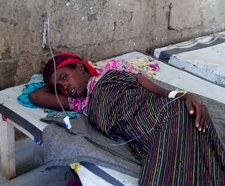
 Cholera is endemic in Somalia, and cases are reported throughout the year13 July 2012, Nairobi – The World Health Organization (WHO) is very much concerned about the increased number of cholera cases, particularly in Kismayo town. One health facility did a rapid test among a sample of 10 patients, and a total of 6 cases tested positive for cholera. Out of the 65 patients treated so far in the same health facility, 40 suffered severe dehydration and needed immediate hospitalization. The majority of the cases are children under the age of 8.
The WHO surveillance system, with a total of 222 health facilities reporting nine health events on a weekly basis, alerted an increase in suspected cholera cases. Since the beginning of the year, Kismayo General Hospital reported a total of 639 suspected cholera cases. However since May 2012, the health facility reported an average of 40 suspected cholera cases on a weekly basis.
“Cholera is an acute diarrhoeal disease that can kill within hours if left untreated,” says Dr Marthe Everard, WHO Representative for Somalia. People get infected by drinking water or eating food contaminated by the bacterium Vibrio cholerae. Cholera is endemic in Somalia, and cases are reported throughout the year. The last cholera outbreak in the country occurred in November 2011 and was declared under control at the end of December 2011.
The most important treatment for cholera is rehydration and antibiotics, which consists of prompt replacement of the water and salts lost. Early rehydration can save the lives of nearly all cholera patients. People living in high-risk areas can protect themselves by following a few simple rules of good hygiene and safe food preparation. These include washing of hands, especially before food preparation and eating, thorough cooking of food, boiling or chlorination of drinking-water, and use of sanitary facilities.
WHO helps responding to this sudden increase of suspected cholera cases by sending five diarrhea disease kits to the affected areas. One diarrhoeal disease kit can treat 400 moderate and 100 severe diarrhoea cases. Adequate case management supplies have been prepositioned in strategic locations, particularly the riverine areas, such as Lower and Middle Jubba, Lower and Middle Shabelle, Hiraan and Gedo regions. However, various challenges such as limited access and the recent fighting in the area make it difficult to fully respond.
Contact:
Pieter Desloovere
Communications Officer
WHO Somalia - Nairobi, Kenya
Mobile: +254 733 410 984