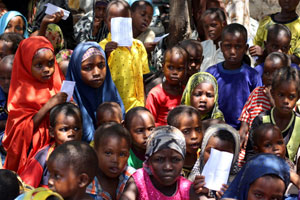
 25 July 2017 - Somalia is experiencing its worst outbreak of measles in four years. Drought and a real threat of famine, coupled with low vaccination rates, have left millions of children in Somalia weak, hungry, and particularly susceptible to contracting measles and other life-threatening diseases.
Almost 14,000 suspected cases of measles have been reported this year alone (as of 23 July) compared to between 5,000 to 10,000 total cases per year since 2014. More than 80 per cent of all those affected by the current outbreak are children below the age of ten.
In order to control the outbreak and reduce the number of deaths among children, a nation-wide measles campaign will be launched by WHO, UNICEF and national health authorities in November 2017, targeting 4.4 million children aged from six months to ten years.
In early 2017, WHO, UNICEF, partners and health authorities vaccinated 529,038 children aged six months to five years for measles across select hotspots. Although the campaigns helped delay immediate transmission, measles cases are on the rise due to mass displacement and overcrowding in temporary settlements as a result of drought and conflict, combined with the overall low vaccination coverage prior to the current crises and low population immunity due to high prevalence of malnutrition.
The total funding requirement for the upcoming campaign is US$14 million, of which WHO requires US$7 million. Along with the vaccination campaign, additional activities include providing vitamin A supplements, and training medical staff in all regions to strengthen case management, especially among internally displaced people, and improve disease surveillance.
“Investing in the health of Somalia’s children is critical, and is an investment in the future of Somalia. WHO, UNICEF, partners and health authorities are working closely to curb the spread of measles in the country,” said Dr Ghulam Popal, WHO Representative in Somalia. “This strong partnership provides continuous support to national health authorities to increase vaccination coverage for vulnerable children across the country. But we can only succeed in reaching every child if we have enough funding.”
25 July 2017 - Somalia is experiencing its worst outbreak of measles in four years. Drought and a real threat of famine, coupled with low vaccination rates, have left millions of children in Somalia weak, hungry, and particularly susceptible to contracting measles and other life-threatening diseases.
Almost 14,000 suspected cases of measles have been reported this year alone (as of 23 July) compared to between 5,000 to 10,000 total cases per year since 2014. More than 80 per cent of all those affected by the current outbreak are children below the age of ten.
In order to control the outbreak and reduce the number of deaths among children, a nation-wide measles campaign will be launched by WHO, UNICEF and national health authorities in November 2017, targeting 4.4 million children aged from six months to ten years.
In early 2017, WHO, UNICEF, partners and health authorities vaccinated 529,038 children aged six months to five years for measles across select hotspots. Although the campaigns helped delay immediate transmission, measles cases are on the rise due to mass displacement and overcrowding in temporary settlements as a result of drought and conflict, combined with the overall low vaccination coverage prior to the current crises and low population immunity due to high prevalence of malnutrition.
The total funding requirement for the upcoming campaign is US$14 million, of which WHO requires US$7 million. Along with the vaccination campaign, additional activities include providing vitamin A supplements, and training medical staff in all regions to strengthen case management, especially among internally displaced people, and improve disease surveillance.
“Investing in the health of Somalia’s children is critical, and is an investment in the future of Somalia. WHO, UNICEF, partners and health authorities are working closely to curb the spread of measles in the country,” said Dr Ghulam Popal, WHO Representative in Somalia. “This strong partnership provides continuous support to national health authorities to increase vaccination coverage for vulnerable children across the country. But we can only succeed in reaching every child if we have enough funding.”