

Select your language
Continued support from Government of Japan ensures quality of health services in Syria
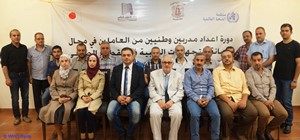 15 August 2017 – With support from the Government of Japan, the World Health Organization (WHO) and the Syrian Ministry of Health have launched the first Training of Trainers (ToT) course on the insulation and maintenance of medical equipment for 15 biomedical engineers and technicians working in national hospitals in Damascus, Homs, Aleppo, Darra and Al-Hassakeh governorates.
Since the beginning of the crisis in Syria in 2011, large numbers of technical staff responsible for providing maintenance for medical equipment have left the country, negatively affecting the reliability of medical equipment and quality of medical services.
“The purpose of the training course is to enhance the capacities of those staff responsible for maintaining medical equipment in public hospitals in Syria. This will positively reflect the quality of healthcare provided to patients,” said Elizabeth Hoff, WHO Representative in Syria.
“With the generous support of the Government of Japan, WHO has also provided mobile clinics and ambulances, and additional health equipment is in the process of being delivered, which will help improve health services to the Syrian people,” Hoff added.
Since 2016, the Government of Japan has supported WHO with US$ 15 million for its response operations in Syria.
Related links
WHO enhances capacity of national vaccinators with support from Government of Japan
November 2016
WHO welcomes support from Government of Brazil to Syria health response
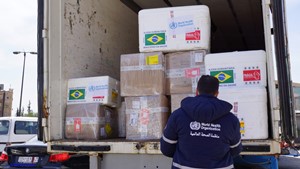 13 April, 2017, Damascus, Syria – In close coordination with WHO, the Government of Brazil has donated vaccines and lifesaving medicines to the Syrian health sector. Public hospitals and health centers across the country will benefit from the generous donation of rotavirus and valent pneumococcal vaccines, antibiotics, analgesics and other medical consumables.
Due to sanctions, Syria continues to face difficulties in importing a number of critical medicines that are not produced locally. The shipment, sufficient for more than 21 000 treatments, will fill critical shortages in a number of primary and secondary health care facilities.
“This donation is greatly appreciated as it meets the essential needs of many patients suffering from trauma injuries and chronic diseases,” said Elizabeth Hoff, WHO Representative in Syria. “This is the first shipment received from the Government of Brazil in support of the health sector in Syria, and we understand that additional in-kind support will be received over the next few months.”
Since the onset of crisis in Syria, WHO has coordinated efforts with international organizations and donor countries to sustain an effective health response for the Syrian population. It is estimated that approximately 13.5 million people inside the country are in urgent need of health assistance.
WHO again reaches East Ghouta, Syria, with supplies of lifesaving treatments
21 June 2016 – With another delivery of lifesaving treatments to East Ghouta in Syria on 19 June 2016, the World Health Organization (WHO) has reached, this year, the besieged district with over 30 tonnes of urgently needed medicines and supplies for an estimated population of 246 000 people in need.
This was the sixth delivery of lifesaving medicines and supplies by WHO to East Ghouta in the last 4 months, which has included medicines, incubators, water testing kits and other medical equipment. Since February 2016, the Organization has delivered over 135 000 treatments to East Ghouta, including lifesaving and noncommunicable diseases medicines, anaesthetics, medical equipment, trauma kits and oral rehydration solution.
“We are eager and committed to deliver regular health assistance to people in need in all locations of Syria where access is granted, especially to the besieged areas, including East Ghouta,” said Elizabeth Hoff, WHO Representative in Syria.
WHO continues to call on all parties to the conflict to lift the siege on all besieged locations and to allow unhindered and sustained access to humanitarian aid workers to provide lifesaving aid to populations in need.
For further information: