

Select your language
WHO reaches 80 000 families with life-saving medicines in Douma, Rural Damascus
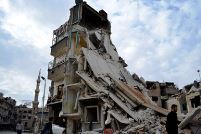 18 May 2015 – For the first time in 12 months, WHO has reached beneficiaries with life-saving medicines and dialysis machines in Douma, a besieged area of Rural Damascus governorate. As part of the inter-agency convoy, WHO's shipment to Douma targeted 80 000 families with medicines for noncommunicable diseases, including myiasis, 250 haemodialysis sessions and 2 dialysis machines.
An estimated 22 600 people of Douma’s 65 000-strong population are in need of medical assistance, including urgent surgical care and life-saving treatments. Health and the humanitarian situation in Douma has been deplorable following intense fighting in the Rural Damascus governorate since 2012.
Life is characterized by poor living conditions, poor hygiene and sanitation among people in the besieged areas where proper access to water and sanitation services are impeded due to the security situation. 3 cases of myiasis, otherwise known as screw flies, were reported on 19 November 2014 in Douma. Although, myiasis is not a life-threatening disease, it mostly reflects the poor living conditions, poor hygiene and sanitation among people in areas where proper access to water and sanitation services are limited.
Across the Rural Damascus governorate, there is only one operational public hospital for every 567 200 people. There are 2 public hospitals in Douma and as of March 2015, one was functional while both were either hard to access or inaccessible.
By the end of the last quarter of 2014, 44% of public centres in Douma were completely out of service, while the status of 38% (or 8 facilities) could not be ascertained, 6% (3 facilities) were partially functional and only 12% (5 facilities) were functional. In 2014, almost one third of WHO’s health and humanitarian supplies were delivered to beneficiaries in hard-to-reach and besieged areas, including Douma.
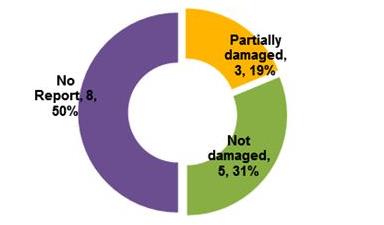
Figure 1. Extent of damage to health facilities in Douma in the last quarter of 2014
Related links
WHO reaches the besieged town of Douma in East Ghouta with life-saving medicines, 29 May 2014
Centers for Disease Control and Prevention: what is myiasis?
Media contact
Chima E. Onuekwe
Communication Officer
Workshop to review EWARS, 19 and 20 February, 2013
WHO, in collaboration with the Ministry of Health, held a workshop to review the performance of the Early Warning Alert and Response System (EWARS), in Damascus on 19 and 20 February 2013.
The workshop provided updated information on EWARS to the attending focal points and the expansion of the system to different governorates was discussed.
A total of 55 participants from 8 (out of 14) governorates participated, while Idilb, Der ez-Zor, Aleppo, Al-Hasakah, Daraa and Ar-Raqqa governorates were unable to attend due to closed roads and the ongoing conflict.
The participants noted the communication problems faced during the first phase of implementing the EWARS, and improved communication was strongly requested by all governorates present. Further capacity-building to strengthen the network of surveillance, particularly at governorate level, was also identified as a priority.
As an outcome of the workshop, the EWARS data collection format has been revised. The Ministry of Health agreed to endorse two rather than three age groups (under the age of 5 and above the age of 5), and to segregate it by gender.
In addition, 48 new sentinel sites were identified from the eight participating governorates to join the system, while new sites from the other six governorates will be identified later.
EWARS established in the Syrian Arab Republic, September 2012
EWARS
In 2012, WHO and the Ministry of Health of the Syrian Arab Republic established an early warning and response system (EWARS) to strengthen the national surveillance system, detect epidemic threats early, respond and control outbreaks and monitor epidemic-prone diseases.
EWARS has been functional since 23 September, 2012. A weekly epidemiological bulletin is produced using data generated by the system.
Sentinel surveillance
A total of 104 health centres have been designated as sentinel sites for EWARS across 14 governorates in the country. The system captures data on case counts of diseases with epidemic potential and its main goal is to early detect outbreaks through 'flagging' unusual events and triggering an appropriate investigation and response to manage the event.
Surveillance sites, using a simple data collection tool, report on case counts of selected diseases which are diagnosed by health care providers on the basis of a case definition. The system analyses the surveillance data on selected health conditions and provides feedback on a weekly basis for a timely and appropriate response.
EWARS detects an outbreak on the basis of an agreed “alert and epidemic threshold” which may vary depending on settings and diseases. EWARS data can also make projections on disease trends to improve epidemic preparedness, including prepositioning of supplies and medicines at appropriate time and places.
Epidemic response plan
The establishment of the EWARS in the Syrian Arab Republic followed a WHO risk assessment that determined the need for such a system. Training of health care workers was conducted on EWARS and an epidemic response plan has been linked in order to ensure a timely and rapid investigation of any unusual health event. It is expected that during the current situation prevailing in the country, EWARS will be a tool not only to detect outbreaks but also to reduce mortality and morbidity from epidemic diseases.