

Select your language
Regional situation reports
 Social mobilization activities on oral cholera vaccine in Dommiz 1 refugee camp near Dahuk, northern Iraq, close to the borders of Syria and TurkeyDecember highlights
- WHO Syria: Provided over 346 000 treatments across conflict lines to Aleppo and Homs governorates. This represents 45% of 780 000 treatments delivered this month.
- WHO Iraq: Concluded the second round of the national oral cholera vaccination campaign between 07 and 09 December in the Kurdistan Region.
- WHO Jordan: Assisted in establishing a polio control room under the leadership of the Ministry of Health, which includes WHO, UNICEF, nongovernmental organizations and Royal Medical Services.
- WHO Lebanon: Supported the Ministry of Public Health to create a national Hazmat emergency response team to ensure public and medical safety throughout the mitigation of hazardous materials incidents all over Lebanon.
- WHO Turkey: Completed a polio campaign in Kobani area in northern Syria covering more than 17 000 children under 5 years of age. Kobane is accessed for the first time since December 2014 due to security tensions and subsequent border blockade.
Read the latest situation report, December 2015 [pdf 795kb]
Related links
Situation report, November 2015
Situation report, October 2015
Situation report, September 2015
Situation report, May–June 2015
Situation report, February 2015
Situation report, January 2015
Donor updates
Donor update: Syrian Arab Republic, April–June 2015 [pdf 1.62Mb]
Donor update: Syrian Arab Republic, January–March 2015 [pdf 1.43Mb]
Donor update: Syrian Arab Republic, July–September 2014 [pdf 2.31Mb]
Donor update, Syrian Arab Republic, April–June 2014 [pdf 1.13Mb]
Donor update: Syrian Arab Republic, January-March 2014 [pdf 182Mb]
Donor update: Syrian Arab Republic, 9 April 2013 [pdf 133kb]
WHO and Syrian Arab Red Crescent (SARC) deliver medical aid to opposition-controlled areas in Daraa and Rural Damascus
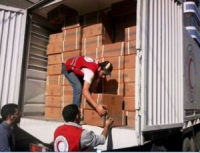 Damascus, 12 September 2014 – The World Health Organization (WHO) together with SARC delivered medical assistance from Damascus to hard-to-reach locations in Daraa and Rural Damascus governorates.
Health authorities in three opposition-controlled villages (Bosra, Al-Hirak and Jasim) in Daraa governorate received antibiotics and medicines for chronic diseases to treat over 108 000 people. Additional medical supplies were prepositioned in the governorate for future distribution to other villages.
On 9 September 2014, urgently needed antibiotics and WASH supplies to respond to the increasing number of diarrhoeal diseases and typhoid cases were delivered for a population of over 349 000 to local authorities in Douma town in the Eastern Ghouta area of Rural Damascus.
“With more of the hard-to-reach areas now being accessible, people in Daraa, Rural Damascus and across the country are benefiting from these deliveries.” said WHO Representative to Syria, Elizabeth Hoff. She added that: “More is needed to improve people’s access to medical treatments, health services and equipment, including for surgical interventions.”
The health situation in Daraa and Rural Damascus governorates is critical, with both areas suffering acute shortages of life-saving treatments and basic medical supplies. In both governorates over half of the health facilities have been severely damaged since the onset of the conflict in 2011.
These deliveries come in line with the United Nations Security Council Resolution 2165 (2014), and WHO’s strategy to reach Syrians in need through direct deliveries to all hard-to-reach locations in collaboration with local health authorities and partners.
WHO continues to scale up its efforts to provide medical treatments to those in need across the country. Since the beginning of 2014, the Organization has supported over 8 million people, including those in besieged, hard-to-reach and opposition-controlled areas, most recently in Aleppo, Ar-Raqqah and Idleb governorates.
For more information, please contact:
Karim Shukr
Media and Communication Officer in Syria
email:
Mobile: +963953888470
Information on the polio outbreak in Syria
Prior to the current outbreak, Syria’s last confirmed polio case (due to an imported wild poliovirus) was in 1999. Syria remained polio free until October 2013 when wild poliovirus was confirmed in Deir ez-Zor, and Aleppo, following importation of wild poliovirus closely related to strains currently circulating in Pakistan. The total number of confirmed polio cases in 2013 was 23.