


 28 June 2016 – With almost half of Syrian health workers having fled the country for safety, being injured or killed in the current crisis, the need to strengthen the capacities of remaining health personnel has never been more critical.
The exodus of skilled health workers has severely compromised the country’s capacity to provide health care services, especially for the wounded and patients with life-threatening chronic conditions, such as cardiovascular diseases, kidney failures, diabetes, asthma and cancer.
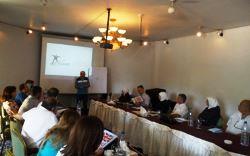
In order to strengthen the available health workforce, WHO has trained thousands of health care workers on various health care topics, including trauma care, noncommunicable diseases, infection control, immunization, mental health, nutrition and vaccine management, among others.
Yamama Dalla, head of the nursing section at the Kidney Hospital in Damascus, attends to nearly 120 kidney patients every day. She has worked in the section for several years. “Before I attended WHO’s training course on infection control, I was less attentive to personal protection practices,” says Yamama. “I did not wear hygiene gloves regularly or wash my hands after attending to patients. But now, not only do I wash my hands regularly, my knowledge of medical waste management has also improved, and I share this knowledge with my colleagues.”
Mohammad Wanous, a storekeeper in a Homs warehouse, also admitted to having limited knowledge of the best practices in medicine storage and movement tracking mechanisms. “After attending a WHO training on medicine storage and handling,” explained Mohammad, “I learnt the best practices in medicine storage in order to reduce waste and efficiently utilize available spaces and resources.”
“With the generous support from donors especially, ECHO, Department for International Development, the Government of Kuwait, United Arab Emirates and United States Agency for International Development, WHO has trained more than 40 000 health workers on critical health topics since 2014 to strengthen the national capacities for health emergency response in Syria,” said Elizabeth Hoff, WHO Representative, Syria.