 8 March 2017 -- Six years into the Syria crisis, malnutrition rates have increased, especially among children under 5 years of age. Almost 4.3 million boys and girls under the age of 5 are in need of nutrition services, including 73 000 children who are acutely malnourished. WHO is working to ensure that children suffering from malnutrition are diagnosed and treated before their condition leads to serious and long-term medical complications.
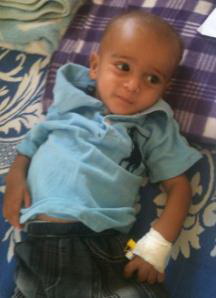
12-month-old Samer* was born one year after his parents fled their home in Rural Hama due to severe clashes. “The situation in the area we arrived at was very bad.” said Samer’s mother. “I was exhausted, depressed and always hungry. Sometimes I could barely find a loaf of bread to share with my husband. I couldn’t breastfeed Samer anymore, and I could see that my baby was suffering with us in our starvation,” she said, holding back her tears.
“Soon, Samer’s body became very weak and so thin that his bones started to appear. My heart sank every time I heard him crying. I was afraid of losing my only son,” she added.
On January 30, 2017, Samer was admitted to the malnutrition treatment centre in Hama governorate. He weighed only 5.8 kilogrammes (less than 13 pounds) and was diagnosed with severe acute malnutrition, pneumonia and breathing difficulties.
Samer underwent treatment as part of the centre’s Management of Severe Acute Malnutrition Programme. After 10 days, his weight increased and the pneumonia and breathing difficulties were treated. When she heard her son’s laughter for the first time in many months, Samer’s mother burst into tears.
Samer is one of almost 614 000 children screened for malnutrition at 445 nutrition surveillance centres in 13 governorates in Syria. WHO supports these centres by providing them with equipment and training for health staff. In 2016, more than 24 000 children were diagnosed with malnutrition and treated at these centres.
“WHO spares no effort in supporting nutrition surveillance across Syria to ensure better growth and development for children under these challenging circumstances,” said Elizabeth Hoff, WHO Representative in Syria.
* Not his real name
8 March 2017 -- Six years into the Syria crisis, malnutrition rates have increased, especially among children under 5 years of age. Almost 4.3 million boys and girls under the age of 5 are in need of nutrition services, including 73 000 children who are acutely malnourished. WHO is working to ensure that children suffering from malnutrition are diagnosed and treated before their condition leads to serious and long-term medical complications.
12-month-old Samer* was born one year after his parents fled their home in Rural Hama due to severe clashes. “The situation in the area we arrived at was very bad.” said Samer’s mother. “I was exhausted, depressed and always hungry. Sometimes I could barely find a loaf of bread to share with my husband. I couldn’t breastfeed Samer anymore, and I could see that my baby was suffering with us in our starvation,” she said, holding back her tears.
“Soon, Samer’s body became very weak and so thin that his bones started to appear. My heart sank every time I heard him crying. I was afraid of losing my only son,” she added.
On January 30, 2017, Samer was admitted to the malnutrition treatment centre in Hama governorate. He weighed only 5.8 kilogrammes (less than 13 pounds) and was diagnosed with severe acute malnutrition, pneumonia and breathing difficulties.
Samer underwent treatment as part of the centre’s Management of Severe Acute Malnutrition Programme. After 10 days, his weight increased and the pneumonia and breathing difficulties were treated. When she heard her son’s laughter for the first time in many months, Samer’s mother burst into tears.
Samer is one of almost 614 000 children screened for malnutrition at 445 nutrition surveillance centres in 13 governorates in Syria. WHO supports these centres by providing them with equipment and training for health staff. In 2016, more than 24 000 children were diagnosed with malnutrition and treated at these centres.
“WHO spares no effort in supporting nutrition surveillance across Syria to ensure better growth and development for children under these challenging circumstances,” said Elizabeth Hoff, WHO Representative in Syria.
* Not his real name