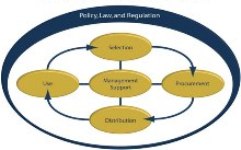
 The phamarceutical management frameworkQuality management of anti-TB medicines is one of the main components of the Stop TB Strategy. The aim is to ensure an uninterrupted supply of both first and second line anti-TB medicines, good storage practices, capacity building and improvement of health staff skills. Moreover, it is the key for successful management of TB.
Anti-TB drugs should be available free of charge to all TB patients, because many patients are poor and treatment benefits extend to the community as a whole.
Some global initiatives, such as the Global Drug Facility, have succeeded in improving the medicine supply chain in the countries of the Region, either by providing anti-TB medicines as a grant or by using the direct procurement mechanism for procuring anti-TB medicines of the highest quality at competitive prices. This initiative offers a simple, but comprehensive, approach to ensuring access to the products needed to treat people with TB (first and second line) with standard regimens.
These initiatives have stimulated country programmes to adopt WHO-recommended treatment regimens by making available the medicines needed for those regimens in patients-friendly formulations (such as fixed dose combinations), with packaging designed to meet the needs of health workers, medicine managers and patients, at competitive prices. Full compliance with the drug regimens means nine out of ten patients can be cured.
Legislation related to drug regulation should also be in place, and use of anti-TB medicines by all providers should be strictly monitored.
Finally, WHO has achieved considerable progress in the area of WHO pre-qualification, leading to a list of pre-qualified suppliers for TB, malaria and antiretroviral drugs, to facilitate access to these medicines and to meet standards of quality, safety and efficacy.
The role of the regional Stop TB programme in drug management is to deliver a bundle model that includes these elements:
building medicine management capacity
procuring medicines
mobilizing partners for technical assistance
providing grants whenever possible
monitoring the proper management of TB medicines.
The phamarceutical management frameworkQuality management of anti-TB medicines is one of the main components of the Stop TB Strategy. The aim is to ensure an uninterrupted supply of both first and second line anti-TB medicines, good storage practices, capacity building and improvement of health staff skills. Moreover, it is the key for successful management of TB.
Anti-TB drugs should be available free of charge to all TB patients, because many patients are poor and treatment benefits extend to the community as a whole.
Some global initiatives, such as the Global Drug Facility, have succeeded in improving the medicine supply chain in the countries of the Region, either by providing anti-TB medicines as a grant or by using the direct procurement mechanism for procuring anti-TB medicines of the highest quality at competitive prices. This initiative offers a simple, but comprehensive, approach to ensuring access to the products needed to treat people with TB (first and second line) with standard regimens.
These initiatives have stimulated country programmes to adopt WHO-recommended treatment regimens by making available the medicines needed for those regimens in patients-friendly formulations (such as fixed dose combinations), with packaging designed to meet the needs of health workers, medicine managers and patients, at competitive prices. Full compliance with the drug regimens means nine out of ten patients can be cured.
Legislation related to drug regulation should also be in place, and use of anti-TB medicines by all providers should be strictly monitored.
Finally, WHO has achieved considerable progress in the area of WHO pre-qualification, leading to a list of pre-qualified suppliers for TB, malaria and antiretroviral drugs, to facilitate access to these medicines and to meet standards of quality, safety and efficacy.
The role of the regional Stop TB programme in drug management is to deliver a bundle model that includes these elements:
building medicine management capacity
procuring medicines
mobilizing partners for technical assistance
providing grants whenever possible
monitoring the proper management of TB medicines.